
Contents
Imagine your lawn as a bustling city, where roots are the roads and nutrients are the vehicles. Over time, traffic can lead to congestion, hindering growth. By employing various aeration techniques, you can ease this compaction and restore vibrancy. Whether you choose core, spike, or liquid aeration, each method has its unique benefits. But how do you determine which technique is right for your lawn’s specific needs? Let’s explore the options together.
Key Takeaways
- Core aeration removes soil plugs, enhancing nutrient absorption and root growth while reducing soil compaction for healthier lawns.
- Spike aeration uses spikes to create holes, but may cause surface compaction, making it less effective for deep root penetration.
- Powered aerators are efficient for larger lawns, providing quick and thorough aeration compared to manual tools.
- Manual aerators allow for hands-on control and precision in small areas, ideal for targeted aeration tasks.
- Liquid aeration involves applying a solution that breaks down compacted soil, improving water retention and nutrient absorption effectively.
Understanding Lawn Aeration
Lawn aeration is an essential process that enhances your turf’s health and energy. It involves perforating the soil with holes, allowing air, water, and nutrients to penetrate deeper.
This technique’s primary goal is to alleviate soil compaction, a common issue that restricts root growth and diminishes lawn health. When soil becomes compacted, it limits the capacity for roots to expand, leading to a weaker and less resilient lawn.
Benefits of Aerating Your Lawn
Aerating your lawn opens up a world of benefits that can transform your outdoor space.
By enhancing nutrient absorption and improving soil drainage, you’re setting the stage for healthier grass growth.
Experience the difference as your lawn thrives, showcasing lush greenery and resilience.
Enhanced Nutrient Absorption
When you choose to aerate your lawn, you’re not just poking holes in the soil; you’re greatly enhancing its ability to absorb essential nutrients.
This process promotes improved nutrient uptake by allowing fertilizers and organic matter to penetrate deeper into the root zone. With aeration, your lawn’s soil health is revitalized, fostering a thriving ecosystem where beneficial microorganisms can flourish.
As you create channels for air, water, and nutrients, the roots can access what they need more efficiently. This leads to a lush, vibrant lawn and strengthens it against pests and diseases.
Improved Soil Drainage
As nutrient absorption improves through aeration, another significant benefit emerges: enhanced soil drainage.
Aerating your lawn effectively combats soil compaction, which can lead to water pooling and poor root health. By creating small holes in the ground, you allow water to penetrate deeper into the soil, promoting drainage improvement.
This process prevents saturation and encourages the development of beneficial microorganisms that thrive in aerated conditions. When your lawn can drain properly, it reduces the risk of disease and fosters a more vibrant ecosystem.
You’ll notice a healthier lawn that can withstand the elements, making your outdoor space a welcoming haven for family and friends. Embrace aeration for a lawn that truly thrives!
Healthier Grass Growth
A lush, vibrant lawn is a hallmark of a well-maintained yard, and aeration plays an essential role in achieving this. By aerating your lawn, you enhance soil health, allowing grass to access crucial resources more effectively. This process helps your grass thrive by improving nutrient absorption and promoting deeper root growth.
Here are some key benefits of aeration for healthier grass growth:
Enhanced Nutrient Availability: Aeration allows better penetration of grass nutrients, ensuring your lawn receives what it needs.
Improved Air Circulation: It creates channels in the soil, facilitating oxygen flow to the grassroots.
Strengthened Root System: With less compaction, roots can expand and establish a stronger, more resilient lawn.
Embrace aeration to cultivate a flourishing green space!
When to Aerate Your Lawn
Timing is vital when it comes to aerating your lawn, as seasonal factors can greatly impact its effectiveness.
You’ll need to account for soil moisture levels to ensure proper penetration, and different grass types have specific aeration windows for optimal growth.
Understanding these elements will help you determine the best time for aeration and set your lawn up for success.
Ideal Seasonal Timing
Understanding the ideal seasonal timing for lawn aeration is essential for promoting healthy grass growth.
You’ll want to take into account both spring aeration and fall aeration for optimal results.
Spring Aeration: Ideal when grass is actively growing, typically between late March and early May.
Fall Aeration: Best for cool-season grasses, usually around September to early October, as it helps the lawn recover from summer stress.
Soil Temperature: Aerate when soil temperatures reach around 50-65°F for best outcomes.
Soil Moisture Considerations
When considering the best moment to aerate your lawn, soil moisture plays an essential role in ensuring effective results.
You’ll want to conduct soil moisture testing to gauge how well your soil retains moisture. Ideally, aeration should occur when your soil is moist but not overly saturated. This will allow the aerator to penetrate the ground easily, creating the necessary holes for air, water, and nutrients to reach the roots.
If the soil is too dry, it becomes hard and compacted, inhibiting moisture retention and diminishing aeration benefits. Conversely, if it’s too wet, you risk damaging the lawn.
Striking the right balance in soil moisture will lead to a healthier, more vibrant lawn that you can proudly showcase.
Grass Type Requirements
While your lawn’s health hinges on various factors, the type of grass you have greatly influences the best aeration schedule.
Understanding whether you have cool-season grasses or warm-season grasses is key to timing your aeration effectively.
Cool-season grasses thrive in early spring and fall; aerate during these times for peak growth.
Warm-season grasses prefer the heat of summer; aim for aeration in late spring to early summer when they’re actively growing.
Soil temperature also matters; verify it’s at least 50°F for cool-season and 65°F for warm-season grasses to maximize benefits.
Different Types of Aeration Tools
Choosing the right aeration tool can greatly impact the health of your lawn, as each type serves a unique purpose and offers different benefits.
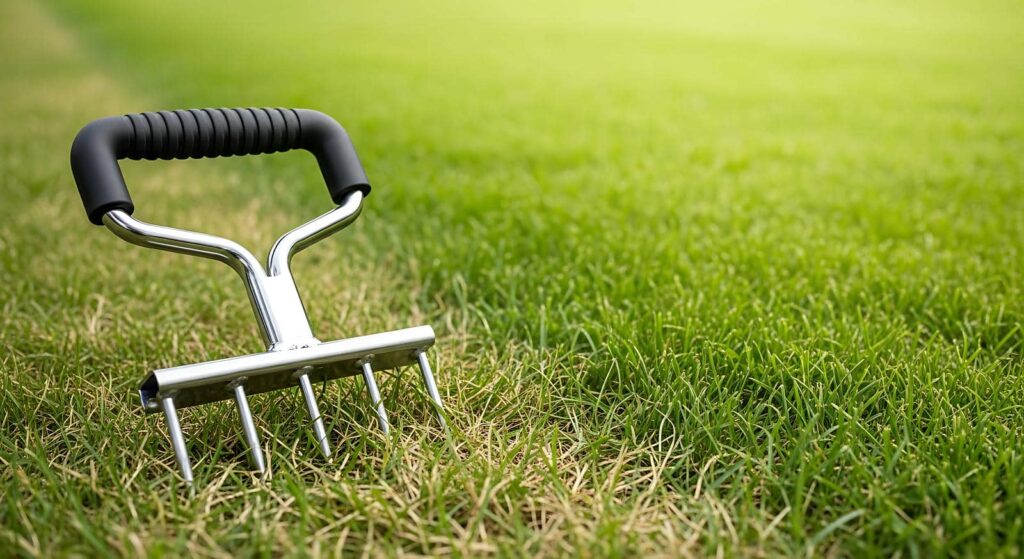
For a hands-on approach, manual aerators let you take control, pushing through the soil while providing a workout. If you prefer efficiency, powered aerators save time and energy, making them ideal for larger lawns.
Aeration spikes are great for creating holes in compacted soil, but may not remove soil plugs. Drum aerators, meanwhile, do both—punching holes and extracting plugs to enhance soil structure.
For small areas, aeration mats can be rolled out, ensuring even coverage. Finally, aeration shoes allow you to walk across your lawn, aerating as you go, blending practicality with ease.
Core Aeration Technique
When you choose core aeration, you’re opening up a world of benefits for your lawn, including improved nutrient absorption and enhanced root growth.
Timing is essential; you’ll want to perform this technique during the growing season for maximum impact.
Benefits of Core Aeration
Core aeration offers numerous benefits that can significantly enhance the health and appearance of your lawn. By removing soil cores, you reveal several core benefits that lead to vibrant greenery and robust growth.
Here are some key aeration advantages:
Improved Nutrient Absorption: With better soil aeration, your grass can more effectively take in nutrients and water, leading to a lush lawn.
Enhanced Root Development: Core aeration encourages deeper root systems, making your grass more resilient to drought and pests.
Reduced Soil Compaction: Aeration alleviates compacted soil, promoting airflow and microbial activity essential for a thriving ecosystem.
Incorporating core aeration into your lawn care routine will help you cultivate a thriving, beautiful landscape that you’ll be proud to share with friends and family.
Best Timing Practices
To maximize the benefits of core aeration, timing plays an essential role in ensuring your lawn receives perfect care.
For most regions, early spring or early fall is the best weather for aeration, as it coincides with your grass’s active growth phases.
However, regional differences can affect this timing—cool-season grasses thrive during cooler months, while warm-season grasses benefit from summer aeration.
Pay attention to soil moisture levels; aerating during dry spells can lead to poor results.
A well-timed aeration enhances root growth and improves nutrient absorption.
Spike Aeration Technique
The spike aeration technique is a straightforward yet effective method for improving soil aeration and promoting healthy grass growth. This technique involves using a tool with spikes to create holes in the soil, allowing air, water, and nutrients to penetrate deeper.
Here are some spike aeration benefits:
Improved Soil Structure: It helps break up compacted soil, enhancing root development.
Cost-Effective: This method requires minimal equipment and can be done by homeowners.
Quick Results: You’ll notice healthier grass within weeks of aeration.
However, spike aeration does have drawbacks. It can lead to surface compaction if not performed correctly, and it may not reach deeper soil layers as effectively as core aeration.
Before you decide, weigh these factors to determine if spike aeration is the right choice for your lawn.
Liquid Aeration Method
While traditional aeration methods often require heavy equipment, the liquid aeration method offers a convenient alternative that simplifies the process of enhancing soil health. This innovative technique involves applying a specialized liquid solution to your lawn, which penetrates the soil and breaks down compacted layers.
During the liquid aeration process, these solutions typically contain natural ingredients like beneficial microbes and organic matter that improve soil structure. You’ll notice significant liquid aeration benefits, such as increased nutrient absorption, improved water retention, and a healthier root system.
Plus, it’s an eco-friendly choice that won’t disrupt your lawn’s aesthetics.
Applying liquid aeration is straightforward; just mix the solution with water, and use a sprayer for even coverage. With this method, you’ll promote lush grass and foster a sense of community as you join others in adopting sustainable lawn care practices.
Your lawn will thrive, and so will your connection to your neighbors.
Aeration for Different Grass Types
Understanding how aeration impacts different grass types is essential for achieving a lush, vibrant lawn. The effectiveness of aeration varies between cool-season grasses and warm-season grasses, so knowing your grass type can enhance your results.
Cool-season grasses thrive in spring and fall, and they benefit from aeration during these cooler months to relieve soil compaction and improve nutrient absorption.
Warm-season grasses flourish in the heat of summer, making late spring to early summer the ideal time for aeration, promoting robust growth and resilience.
Hybrid grasses, often a blend, may require a tailored approach, balancing the needs of both cool and warm season varieties.
Preparing Your Lawn for Aeration
Before you start aerating, it’s important to prepare your lawn properly to maximize the benefits of this technique.
Begin with thorough lawn preparation, which sets the stage for effective aeration. Mow your grass to a shorter height, making it easier for aerators to penetrate the soil. Next, conduct soil testing to assess compaction levels and nutrient deficiencies. This information will guide you in selecting the right aeration method and any necessary amendments.
Clear your lawn of debris, such as leaves and twigs, to ensure unobstructed access for the aerator. If your lawn has a heavy thatch layer, consider dethatching before aeration to enhance soil exposure.
Finally, water your lawn lightly a day prior to aeration; this softens the soil, allowing for easier penetration. By following these steps, you’ll ensure your lawn is primed for ideal aeration results.
Post-Aeration Lawn Care Tips
After aerating your lawn, proper care is essential to help restore its health and promote vigorous growth. To maximize the benefits of aeration, follow these post-aeration lawn care tips:
Implement effective lawn fertilization techniques: Use a high-quality fertilizer to nourish your grass, ideally within a week of aeration. This boosts recovery and encourages new growth.
Prioritize post-aeration watering: Water your lawn thoroughly after aeration, but avoid overwatering. Aim for about 1 to 1.5 inches of water, ensuring the soil absorbs moisture effectively.
Avoid heavy foot traffic: Give your lawn time to recover by limiting traffic on the grass for at least two weeks. This helps prevent soil compaction and allows roots to strengthen.
Review
Lawn aeration is essential for a vibrant, healthy yard. By choosing the right technique—be it core, spike, or liquid—you can greatly enhance nutrient flow and root growth. Remember to aerate at the ideal time and follow up with proper care to reap the full benefits of your efforts. Your lawn will thank you!
Recent Posts
10 Best Organic Lawn Care Tips for Spring
Spring offers a prime opportunity to enhance your lawn organically. By focusing on soil health,
Spring Organic Lawn Care Tips for a Healthy Yard
If you’ve noticed patchy areas in your lawn after winter, it’s time to think about
Boost Your Lawn: Soil Enrichment Strategies
Your lawn can either thrive or struggle, depending on the health of its soil. Evaluating