
Contents
If you want a cleaner West Michigan lawn, Weed Control starts with a weed plan that matches local conditions. Begin by identifying common invaders, then time pre-emergent applications for early spring and spot-treat broadleaf weeds when they’re actively growing. Mow high, water deeply, and feed your turf so healthy grass can outcompete weeds. The real challenge comes when seasonal pressure changes, making consistent timing and lawn care even more important.
Key Takeaways
- Identify common West Michigan weeds like dandelions, clover, crabgrass, thistles, and chickweed for targeted control.
- Apply pre-emergent herbicide in early spring before crabgrass germinates and soil temperatures reach 55°F.
- Spot-treat broadleaf weeds with a selective lawn herbicide during active growth on calm, dry days.
- Mow high, keep blades sharp, and water deeply but infrequently to strengthen turf and suppress weeds.
- Overseed thin areas, fertilize based on soil test results, and remove fall weeds before they set seed.
Identify Common West Michigan Weeds
To control weeds effectively, you first need to know which ones you’re dealing with. In West Michigan, focus on dandelion identification by checking for toothed leaves and hollow stems.
Learn clover variations, since white and red forms spread differently. Note thistle types by their spines and purple blooms.
For crabgrass control, watch for low, spreading clumps in thin turf. Chickweed management starts with spotting its tiny white flowers and matting growth.
Compare plantain species by leaf width and parallel veins. For bindweed removal, look for twining vines with arrow-shaped leaves.
Ground ivy forms creeping, square-stemmed mats. Poison ivy has three glossy leaflets.
Wild violet shows heart-shaped leaves and purple flowers. You’ll fit right in when you can name these weeds fast.
Start Weed Control in Early Spring
As soon as the soil warms and weeds start germinating, you should begin your control plan.
In West Michigan, timing matters because cool-season weeds establish fast in spring moisture. Apply preemergent products before target seeds sprout, and inspect beds, borders, and thin turf for breakthrough growth.
Your early spring strategies should include spot treatment with a labeled selective herbicide, following rate and temperature instructions exactly. Keep records of application dates, weather, and weed pressure so you can adjust next season.
Proactive lawn care helps you stay ahead of crabgrass, chickweed, and other annual invaders before they compete with your turf. When you act early, you protect density, reduce later workload, and join neighbors who keep lawns healthier through the season.
Mow Your Lawn to Crowd Out Weeds
Keep your mower set at the right height so turf shades the soil and makes it harder for weeds to sprout. Match mowing height to your grass types: cool-season lawns in West Michigan usually perform best when you remove no more than one-third at a time.
Keep a steady lawn frequency during peak growth, and adjust seasonal timing as growth slows. Vary cutting patterns to reduce ruts and help blades stand upright, which improves weed competition.
Sharp blades and regular mower maintenance protect turf health and keep cuts clean, so grass recovers quickly. When you mow consistently, you lower weed pressure, protect lawn aesthetics, and create a thicker stand your neighbors will notice.
Stay disciplined, and your lawn will feel like part of a strong local crew.
Water Deeply to Strengthen Grass Roots
Water deeply so moisture reaches the lower soil profile and pushes roots to grow deeper.
This root growth helps grass tolerate heat, drought, and weed pressure better than frequent shallow watering.
In West Michigan, water less often but longer each time to support stronger turf.
Deep Watering Benefits
Deep watering can make a big difference in weed control because it pushes moisture deeper into the soil and encourages grass roots to grow farther down.
You’ll keep soil moisture more stable between rain events, which helps your lawn handle West Michigan’s hot, dry stretches. When you water less often but more thoroughly, you train turf to use deeper reserves instead of staying near the surface.
That supports stronger root development and makes it harder for shallow-rooted weeds to compete. Aim for early-morning watering so you lose less water to evaporation.
Check coverage with simple cans or gauges, and adjust run time so the soil gets wet several inches down. Your lawn team will see denser turf, better recovery, and fewer openings for weeds.
Root Growth Support
When you water deeply, you encourage grass roots to grow farther into the soil profile, which helps your lawn access moisture and nutrients more effectively.
You also improve root nourishment by keeping moisture available below the surface, where roots can expand with less stress. This deeper moisture delivery supports stronger turf that can better compete with weeds in West Michigan’s changing conditions.
Pair deep watering with soil aeration to reduce compaction and improve water movement into the root zone. That helps oxygen reach the roots and lets water soak in instead of running off.
When you manage moisture this way, you build a healthier lawn community that’s more resilient, denser, and better equipped to stay weed-resistant through the season.
Infrequent Watering Schedule
Instead of watering on a fixed daily schedule, give your West Michigan lawn a thorough soak less often so moisture reaches deeper into the root zone. You’ll train turf roots to grow downward, where soil stays cooler and more stable. That deeper rooting improves drought tolerance and helps your grass outcompete shallow-rooted weeds.
Water early in the morning so you reduce evaporation and support better moisture retention in the soil profile. Aim for about 1 inch per session, including rainfall, then wait until the top few inches dry before watering again.
Check coverage with straight-sided cans to verify even application. If you join this routine, your lawn builds resilience, uses water more efficiently, and stays healthier through summer stress.
Apply Pre-Emergent at the Right Time
For best results in West Michigan lawns, apply pre-emergent herbicide just before soil temperatures reach about 55°F and crabgrass begins to germinate.
You’ll get stronger control when you match pre-emergent timing to local weather, not just the calendar. Check soil temperatures at a 2-inch depth, and watch for consistent spring warming after a stretch of mild days.
A well-timed seasonal application forms a protective barrier in the upper soil where weed seeds sprout. If you apply too late, seedlings can break through and establish quickly. If you apply too early, the barrier may thin before peak germination.
Use a calibrated spreader, follow label rates, and water in only if the product requires it. That’s how you stay ahead with the rest of your lawn care crew.
Spot-Treat Broadleaf Weeds Fast
You can spot broadleaf weeds by their wider leaves, netted veins, and growth patterns that differ from turfgrass.
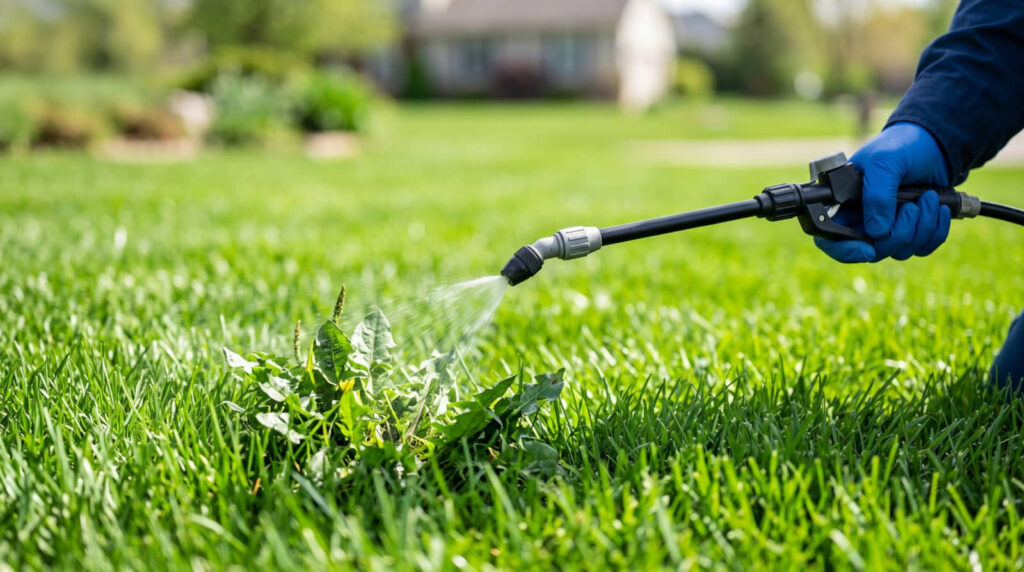
Focus on the weed patches instead of spraying the whole lawn, since that cuts product use and limits turf stress.
Then apply a selective herbicide at the labeled rate so you kill the weeds without harming your grass.
Identify Broadleaf Weeds
Broadleaf weeds stand out from turfgrass because they’ve wider leaves, visible veins, and branching growth patterns, so you can spot them quickly before they spread.
Use broadleaf identification to confirm what you’re seeing and avoid treating healthy grass. Check weed characteristics like leaf shape, stem texture, and growth habit.
In West Michigan lawns, you’ll often notice:
- Dandelion rosettes
- Clover’s three leaflets
- Plantain’s ribbed leaves
- Thistle’s spiny edges
Scan your lawn at eye level and compare each plant with nearby turf.
When you recognize the difference early, you can act with confidence and keep your yard looking cared for. That’s how you stay in control and feel at home in your grass.
Target Weed Patches
Once you’ve identified the weed, spot-treat the patch with a broadleaf herbicide instead of spraying the whole lawn. You’ll protect healthy turf, reduce product use, and keep weed patch management efficient across your West Michigan yard.
Use targeted treatments only where broadleaf weeds cluster, making sure you coat leaves evenly without drenching nearby grass. Work on calm, dry days so drift stays low and the herbicide stays where you need it.
Mark the patch, treat it once, and check progress after several days. If any plants remain, repeat only on the missed spots.
This approach helps you stay consistent with your neighbors who care about a clean, resilient lawn. Precise spot work saves time, limits stress on turf, and supports better long-term control.
Apply Selective Herbicide
Choose a selective broadleaf herbicide labeled for lawns, then apply it directly to the weed patch so you can kill unwanted plants without harming healthy turf. You’ll get the best results when herbicide timing matches active weed growth and mild weather.
Use these application methods to stay precise and efficient:
- Calibrate your sprayer before you start.
- Treat weeds on a calm, dry day.
- Keep the nozzle low for spot coverage.
- Avoid mowing before or after treatment.
This approach helps you protect the grass your neighbors admire while stopping dandelions, clover, and plantain fast.
Read the label for mix rates, rainfast time, and reentry guidance. If patches persist, wait the recommended interval before retreating.
Fertilize to Help Grass Outcompete Weeds
Feed your lawn on a regular schedule so grass grows thick, vigorous, and better able to crowd out weeds.
Use a soil test to guide your nutrient plan, then choose a balanced fertilizer that matches West Michigan conditions. Apply nitrogen in split doses during active growth, and don’t overdo it; excess feeding can push weak, lush growth.
If you prefer a lower-input approach, organic fertilizers can release nutrients steadily and support soil health. Match the product to your grass varieties, since cool-season turf responds best to timed feeding in spring and fall.
Water lightly after application to move nutrients into the root zone.
When you feed consistently, you strengthen your lawn’s canopy, improve recovery, and help your yard stay part of the strong, weed-resistant crowd.
Overseed Bare Spots and Thin Areas
Before you overseed, clear debris and loosen the topsoil so seed can contact the ground.
After you remove weeds, reseed the bare spots and thin areas right away to limit new weed germination.
Keep the seeded areas evenly moist until the new grass establishes.
Prepare Soil For Seed
Rake out dead grass, loose thatch, and debris so seed can reach soil in bare spots and thin areas. You’ll give new grass the best start when you prep a clean, firm seedbed.
Check soil testing results first so you can match pH and nutrient levels to your lawn’s needs. Then focus on seed selection, choosing a blend suited to West Michigan sun, shade, and traffic.
- Loosen the top 1/4 inch of soil.
- Fill shallow dips with screened topsoil.
- Break up compacted crust for better contact.
- Level edges so water won’t pool.
You belong in a lawn care routine that rewards consistency. Press seed into the surface, then water lightly to keep the top layer evenly moist and support quick germination.
Reseed After Weed Removal
Once you’ve removed weeds, overseed bare spots and thin areas right away so desirable grass can fill the open space before new weeds move in.
Choose a seed blend that matches your existing turf and West Michigan conditions, then spread it evenly for uniform coverage.
Lightly rake the surface so seed contacts the soil, and keep the top layer consistently moist until seedlings establish.
Avoid heavy foot traffic and mow only when new grass reaches the proper height.
This quick reseeding step improves lawn health, strengthens root competition, and supports long-term soil quality.
When you act fast, you protect your lawn’s dense look and help your yard stay part of a healthy, resilient neighborhood landscape.
Remove Weeds Before They Seed in Fall
As fall weeds mature, you should pull or cut them down before they drop seed and spread next spring. This fall maintenance keeps your lawn cleaner and helps your neighbors’ yards stay a little less weedy too.
Use seasonal timing to act while weeds are still easy to remove.
- Spot tall broadleaf weeds along edges and thin turf.
- Grasp the base, then pull steadily to lift roots.
- Cut seed heads if roots won’t come free.
- Bag debris so you don’t reintroduce seed.
Check after rain, when soil loosens and roots release faster. Wear gloves, and use a sharp hand tool for stubborn clumps.
When you stay consistent now, you protect the turf you’ve already built and set your lawn up for a stronger spring.
Plan Weed Control by Season
Plan weed control around the season so you hit weeds when they’re most vulnerable. In West Michigan, you can match seasonal strategies to weed life cycles and local weather.
Apply pre-emergent in early spring before crabgrass germinates, then spot-treat broadleaf weeds in late spring when they’re actively growing.
Mow high through summer to shade soil and support weed prevention, and water deeply but less often to strengthen turf roots.
In fall, overseed thin areas and remove late weeds before winter sets in. If you stay consistent, you’ll build a lawn care routine that feels like part of the neighborhood standard.
Check your lawn each month, adjust timing after heavy rain, and keep records so next season’s treatments work even better.
Frequently Asked Questions
What Lawn Grasses Handle West Michigan Weed Pressure Best?
You’ll get the best weed resistance from Kentucky bluegrass and perennial ryegrass blends; Kentucky Bluegrass benefits include dense turf, while Perennial Ryegrass resistance adds quick recovery, helping you belong to a thicker, more competitive lawn.
Are Organic Weed Control Options Effective Here?
Yes, you can get solid results with organic weed control here. You’ll need natural herbicides, mulching techniques, and consistent hand-pulling. They work best on young weeds, though you’ll see slower, shorter-lasting control than synthetic products.
How Do I Keep Weeds Out of New Sod?
Keep weeds out of new sod by watering lightly, mowing high, and filling gaps fast. Your sod care routine should include weed prevention through clean soil, proper edging, and hand-pulling before roots settle.
Should I Aerate Before Applying Weed Treatments?
Yes, you can aerate first if your lawn’s compacted, but wait a few days before weed treatments so they don’t slip through cores. Use proper timing strategies; aeration benefits roots, drainage, and long-term weed suppression.
Can Pets Safely Return After Weed Applications?
Usually, yes, once the turf’s chemical veil settles. You should check the label for pet safety and follow application timing exactly. Keep pets off until the lawn’s dry, then they can return safely.
Final Thoughts
You can keep your West Michigan lawn weed-resistant by using these practical steps year-round. Spot common invaders early, start spring pre-emergent treatments on time, and mow high to crowd out competition. Water deeply, fertilize wisely, and overseed thin patches to strengthen turf. Pull or treat weeds before they seed in fall, then plan your control schedule by season. With consistent care, you’ll build a thicker, tougher, tidier lawn.
Recent Posts
What Organic Methods Prevent Weeds in Lawns?
Prevent Weeds in Lawns organically by building a thicker, healthier lawn that naturally leaves less
What Are the Best Seasonal Weed-Control Tips?
Could the best seasonal weed-control really come from timing more than effort? You can prevent
Why Is Spring Weed Control Crucial in Grand Rapids?
You might think spring weed control can wait, but in Grand Rapids, weeds like crabgrass