
Contents
Prevent Weeds in Lawns organically by building a thicker, healthier lawn that naturally leaves less room for weeds to grow. Mow high enough to shade the soil, water deeply but less often, and feed the turf with compost or other natural amendments. Corn gluten meal may help prevent some weed seeds from sprouting, while pulling new weeds before they produce seeds can keep pressure low. Timing matters too, especially when you want consistent results throughout the seasons.
Key Takeaways
- Mow grass high to shade the soil and crowd out weed seedlings.
- Water deeply and infrequently to promote strong roots and denser turf.
- Apply compost and organic fertilizer to improve soil health and support thick growth.
- Use corn gluten meal early in the season as a natural pre-emergent weed preventer.
- Remove new weeds promptly and mulch around beds to stop spread and seed set.
Healthy Turf Is Your First Defense
A healthy lawn gives weeds far fewer places to take hold, so your best defense starts with strong turf. You’ll build turf health by helping grass grow thick, steady, and resilient.
Mow at the right height for your grass type, and never cut too much at once. Keep blades sharp so you don’t stress the plants.
Water deeply when needed, not a little every day, so roots grow down. Check soil quality regularly because balanced, living soil supports stronger grass and leaves less room for weeds.
If you notice thin spots, repair them quickly with seed that matches your lawn. When your grass fills in well, you join a stronger, cleaner lawn community that naturally pushes weeds back.
Core Organic Practices That Prevent Lawn Weeds
To keep weeds from getting established, you need a few core organic habits working together. Mow high so grass shades soil and crowds out seedlings. Water deeply, not often, so roots grow stronger and your lawn stays resilient. Feed the ground with compost to improve soil health, helping turf compete better.
Keep a steady mulch application around beds near the lawn edge.
Reseed thin spots quickly so weeds don’t move in.
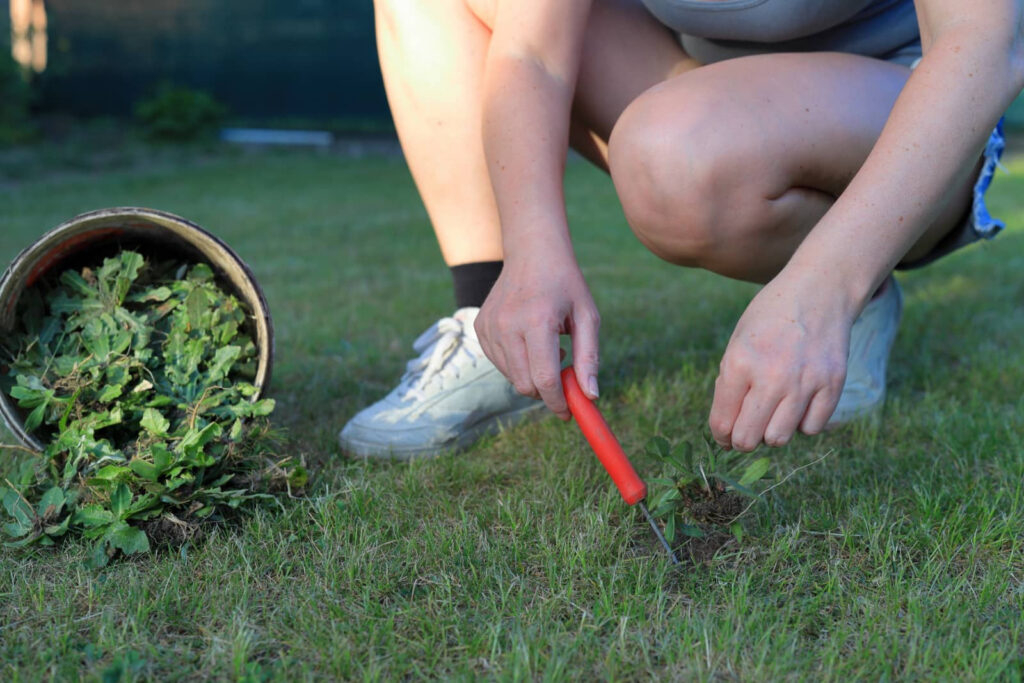
Pull new weeds before they set seed.
You’re building a lawn team, not fighting alone. Stay consistent with these basics, and you’ll make your yard less inviting to weeds without harsh chemicals.
Use Corn Gluten Meal as a Pre-Emergent
Corn gluten meal can help stop weed seeds from sprouting when you apply it early in the season, before germination begins.
For best results, time your pre emergent application to match local germination timing. Spread corn gluten evenly, then water lightly so it settles into the soil surface.
Use it as a natural herbicide for weed suppression, but remember it won’t kill established weeds. Stick with organic lawn care habits, and avoid overdoing it; too much product can affect nutrient balance and soil health.
You’ll get the strongest results when you apply it consistently each year, right before weed seeds wake up.
If you’re part of a lawn care routine that values safer options, corn gluten can fit well and help you keep your yard cleaner.
Feed Your Lawn to Crowd Out Weeds
Give your grass the nutrients it needs, and it’ll naturally push out many weeds by growing thicker and stronger. Use organic lawn fertilization to steady growth, and keep soil health in mind so roots can spread well. When your turf stays dense, weeds get less light, space, and moisture.
Apply compost or a balanced organic fertilizer.
Mow high to help grass shade out seedlings.
Water deeply so roots grow deeper and tougher.
You don’t need fancy products; you need a consistent routine that supports your lawn from the ground up. Feed lightly but regularly, and check your soil each season.
As your grass fills in, you’ll notice fewer gaps for weeds to claim, and your yard will feel more welcoming and healthy for everyone.
When to Prevent Lawn Weeds in Grand Rapids?
In Grand Rapids, you should start weed prevention in early spring, before weeds get a strong foothold.
You’ll also want to stay on top of late summer growth, when weeds can spread fast in thin turf.
Finish the season with fall weed control so your lawn heads into winter healthier and stronger.
Early Spring Timing
As soon as Grand Rapids lawns start greening up in early spring, you should focus on weed prevention before crabgrass and other annual weeds get established.
Watch spring growth closely and act when soil temperature stays consistently warm enough for weed seeds to wake up. You’ll protect the lawn best when you time organic steps with this first flush of growth.
- Mow high so turf shades soil and blocks seedling light.
- Rake out winter debris to help grass fill in quickly.
- Topdress thin spots with compost to strengthen crowded, healthy turf.
When your neighbors are seeing weeds, you can stay ahead by supporting dense grass now.
Early action helps your lawn join the season strong and keeps your yard feeling cared for.
Late Summer Prevention
Late summer is another key window for weed prevention in Grand Rapids lawns, especially if you want to stop fall-germinating weeds before they settle in.
You can stay ahead by mowing high, watering deeply but less often, and keeping your grass dense so weeds don’t get light or room. A thin organic topdressing can support soil health, while a slow-release, natural feeding helps roots strengthen for better drought resilience.
If you spot bare patches, overseed them right away so turf fills in before weeds move in. You’re building a lawn that works with your neighborhood, not against it.
Stay consistent now, and you’ll give your grass the best chance to crowd out unwanted growth later.
Fall Weed Control
Fall is one of the best times to prevent lawn weeds in Grand Rapids because many problem weeds start germinating as temperatures cool.
You can protect your lawn now by staying consistent and using organic habits that support thicker turf. Focus on:
- Seasonal mowing: keep grass at the right height so it shades out weed seeds.
- Fall mulching: add a clean layer around beds to block light and limit weed growth.
- Hand-pulling: remove young weeds before they set seed.
Water only when needed, and keep your lawn clear of leaves that smother grass.
When you act in fall, you give your lawn a stronger start next spring and help your yard stay part of a healthy neighborhood landscape.
Best Organic Weed Prevention Plan by Season
To keep weeds from gaining ground, you’ll want to adjust your organic lawn care by season.
In spring, overseed thin spots, mow high, and apply compost to help grass crowd out seedlings.
In summer, water deeply but less often, and let your turf stay a bit taller so roots stay strong.
In fall, use seasonal strategies like raking leaves, aerating compacted soil, and spreading a light layer of compost to support thick growth.
Winter is your planning season: test soil, sharpen tools, and choose organic alternatives such as corn gluten meal or mulching around lawn edges.
If you stay consistent, your yard becomes a healthier, more welcoming space where weeds don’t get an easy opening.
Frequently Asked Questions
Can Organic Weed Prevention Harm Pets or Children?
Yes, organic weed prevention can still affect your family if you use it carelessly. You should check labels, keep kids and pets off treated areas, and choose products that support pet safety and child safety.
Do Organic Methods Work on All Grass Types?
Not always; you’ll need to check grass compatibility first, since organic efficacy varies by turf type. You can still improve results with proper mowing, watering, and soil care, but some grasses respond better than others.
How Long Before Organic Treatments Show Results?
Organic treatments can feel like magic; you’ll usually see results in 1–3 weeks. Time your application correctly, and expect treatment duration to vary by product, weather, and weed pressure. Be patient, you’re not alone.
Can I Use Compost to Prevent Weeds?
Yes, you can use compost to prevent weeds. You’ll boost compost benefits by spreading a thin layer, which improves soil and supports weed suppression. Keep it weed-free and pair it with mulch for best results.
Are Natural Weed Barriers Better Than Mulch?
Natural weed barriers aren’t always better than mulch; you’ll often get better barrier effectiveness from thick mulch. Choose natural alternatives when you want shared, eco-friendly care, but keep them dense and refreshed.
Conclusion
You can prevent weeds by building a thick, healthy lawn with smart, simple steps. Mow high, water deeply but less often, and add compost to improve soil. Use corn gluten meal early as a natural pre-emergent, and pull new weeds before they spread. Feed your turf to help it crowd out invaders. With steady seasonal care, you’ll keep your grass greener, stronger, and far less weed-prone.
Recent Posts
Top 10 Weed Control Tips for West Michigan Lawns
If you want a cleaner West Michigan lawn, Weed Control starts with a weed plan
What Are the Best Seasonal Weed-Control Tips?
Could the best seasonal weed-control really come from timing more than effort? You can prevent
Why Is Spring Weed Control Crucial in Grand Rapids?
You might think spring weed control can wait, but in Grand Rapids, weeds like crabgrass