
Contents
Lawn aeration techniques can transform your yard into a fortress against pests. By using methods like core and spike aeration, you can greatly improve soil health, making your grass more resilient. These techniques foster a robust lawn ecosystem and disrupt pest lifecycles when timed correctly. So, how do you effectively implement these strategies to maximize their benefits? Let’s explore the details behind aeration and its role in pest control.
Key Takeaways
- Core aeration removes soil plugs, improving air and water penetration, which promotes healthier grass less susceptible to pests.
- Spike aeration punctures the soil surface, alleviating compaction and enhancing root development, making plants stronger against insect damage.
- Aerate during the growing season to disrupt pest life cycles and improve soil health, deterring pest populations.
- Combine aeration with natural pest deterrents and monitor soil moisture to maintain a vigorous and resilient lawn.
- Regular aeration fosters beneficial microorganisms, enhancing soil quality and creating a healthier environment for grass growth.
Understanding Lawn Aeration
Lawn aeration is an important technique for maintaining a healthy lawn, and understanding its mechanics can greatly enhance your pest control efforts. By creating small holes in the soil, you allow air, water, and nutrients to penetrate deeper, improving soil composition and promoting ideal root development. This process alleviates soil compaction, which is essential for healthy grass growth.
When roots can access more oxygen and necessary nutrients, they grow stronger and more resilient, making your lawn less susceptible to pests. The aeration process also encourages beneficial microorganisms in the soil, which play a considerable role in breaking down organic matter and improving soil health.
Regular aeration, particularly during peak growing seasons, can greatly impact the overall health of your lawn. By fostering robust root systems, you create an environment that’s less favorable for pest infestations, ensuring your lawn thrives as a lush, green space for you and your community.
Benefits of Lawn Aeration for Pest Control
Lawn aeration greatly improves soil health by enhancing microbial activity and nutrient availability, which helps create an environment less conducive to pests.
With better soil aeration, your lawn can absorb water more effectively, reducing standing water that attracts unwanted insects.
Additionally, addressing compaction issues allows roots to grow deeper and stronger, promoting a healthier lawn that can naturally resist pest infestations.
Improved Soil Health
While you mightn’t immediately think of aeration as a pest control strategy, improving soil health through this technique plays an essential role in creating an environment that deters unwanted insects.
Aeration enhances the soil microbiome, fostering a diverse community of beneficial microorganisms that outcompete harmful pests. By breaking up compacted soil, you promote better nutrient availability for your grass, enabling it to thrive and resist pest infestations.
Healthy, robust plants are less susceptible to damage from insects, as they can better withstand stressors. Additionally, an aerated lawn allows roots to grow deeper, further enhancing plant health.
Enhanced Water Absorption
When soil is aerated, it greatly enhances water absorption, which is essential for maintaining a healthy lawn that can resist pests.
Aeration creates small holes in the ground, allowing water to penetrate deeper into the soil. This improved water retention means your grass can access moisture more effectively, helping it thrive even during dry spells.
As the moisture levels rise, your lawn becomes more resilient against pests, as a well-hydrated grass is less susceptible to infestations.
Additionally, enhanced water absorption promotes healthier root systems, enabling your lawn to fend off disease more efficiently.
Reduced Compaction Issues
Compaction issues in soil can severely hinder grass health and increase vulnerability to pests, but aeration effectively alleviates these problems.
By creating holes in the soil, aeration enhances soil structure, allowing air, water, and nutrients to penetrate deeper. This process breaks up compacted layers, which is essential for root growth and overall lawn health.
With improved soil aeration, compaction prevention becomes manageable, enabling your grass to thrive. As your lawn grows healthier, it naturally becomes more resilient against pests.
Additionally, a well-aerated lawn fosters beneficial microorganisms that further enhance soil quality.
Timing Your Lawn Aeration
Timing your lawn aeration is essential for maximizing its benefits, particularly when it comes to pest control. You’ll want to take seasonal considerations and weather conditions into account to ensure optimal results.
Here are some key points to remember:
Aerate in the growing season: For cool-season grasses, early spring or early fall is ideal. For warm-season grasses, late spring to early summer works best.
Monitor soil moisture: Aerate when the soil is moist but not overly wet to avoid clumping.
Avoid extreme weather: Don’t aerate during droughts or heavy rains; these conditions can hinder effectiveness.
Observe pest activity: Timing your aeration to coincide with pest lifecycle stages can disrupt their reproduction and feeding patterns.
Different Aeration Techniques
When it comes to lawn aeration, understanding the different techniques is essential for effective pest control.
Core aeration involves removing plugs of soil to improve air and water penetration, while the spike aeration method simply punctures the soil surface, which can also help alleviate compaction.
Each technique has its own benefits, and knowing when to use them can greatly enhance your lawn’s health and resilience against pests.
Core Aeration Benefits
Although many homeowners overlook the importance of aeration, core aeration offers significant benefits for promoting a healthy lawn and controlling pests. This technique involves removing small plugs of soil, allowing air, nutrients, and water to reach the roots more effectively.
By incorporating core aeration into your lawn maintenance routine, you can enjoy the following advantages:
Improved soil structure: Breaks up compacted soil, enhancing root growth.
Enhanced nutrient absorption: Helps your grass absorb essential nutrients more efficiently.
Increased water retention: Allows for better water infiltration, reducing runoff and drought stress.
Pest control: Promotes a more resilient lawn that can naturally resist pests and diseases.
Investing in core aeration can lead to a thriving lawn environment for you and your family.
Spike Aeration Method
The spike aeration method is a popular alternative to core aeration, especially for homeowners looking for a simpler, more accessible technique.
This method involves using a tool with sharp spikes to puncture the soil, creating holes that allow air, water, and nutrients to penetrate deeper.
While spike aeration doesn’t remove soil plugs like core aeration, it effectively loosens compacted soil, which can help combat lawn pests by improving overall lawn health. Healthier grass is better equipped to resist pest invasions.
You can perform spike aeration using a handheld tool or a machine, making it suitable for various lawn sizes.
Regularly practicing spike aeration can enhance your lawn’s resilience, making it a practical choice for effective pest control.
Equipment Used in Lawn Aeration
Several types of equipment can enhance the effectiveness of lawn aeration, each designed to tackle specific soil conditions and lawn sizes.
When you’re ready to aerate, you’ll want to reflect on the right aeration tools and machines that best suit your needs:
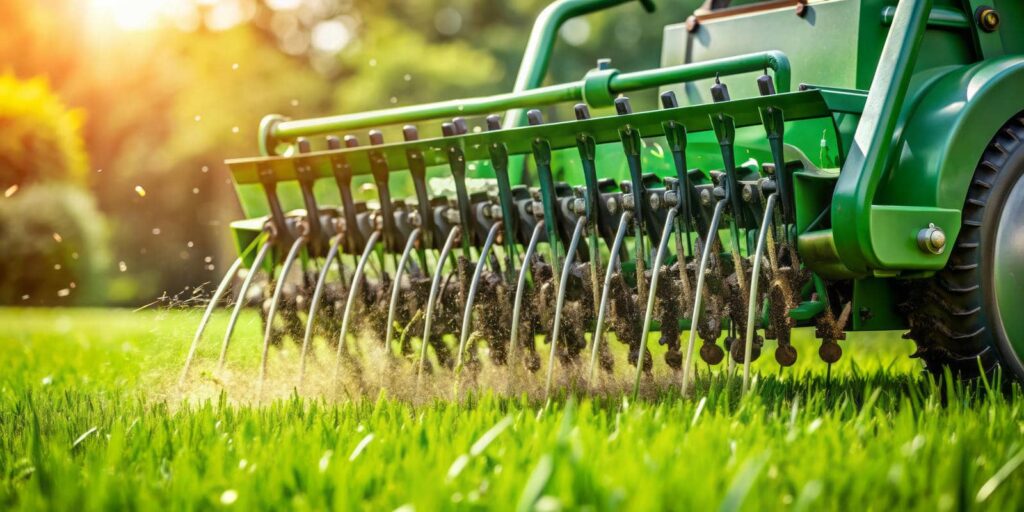
Core Aerators: These machines remove plugs of soil, allowing for maximum airflow and nutrient absorption.
Spike Aerators: Ideal for small lawns, these tools simply poke holes into the ground but don’t remove soil.
Tow-Behind Aerators: Perfect for larger lawns, these attach to mowers and cover vast areas efficiently.
Manual Aerators: For those seeking a workout, these handheld tools allow you to aerate smaller patches by foot power.
Choosing the right equipment ensures a healthier lawn, promoting better growth and pest control.
Make certain to evaluate your lawn’s specific requirements before selecting the best aeration machines for your project.
Steps for Core Aeration
To successfully perform core aeration, follow these essential steps that ensure excellent results for your lawn.
First, gather your lawn aeration tools, such as a core aerator—either a manual or powered version. Choose a day when the soil is moist, as this will facilitate easier penetration.
Next, mow your lawn to a shorter height, allowing the aerator to work effectively.
Begin the core aeration process by walking in straight lines across the lawn, ensuring you overlap slightly with each pass to avoid missing areas. Aim for a density of holes about every 4 to 6 inches for optimal airflow.
After aeration, leave the soil plugs on the surface to decompose and enrich your soil.
Finally, consider overseeding or fertilizing your lawn to maximize the benefits of aeration. Following these steps will promote a healthier, pest-resistant lawn you can be proud of.
Tips for Effective Lawn Aeration
After completing core aeration, maximizing its benefits requires a few strategic tips.
To ensure your lawn thrives and remains pest-free, keep these essential practices in mind:
Monitor soil moisture: Regularly check moisture levels to prevent drought stress and promote healthy grass growth.
Choose the right time: Aerate during the growing season for your grass type to enhance recovery and nutrient uptake.
Practice pest identification: Keep an eye out for any signs of pests post-aeration, as this can help you tackle issues early and maintain a healthy lawn.
Apply a quality fertilizer: Post-aeration is an ideal time to fertilize, as the holes allow nutrients to penetrate deep into the soil.
Post-Aeration Lawn Care
Post-aeration lawn care is crucial for ensuring your lawn recovers effectively and thrives. After aerating, proper maintenance practices like post-aeration watering and post-aeration fertilization are critical. Watering helps the grass absorb nutrients and reduces stress. Fertilizing, on the other hand, replenishes the soil with essential nutrients that may have been depleted.
Here’s a concise guide to your post-aeration care:
| Task | Timing | Purpose |
|---|---|---|
| Post Aeration Watering | Immediately after | Helps grass recover and absorb nutrients |
| Post Aeration Fertilization | 1-2 weeks later | Provides crucial nutrients for growth |
| Mowing | 3 weeks after | Encourages lateral growth |
| Regular Monitoring | Ongoing | Ensures lawn health and pest control |
Adhering to this care routine will help your lawn flourish, fostering a vibrant, healthy outdoor space for you and your community.
Integrating Aeration With Pest Management Strategies
While lawn aeration primarily focuses on enhancing soil health and promoting grass growth, it also serves as a valuable tool in your pest management strategy.
By understanding pest behavior and integrating aeration with other control methods, you can create a healthier lawn that’s less susceptible to lawn pests.
Consider these strategies:
- Aerate during peak pest seasons to disrupt breeding cycles.
- Combine aeration with natural pest deterrents like beneficial nematodes or insecticidal soaps.
- Monitor soil moisture levels post-aeration to maintain turf vigor and deter pests.
- Educate yourself and neighbors about local pest patterns to strengthen community efforts against infestations.
Final Thoughts
Incorporating lawn aeration into your pest control strategy creates a vibrant contrast between a thriving ecosystem and a pest-ridden landscape. By choosing core or spike aeration, you enhance airflow and water absorption, fostering healthy grass that can withstand insect pressures. Timing your aeration with pest life cycles further disrupts their development. With effective post-aeration care and integration into broader pest management, you’re not just maintaining a lawn; you’re cultivating a sanctuary for beneficial organisms while keeping pests at bay.
Recent Posts
10 Best Spring Weed Prevention Tips for Lawns
Soil temperature is the hidden trigger that can influence when weeds emerge and compete with
5 Spring Weed Prevention Tips for Healthy Lawns
Spring weeds can take over fast, but you can stay ahead of them with a
Why Prevent Spring Weeds in Your Lawn?
You might not realize that spring weeds do more damage than just looking messy. They