
Contents
Soil temperature is the hidden trigger that can influence when weeds emerge and compete with your lawn. Best Spring Weed Prevention starts with checking your lawn early, timing pre-emergent treatments correctly, and pairing spring fertilizer with consistent mowing, spot control, and bare-patch repair. If you also remove young weeds before they seed and keep turf dense through aeration and overseeding, you can reduce future weed pressure and build a healthier lawn throughout the season.
Key Takeaways
- Apply pre-emergent herbicide in early spring when soil warms, then water lightly to activate the weed barrier.
- Mow at the proper height and avoid cutting more than one-third of the blade to shade soil and suppress seedlings.
- Inspect lawns weekly for bare spots, thin areas, and early weed seedlings, then remove weeds immediately before they spread.
- Test soil pH and improve soil health with aeration and compost so turf grows thick and resists weed invasion.
- Overseed and fill bare areas early, while using spot treatments only on visible weeds for precise control.
Start Weed Prevention in Early Spring
As soon as the soil begins to warm in early spring, you should start weed prevention before annual weeds germinate and spread. Track soil temperature, because timing matters more than the calendar. When it reaches the threshold on your product label, apply a pre-emergent herbicide evenly across the lawn and water it in lightly to activate the barrier.
You’ll protect your grass best when you match treatment to seasonal timing and local conditions. Mow at the proper height, keep blades sharp, and avoid scalping, since dense turf shades the soil and helps crowd out seedlings.
If you’re part of a lawn-care routine with neighbors, stay consistent across shared spaces so weeds don’t move back in. Acting early gives your lawn the strongest start.
Check Your Lawn Before Weeds Sprout
Before weeds sprout, you should inspect your lawn for early growth, especially in thin turf and along edges.
Check bare patches closely, since these areas let weeds establish fastest.
You should also assess soil conditions, because compaction, moisture, and pH can affect weed pressure.
Spot Early Weed Growth
Where should you look first? Walk your lawn in a slow grid and scan turf edges, sidewalks, and shaded corners. You’re looking for the first signs of weed identification: tiny cotyledons, fine-textured seedlings, or leaves that don’t match your grass.
Early detection matters because small plants are easier to manage before they spread. Keep a simple record of what you see, and compare shapes, color, and growth habit from week to week. If you spot a suspicious patch, note the location and monitor it closely.
Stay consistent with your checks, especially after warm rains, when germination can accelerate. When you catch early weed growth fast, you protect the whole lawn and stay part of a yard care routine that works.
Inspect Bare Patches
Bare spots deserve your attention because weeds often establish there first.
Walk your lawn and mark thin areas, footpaths, and mower-turn zones before spring growth takes off. In each patch, remove debris and note whether grass is missing from traffic, shade, or damage.
Healthy turf closes gaps fast, so you want to support recovery early. If the surrounding grass looks weak, plan lawn aeration to reduce compaction and improve root access to air.
Keep an eye on soil health by watching how quickly the area dries after rain and how evenly nearby grass greens up.
When you treat bare patches quickly, you strengthen the whole lawn and stay in step with your neighborhood’s clean, cared-for look.
Check Soil Conditions
Check your soil conditions now so you can spot problems before weeds sprout. Test your soil pH with a home kit or lab sample, then adjust it to match your grass type. Most lawns perform best when pH stays near neutral, because nutrient uptake improves and turf fills in faster.
Also check organic matter by feeling the topsoil and reviewing test results. Low organic matter can mean weak structure, poor moisture holding, and thin turf that invites weeds. If needed, aerate, topdress with compost, and avoid overwatering. You’ll build a denser lawn that competes better and helps your neighborhood look cared for.
Recheck the soil each spring so you can catch shifts early and stay ahead of weed pressure.
Apply Pre-Emergent at the Right Time
Apply pre-emergent before weed seeds germinate, not after you see sprouts. You’ll get the best control when soil temperatures reach the target range for crabgrass and other annual weeds, usually as spring warms in your area.
Watch local soil data and calendar cues so your pre-emergent timing matches germination, not guesswork. Use the label rate and choose application methods that spread product evenly across the lawn. A calibrated spreader helps you avoid skips and overlaps, which can weaken results.
Water it in lightly if the label says so, then keep traffic low for a short period. When you time it right, you protect the turf you’re growing with the rest of your lawn team.
Time Spring Fertilizer to Support Weed Control
Once pre-emergent is in place, time your spring fertilizer to support dense turf and reduce room for weeds.
You’ll get better results when you match nutrient timing to active grass growth, not just the calendar. Choose fertilizer types that fit your lawn’s needs: a balanced blend for general recovery, or a slow-release formula if you want steadier feeding.
Apply after soil temps rise and your grass starts moving, so roots can use the nutrients efficiently. Avoid heavy early applications that push weak top growth before the lawn can compete.
Feed evenly, water it in as directed, and keep your schedule consistent. When you and your lawn stay in sync, turf thickens faster, and weeds have less space to take hold.
Mow at the Right Height for Weed Prevention
You should mow at the ideal height for your grass species to keep the turf dense and competitive.
Taller grass blades shade the soil surface, which helps suppress weed germination and growth.
Keep your mower blades sharp and avoid cutting too much at once so you don’t stress the lawn.
Optimal Mowing Height
Mowing at the right height helps your turf shade the soil, which makes it harder for weed seeds to germinate and establish. You should match mowing techniques to your grass type and keep blades sharp so each cut stays clean.
Follow the ideal frequency for your lawn, and don’t remove more than one-third of the leaf blade at once.
- Cool-season grasses often perform best at 3 to 4 inches.
- Warm-season grasses usually stay healthiest at 1.5 to 3 inches.
- Raise the deck in spring if growth slows or stress appears.
- Keep clippings on the lawn unless they clump.
When you stay consistent, you support denser turf, fewer gaps, and stronger weed suppression.
Shade Weeds Naturally
Keeping turf a bit taller is one of the simplest ways to shade out weeds naturally. When you mow too low, you open the soil surface and give weed seeds the light they need to germinate.
Keep your blade high enough to support strong leaf density and better shade tolerance in your grass. That thicker canopy creates natural barriers, reducing space for crabgrass, chickweed, and other spring invaders.
For most lawns, aim to remove no more than one-third of the blade at a time and maintain a consistent cutting schedule. You’ll help your turf compete better, hold moisture longer, and recover faster after stress.
Water Deeply to Build Strong Roots
Watering deeply, rather than lightly and often, encourages grass roots to grow farther into the soil, where they can access moisture more reliably and compete better against emerging weeds.
You’ll improve root strength and moisture retention when you soak the turf thoroughly, then let the surface dry before watering again. That rhythm trains grass to search deeper, not stay dependent on shallow moisture.
Join other lawn owners who water early in the day so less water evaporates and the canopy dries faster.
- Apply enough water to wet the root zone.
- Water less often, but more thoroughly.
- Check soil moisture with a probe.
- Adjust timing after rain or heat.
Patch Bare Spots Before Weeds Spread
Bare soil is an open invitation for weeds, so patch any thin or empty spots as soon as you find them. Rake out debris, loosen the top layer, and add a thin mix of compost and quality topsoil to support soil health.
Then spread seed that matches your existing turf, press it in, and keep the area evenly moist until it establishes. If you use sod, trim it to fit tightly so weeds can’t exploit gaps.
Good lawn maintenance means acting fast, because exposed soil heats up, dries out, and invites unwanted growth. By filling bare areas early, you protect your lawn’s density, improve recovery, and help your yard stay unified, healthy, and ready for the season.
Pull Young Weeds Before They Seed
Pull young weeds as soon as you spot them so they don’t compete with your grass for water, light, and nutrients.
Use a hand tool or pull by the base to remove the root before the plant matures. Acting early stops seed production and limits future weed spread across your lawn.
Early Weed Removal
Remove young weeds as soon as they appear so they don’t get a chance to flower and drop seed into the lawn. You’ll protect turf health by scouting weekly and using early weed identification to catch seedlings before roots deepen.
A small hand trowel, hoe, or weeding knife gives you effective removal techniques with less soil disturbance.
- Check moist soil after rain for easy pulls
- Grip weeds low and remove the full crown
- Refill small gaps with soil and turf seed
- Inspect edges, thin spots, and compacted areas
Work in short sessions so you stay ahead of growth and keep your lawn community clean. Acting early saves time, reduces competition for water and nutrients, and helps your grass fill in faster.
Seed Spread Prevention
Stopping weeds before they set seed is one of the most effective ways to reduce future infestations in your lawn. You should inspect weekly and pull young weeds as soon as you spot them, especially after rain when roots release easily.
Remove the entire crown and taproot, then bag the debris so no mature seed returns to the soil. This habit protects your stand and supports better seed selection when you overseed, since fewer weed seeds compete with seedlings.
Match your turf variety to local conditions so it fills gaps quickly and shades the soil. Dense turf leaves less room for germination, helping your yard stay uniform, healthy, and part of a lawn care routine you can trust.
Spot-Treat Weeds Without Damaging Turf
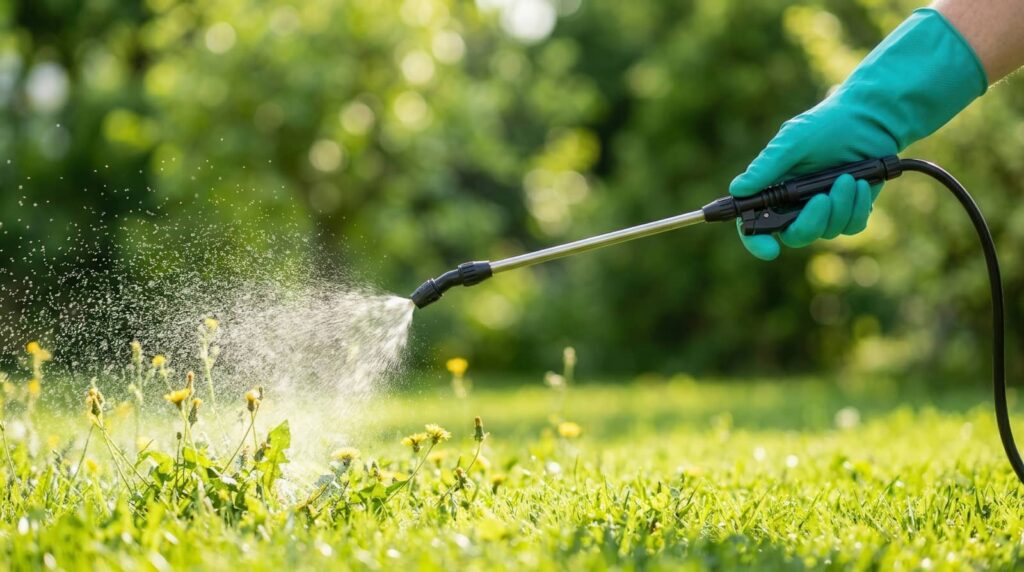
When a few weeds break through your lawn, spot-treat them with a targeted post-emergent herbicide instead of spraying the whole yard. You’ll protect turf and still correct trouble fast.
Choose a calm day, read the label, and apply only to visible weeds. For smaller areas, natural herbicides can work, but test first; some products still stress grass. Use a shielded sprayer or foam applicator for precise targeted application, and keep drift off neighboring blades.
- Identify the weed before treating
- Mix only the labeled rate
- Spray leaves, not soil
- Recheck in 7 to 14 days
You’re not alone in this step; careful treatment keeps your lawn looking clean and intentional without extra damage.
Keep Your Lawn Thick Through Spring
A thick lawn crowds out weeds by shading soil and leaving less room for new seedlings to germinate.
You can keep turf dense by mowing at the right height, watering deeply but infrequently, and feeding it on a spring schedule that matches your grass type.
Use lawn aeration techniques to relieve compaction and improve root growth, especially in high-traffic areas.
Overseed thin patches early so your grass fills gaps before weeds move in.
When you plan grass variety selection, choose cultivars that suit your climate, sun exposure, and maintenance routine.
That helps you build a stronger stand with fewer bare spots.
Stay consistent now, and you’ll join the group of homeowners who spend less time fighting weeds and more time enjoying a healthy lawn.
Frequently Asked Questions
Can I Use Pre-Emergent on Newly Seeded Lawns?
Usually, you shouldn’t use pre-emergent on newly seeded lawns; it can stop grass seed too. Time it after establishment, following label directions and newly seeded considerations, so you protect your turf and still fit in.
Which Weed Killers Are Safe Around Pets and Children?
For pets and kids, you’ll want pet safe options like iron-based herbicides or vinegar sprays; natural alternatives help, too. As they say, better safe than sorry—keep them off treated areas until dry.
How Often Should I Sharpen Mower Blades in Spring?
You should sharpen mower blades every 20 to 25 hours of use in spring. Good mower maintenance includes checking blade sharpening monthly, since dull blades tear grass, reduce health, and leave your lawn looking neglected.
Will Spring Rain Wash Away Weed Prevention Products?
Yes, spring rain can reduce product effectiveness if you apply too soon, but light rain after activation helps. Check labels, time applications before dry periods, and you’ll protect your lawn with confidence.
What’s the Best Way to Identify Grassy Weeds Early?
You’ll spot grassy weeds early by checking color, blade width, and growth pattern—ironic, since the tiniest impostors betray themselves fastest. Use weedy identification techniques and early weed spotting at lawn edges, holes, and disturbed soil.
Summary
By staying ahead of weeds now, you set your lawn up for a cleaner, stronger spring. Check for weak spots, time pre-emergent properly, and keep mowing, watering, and fertilizing on schedule. Pull new weeds before they spread, and spot-treat only where needed. Think of your lawn as a shield: the denser you keep it, the harder it is for weeds to break through. Stay consistent, and you’ll win the season.
Recent Posts
5 Spring Weed Prevention Tips for Healthy Lawns
Spring weeds can take over fast, but you can stay ahead of them with a
Why Prevent Spring Weeds in Your Lawn?
You might not realize that spring weeds do more damage than just looking messy. They
5 Fall Turf Restoration & Fertilization Tips
Before you apply any fall fertilizer, you need to know what your turf is missing.