
Contents
Many gardeners overlook the impact of soil health on weed growth, yet it’s an essential factor in organic weed control. By optimizing your garden’s conditions, you can greatly reduce weed pressure. This discussion will explore practical strategies such as mulching, hand weeding, and planting cover crops that suppress weeds while enhancing soil quality. Understanding these methods could transform your approach to gardening and yield better results.
Key Takeaways
- Apply a 2- to 4-inch layer of organic mulch around plants to suppress weeds and retain moisture.
- Utilize natural herbicides like vinegar and salt for eco-friendly weed control solutions.
- Hand weed regularly, ensuring to remove entire root systems to prevent regrowth.
- Encourage healthy soil by adding organic amendments like compost to boost microbial diversity.
- Plant cover crops to naturally suppress weeds and enhance soil health through nutrient addition.
Mulching for Effective Weed Suppression
When you want to keep weeds at bay, mulching is one of the most effective strategies you can employ. By applying a layer of organic material like straw, wood chips, or grass clippings, you create a barrier that prevents sunlight from reaching the soil. This simple act notably reduces weed germination and growth.
Additionally, mulching enhances moisture retention in your garden, which is essential for healthy plant development. The mulch acts like a sponge, absorbing rainwater and providing a consistent moisture supply to your plants. This means less frequent watering for you and healthier plants overall.
To maximize the benefits, apply a 2- to 4-inch layer of mulch around your plants, ensuring it doesn’t touch the stems. Regularly replenish the mulch as it breaks down.
With this straightforward technique, you’re not just managing weeds; you’re fostering a flourishing garden that invites connection and growth.
Utilizing Natural Herbicides
While many gardeners rely on chemical herbicides, utilizing natural herbicides can be an effective and eco-friendly alternative for managing weeds. Natural ingredients like vinegar, salt, and essential oils can help you target unwanted plants without harming the environment.
For instance, vinegar’s acetic acid dries out weeds when applied directly, making it a powerful option.
When using natural herbicides, consider the application methods that work best for your garden. Spray vinegar on a sunny day for maximum effect, or mix salt with water for a more concentrated solution.
Always test these natural solutions on a small area first to ascertain they won’t damage your desired plants.
Hand Weeding Techniques
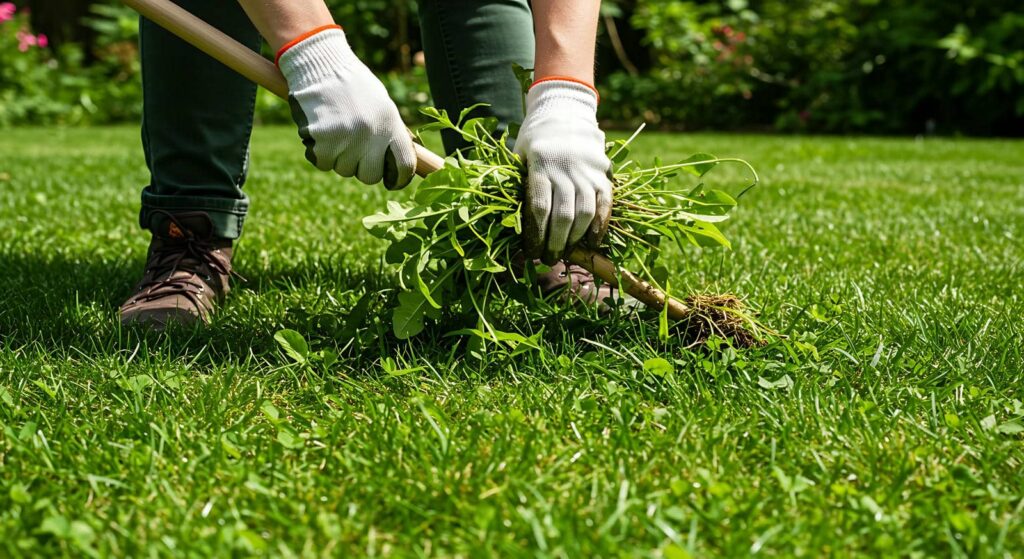
Hand weeding is one of the most effective methods for controlling weeds in your garden. By using hand pulling, you can target specific weeds without disturbing the surrounding plants. It’s important to pull the entire root system to prevent regrowth; otherwise, you might find yourself facing the same pesky weeds again.
For larger areas, consider incorporating hoe techniques. A hoe can help you cultivate the soil and uproot weeds effectively. Position the hoe at a slight angle and use a swift motion to slice through weeds just below the soil surface. This method allows for quicker weeding while maintaining the integrity of your garden.
Remember to wear gloves and stay consistent with your weeding routine, ideally after a rain when the soil is softer.
Encouraging Healthy Soil Health
Healthy soil is the foundation of a thriving garden, as it provides essential nutrients, retains moisture, and supports beneficial organisms. To encourage healthy soil, start by incorporating organic soil amendments like compost, well-rotted manure, or leaf mold.
These enrich the soil and boost microbial diversity, which is vital for nutrient cycling. Regularly testing your soil can help you understand its nutrient levels and pH balance, allowing you to tailor your amendments effectively.
Avoiding chemical fertilizers is key, as they can disrupt the delicate balance of soil life. Instead, focus on practices that promote a variety of microorganisms, such as mulching and maintaining proper moisture levels.
Planting Cover Crops for Prevention
Planting cover crops can greatly enhance your garden’s resilience against weeds and other pests. By integrating these crops into your routine, you create a natural barrier that suppresses weed growth while improving soil health.
Cover crops like clover or rye boost soil diversity, adding nutrients and organic matter. This practice also supports beneficial microorganisms, fostering a thriving ecosystem beneath the surface.
Incorporating crop rotation with cover crops can further disrupt weed cycles. As you rotate different species, you confuse persistent weeds and reduce their chances of survival. You’re not just combating weeds; you’re enriching your garden’s overall health.
Embracing cover crops cultivates a sense of community among gardeners who prioritize sustainable practices. By sharing experiences and tips, you contribute to a collective commitment to organic gardening.
Frequently Asked Questions
What Types of Mulch Are Best for Weed Suppression?
Wood chips and straw bales are excellent for weed suppression. They block sunlight, retain moisture, and enrich the soil as they decompose. Using them together can create a strong barrier against unwanted growth in your garden.
How Often Should I Apply Natural Herbicides?
Applying natural herbicides every two to four weeks can feel like wielding a magic wand against weeds. Monitor their growth and adjust your herbicide application timing to ensure maximum effectiveness and a thriving garden.
When Is the Best Time for Hand Weeding?
The best time for hand weeding is early morning or after rain, as the soil is moist, making weeds easier to pull. Using effective hand weeding techniques during ideal weeding times maximizes your garden’s health and appearance.
How Can I Improve Soil Health Naturally?
You’re not alone in wanting to improve soil health—everyone’s doing it! Use compost for its myriad benefits, and consider natural soil amendments like bone meal or green manure. Healthy soil equals happy plants, right?
What Cover Crops Work Best for My Region?
For your region, consider legumes like clover and vetch for nitrogen fixation or grasses such as rye for erosion control. Tailor your cover crop selection to your specific regional climate for ideal results and soil health.
Summary
By combining mulching, hand weeding, and planting cover crops, you can create a thriving garden free from pesky weeds. Isn’t it rewarding to see your plants flourish while maintaining a healthy ecosystem? Remember, taking proactive steps keeps your garden beautiful and improves soil health in the long term. With these practical tips, you’ll be well on your way to mastering organic weed control in Ada, ensuring your garden thrives season after season.
Recent Posts
Top Plants for Grand Rapids Landscaping Success
When planning your landscape in Grand Rapids, you’ll want to focus on plants that thrive
Why Seasonal Lawn Care Matters in Grand Rapids?
In Grand Rapids, the fluctuating climate demands a strategic approach to lawn care. Seasonal changes
5 Essential Practices for a Healthy Kentwood Lawn
Imagine a lush, green carpet stretching across your yard, inviting you to step outside and