
Contents
Is your lawn struggling under the weight of invasive weeds? Mastering effective weed control is essential for maintaining a healthy garden ecosystem. By analyzing various application techniques, you can tailor your approach to fit specific needs. From organic practices to targeted herbicide use, each method has its merits. Understanding the nuances of these strategies can make all the difference in achieving ideal results. What techniques truly stand out for your unique challenges?
Key Takeaways
- Regularly maintain your lawn by mowing at the proper height to prevent weed growth and promote grass health.
- Enhance soil health through aeration and adding organic matter to create a robust environment for desired plants.
- Utilize mulching around garden beds to effectively suppress weed growth and retain soil moisture.
- Employ hand-pulling for small infestations before weeds have a chance to set seed.
- Choose eco-friendly options, such as boiling water or companion planting, for targeted and chemical-free weed control.
Why You Should Control Weeds in Your Lawn
Controlling weeds in your lawn is essential for aesthetic appeal and for promoting overall grass health. Weeds compete with your grass for critical resources like sunlight, water, and nutrients, ultimately weakening your lawn. This competition can lead to patchy growth and reduced vigor, making your yard less inviting.
By effectively managing weed populations, you enhance lawn aesthetics, creating a lush, uniform appearance that fosters a sense of pride among homeowners. Research shows that a well-maintained lawn improves property values and contributes positively to the environment.
As a result, investing time in weed control techniques is important for cultivating a thriving lawn that reflects your commitment to quality and community standards.
Identifying Common Weeds in Your Garden
A healthy lawn starts with understanding its ecosystem, which includes identifying common weeds that threaten its importance.
You’ll want to recognize the identifying characteristics of these invaders, such as leaf shape, flower color, and growth habits. Common environments like shaded areas or compacted soil often harbor specific weeds.
For instance, dandelions thrive in open spaces, while clover prefers slightly acidic soils. Pay attention to seasonal growth patterns; knowing when these weeds emerge helps you strategize your management efforts.
Additionally, be on the lookout for invasive species, as they can rapidly outcompete your desired plants. By mastering identification, you create a strong foundation for effective weed management in your garden.
Effective Weed Control Methods for Your Lawn
To effectively manage weeds in your lawn, you’ll need to deploy a combination of strategies tailored to your specific situation.
Start with regular lawn maintenance, which includes mowing at the correct height to promote healthy grass while preventing weed seed production. Incorporate practices that enhance soil health, such as aeration and organic matter addition, to create a less favorable environment for weeds.
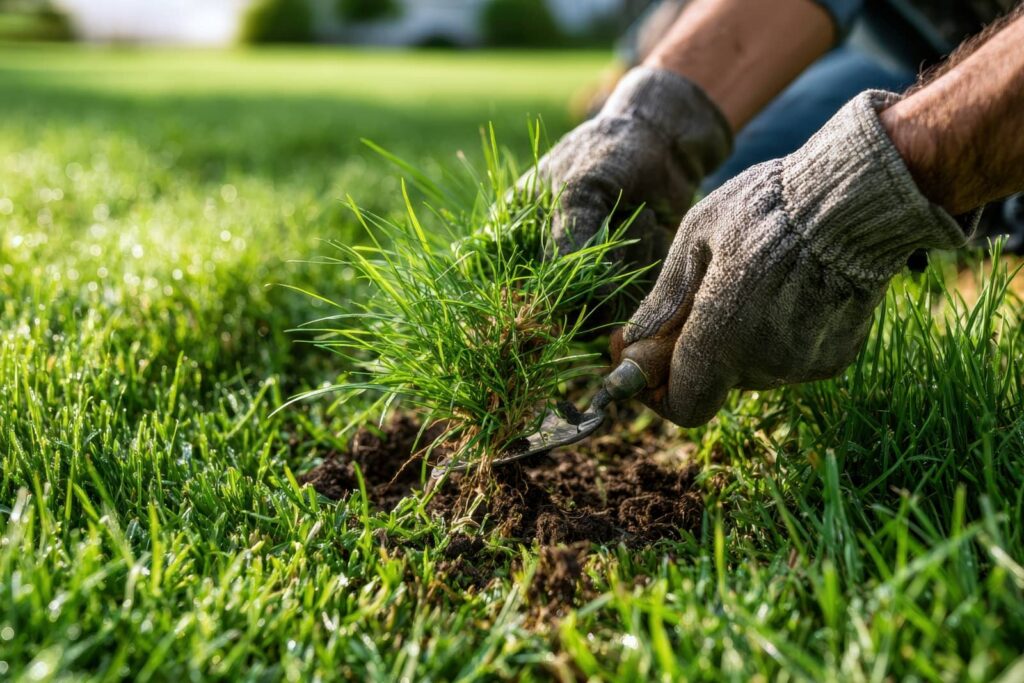
Consider mulching around garden beds to suppress weed growth while retaining moisture. Additionally, hand-pulling can be effective for small infestations, especially when done before weeds set seed.
How to Safely Apply Herbicides and Pesticides
Applying herbicides and pesticides safely requires careful planning and adherence to best practices.
To ensure herbicide safety and effective pesticide application, follow these guidelines:
Read Labels: Always read and understand product labels for specific instructions.
Wear Protective Gear: Use gloves, masks, and goggles to minimize exposure.
Choose Ideal Weather: Apply products during calm, dry conditions to prevent drift and runoff.
Store Safely: Keep all chemicals in a locked, ventilated area away from children and pets.
Eco-Friendly Ways to Control Weeds
Five effective eco-friendly methods can substantially reduce weed growth while promoting a healthier ecosystem.
First, consider organic mulching; it suppresses weeds and retains soil moisture, enhancing plant health.
Second, companion planting is another strategic approach, as certain plants can naturally deter weeds and pests, fostering a balanced garden environment.
Third, implementing crop rotation disrupts weed life cycles, reducing their prevalence.
Fourth, manual weeding, though labor-intensive, allows for precise control over unwanted plants without chemicals.
Finally, using boiling water can effectively kill weeds in targeted areas.
When to Apply Your Chosen Weed Control Method?
Timing your weed control application is essential for effectiveness.
You’ll need to evaluate ideal strategies based on the growth stage of the weeds and seasonal conditions.
Optimal Timing Strategies
When selecting the ideal moment for your chosen weed control method, understanding the life cycle of both the weeds and the desired crops is essential. The timing significance of your application can drastically influence effectiveness.
Recognizing seasonal patterns aids in pinpointing the best application window. Here are key considerations:
Weed emergence: Apply controls just as weeds begin to sprout.
Crop growth stages: Align treatments with critical growth periods of your crops.
Weather conditions: Favor dry, calm days for applications to reduce drift and increase absorption.
Regrowth potential: Target weeds before they can reseed or recover.
Seasonal Considerations For Application
Although the effectiveness of weed control methods hinges on various factors, seasonal considerations play a pivotal role in determining the right application timing.
Timing your application during spring emergence allows you to target young, actively growing weeds, maximizing control efficiency. Conversely, applying treatments during fall dormancy can prevent weed resurgence by disrupting their life cycles before dormancy sets in.
Research shows that understanding these seasonal patterns is essential for effective weed management. By aligning your strategy with natural growth cycles, you enhance the chances of successful weed suppression.
How to Solve Common Weed Control Problems?
To effectively tackle common weed control problems, it’s essential to first identify the specific types of weeds plaguing your garden or lawn. Understanding their characteristics allows you to implement targeted strategies for preventing weed growth while maintaining soil health.
Here are some approaches to evaluate:
Mulching: Apply organic or inorganic materials to suppress weed growth.
Proper Mowing: Keep your grass at the appropriate height to outcompete weeds.
Crop Rotation: Change planting patterns to disrupt weed life cycles.
Soil Testing: Analyze soil health to optimize nutrient levels and discourage weed proliferation.
Frequently Asked Questions
What Tools Are Essential for Effective Weed Control?
For effective weed control, you’ll need tools like mulch for suppression and organic herbicides to target unwanted plants. Combining these methods enhances your garden’s health and promotes a sustainable, vibrant ecosystem you can be proud of.
How Do Weather Conditions Affect Weed Control Effectiveness?
Weather conditions greatly impact your weed control efforts. Temperature fluctuations can influence herbicide effectiveness and weed germination. Understanding these weather patterns helps you time applications for maximum efficacy, ensuring a healthier, weed-free environment for your plants.
Can Weeds Be Beneficial for Soil Health?
Yes, weeds can enhance soil health. Their diversity contributes to improved soil structure, promoting beneficial microbial activity. By fostering a varied ecosystem, you create resilience against erosion and nutrient depletion, ultimately benefiting your garden or agricultural system.
What Common Mistakes Should I Avoid During Weed Control?
Avoid common misconceptions like over-reliance on herbicides. Implementing preventative measures, such as regular monitoring and proper timing, can greatly enhance your weed control efforts, ensuring a healthier environment for your plants and soil.
How Can I Prevent Weeds From Returning After Treatment?
To prevent weeds from returning, implement effective prevention strategies like mulching and regular monitoring. Combine these with long-term maintenance practices, such as proper mowing and fertilization, to create an environment that discourages weed growth.
Final Thoughts
By mastering weed control, you’re not just cultivating a lush, vibrant lawn; you’re creating a thriving ecosystem. Picture your garden, free from the chokehold of invasive weeds, where healthy grass sways gently in the breeze and blooms burst with color. Employing a mix of techniques—whether organic methods or precise herbicide application—will empower you to maintain this balance. Continue refining your approach, and you’ll transform your outdoor space into a sanctuary of growth and beauty.
Recent Posts
10 Best Spring Weed Prevention Tips for Lawns
Soil temperature is the hidden trigger that can influence when weeds emerge and compete with
5 Spring Weed Prevention Tips for Healthy Lawns
Spring weeds can take over fast, but you can stay ahead of them with a
Why Prevent Spring Weeds in Your Lawn?
You might not realize that spring weeds do more damage than just looking messy. They