
Contents
You can prevent weeds naturally by making your lawn thick, healthy, and hard for invaders to take hold. Mow high, water deeply, and feed the soil with compost so grass builds strong roots and fills gaps before weeds do. A few simple habits, like overseeding thin spots and pulling weeds early, can make a big difference—especially when you know which step matters most next.
Key Takeaways
- Mow grass high and keep blades sharp to shade soil and weaken weed growth.
- Water deeply but less often to encourage strong roots and discourage weed germination.
- Feed and improve soil with compost or natural fertilizers to grow thicker, healthier turf.
- Overseed bare or thin spots quickly so grass crowds out weeds before they spread.
- Pull weeds by hand early, removing roots before they flower and set seed.
Start With a Thicker, Weed-Resistant Lawn
A thick, healthy lawn makes it harder for weeds to take hold because it crowds them out and leaves less bare soil for seeds to germinate. You can build that density with steady lawn care: mow at the right height, water deeply but not too often, and feed on a regular schedule.
When grass grows evenly, it shades the soil and reduces weed competition before weeds get established. You’ll also want to fix thin spots quickly by overseeding bare patches so your turf fills in fast.
Keep mower blades sharp so they don’t stress the grass, and avoid cutting too short, which weakens coverage. When you give your lawn the basics it needs, you join neighbors who enjoy a cleaner, stronger yard with fewer weeds.
Build Healthy Soil Naturally
Healthy soil gives your grass the support it needs to grow strong and crowd out weeds naturally. You can improve it by adding compost to feed microbes, boost moisture retention, and slowly release nutrients. Those compost benefits help your lawn stay resilient without extra chemicals.
Test your soil pH so you know whether it’s too acidic or too alkaline, then adjust it with the right natural amendments. Keep heavy clay from compacting by mixing in organic matter, and let roots breathe.
When you build living soil, you give your grass a healthier foundation and a better chance to join the thick, green lawn you want. Over time, that shared strength makes weeds less welcome and less able to take hold.
Mow High to Crowd Out Weeds
Mow your grass high so it can shade the soil and make it harder for weed seeds to sprout. When you keep a taller turf, your lawn grows denser and captures more light before weeds can use it. That’s one of the simplest mowing benefits you can use right away.
Aim for the top end of your grass height range, and don’t scalp the lawn. Cutting too short weakens roots and leaves open space for weeds to move in. Instead, trim often enough that you never remove more than a third of the blade.
You’ll help your lawn stay strong, look fuller, and feel like part of a healthy, weed-fighting team.
Water Deeply, Not Often
Water deeply and less often so your grass sends roots farther down, where they’ll stay stronger and healthier.
This also keeps the topsoil drier between waterings, which helps cut down on weed seed germination.
Over time, you’ll train your turf to handle dry spells better and compete more effectively.
Deep Roots Grow Stronger
Deep roots make a stronger lawn because they can reach moisture below the surface and crowd out weeds more effectively.
When you water deeply, you train grass to send roots downward instead of staying weak at the top. That supports root development and helps your turf handle heat, foot traffic, and dry spells with less stress.
You’ll also encourage soil aeration as roots push through compacted layers and improve movement of air and water.
- Water long enough to soak the root zone.
- Let the top inch dry before watering again.
- Keep a steady schedule during hot, dry periods.
- Check your lawn’s response and adjust as needed.
With this approach, you’re helping your lawn join the stronger, healthier group that naturally resists weeds.
Reduce Surface Weed Germination
By soaking the soil less often but more thoroughly, you keep the surface from staying damp long enough for weed seeds to sprout.
You’ll support your lawn and the rest of your yard by watering early enough for moisture to reach the roots, then letting the top inch dry between sessions. This simple habit is one of the most reliable weed prevention techniques because it makes the seedbed less inviting.
Avoid frequent light sprinklings, which only feed shallow weeds. If you’re dealing with stubborn patches, combine smart watering with hand-pulling or targeted natural herbicides.
When you water with purpose, you help your grass compete better and join other homeowners who keep lawns cleaner with less effort. Consistency matters, and small changes add up fast.
Encourage Drought-Tolerant Turf
A lawn that can handle dry spells naturally starts with deep, infrequent watering that trains roots to grow downward.
You’re building turf resilience, not just keeping grass green today. When you water less often, your lawn learns to search for moisture below the surface, where it’s safer from heat and foot traffic. That makes it a better fit for drought strategies that also discourage thirsty weeds.
- Water early, so less evaporates.
- Soak the soil 6 to 8 inches deep.
- Let the top layer dry before watering again.
- Choose drought-tolerant turf varieties suited to your climate.
With steady habits, you join the homeowners who keep lawns thicker, tougher, and naturally more weed-resistant without extra effort.
Mulch Bare Spots Before Weeds Start
Mulch any bare soil as soon as you spot it, and you’ll help block weed seeds from sprouting.
A fresh layer also keeps the ground covered and helps hold in soil moisture. This simple step cuts down on weed growth before it starts.
Cover Bare Soil
When you leave soil exposed, weeds move in fast, so cover bare spots with mulch before they get a chance. You’re protecting your lawn’s soil coverage and creating natural barriers that help you stay ahead.
Choose shredded bark, compost, or fine wood chips, then spread them evenly over thin areas. Keep the layer light enough for grass edges to breathe, but thick enough to block sunlight and hold moisture.
- Clear debris first.
- Add 2 to 3 inches of mulch.
- Keep mulch off stems and crowns.
- Refill thin spots after heavy rain.
Block Weed Seeds
By mulching bare spots early, you stop weed seeds from reaching light and settling into open soil. You give your lawn a head start by creating natural barriers that keep troublemakers out.
Spread a 2- to 3-inch layer of organic mulch around trees, shrubs, and garden edges where grass hasn’t filled in yet. This blocks seed germination, cushions the soil, and helps your space look cared for and welcoming.
Keep mulch a few inches away from stems and trunks so plants can breathe. Check thin areas after wind or rain, then top them off before weeds move in.
When you act quickly, you protect your yard and join other homeowners who rely on simple, proven habits to keep weeds from taking over.
Retain Soil Moisture
Keeping bare spots covered helps the soil hold moisture, which gives nearby plants a better chance to fill in before weeds take over. You can mulch thin patches with shredded leaves, straw, or compost to improve moisture retention and steady soil temperature. This keeps roots comfortable and discourages weed seeds from sprouting.
- Spread a thin, even layer over exposed soil.
- Keep mulch a few inches from crowns and stems.
- Water lightly after you mulch so it settles.
- Check after rain and refill washed areas.
When you protect open ground, you help your lawn act like a team, with every plant doing its part. That shared cover saves water, supports growth, and makes weed pressure easier to manage.
Use Corn Gluten Meal With Caution
Corn gluten meal can help suppress weed seeds, but you shouldn’t treat it like a guaranteed fix. You’ll get the best results when you pay close attention to corn gluten and application timing, since it works only before seeds sprout.
Spread it evenly on a dry lawn, then water lightly to activate it. If you apply it too late, weeds can still break through.
You should also know that corn gluten may slow new grass seed from germinating, so don’t use it where you’re reseeding.
Think of it as one tool in your natural lawn care routine, not the whole plan. When you combine it with healthy mowing, watering, and feeding habits, you give your lawn a stronger, more welcoming edge against weeds.
Pull Weeds Before They Seed
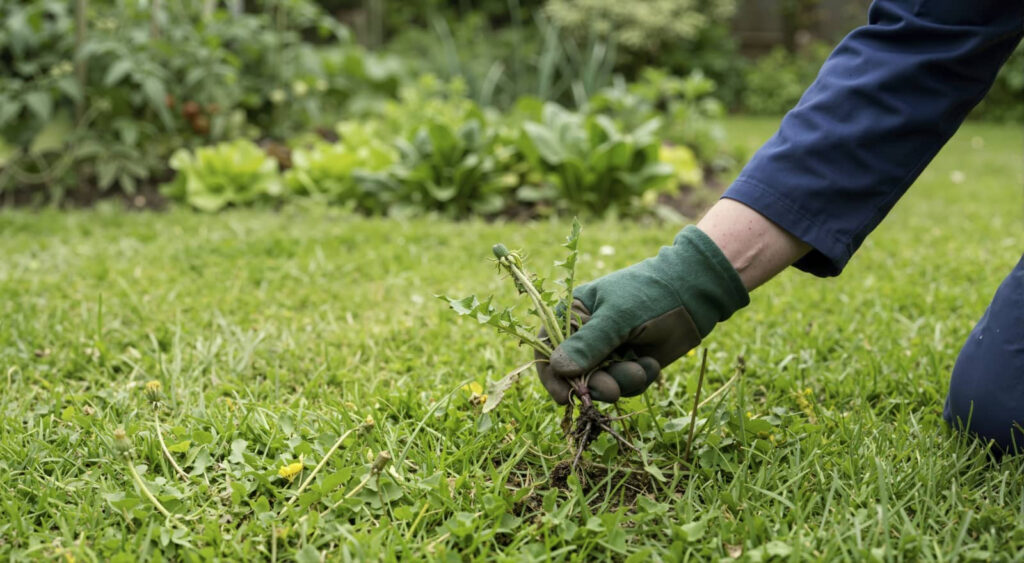
Hand-pulling weeds works best when you catch them early, before they flower and set seed. You can protect your lawn and feel confident using a simple routine.
Spot weeds weekly and use weed identification techniques so you know what to remove.
Grasp the plant low, loosen the soil, and pull the whole root out.
Bag seedheads right away so you don’t spread more weeds across the yard.
Follow up with mulch or natural herbicide options where needed.
Wear gloves, pull after rain for easier removal, and keep a small trowel handy.
When you stay on top of new growth, you help your lawn stay healthier, thicker, and more welcoming for you and everyone who enjoys it.
Overseed Thin Areas Each Fall
When your lawn starts to look thin, overseed those bare spots in early fall so new grass can fill in before weeds take over. You’ll help your turf thicken up and crowd out invaders with simple overseeding techniques.
Mow a little shorter, rake lightly to expose soil, and spread seed evenly so it touches the ground. Keep the area moist until seedlings establish, and avoid heavy foot traffic while they grow.
This kind of fall maintenance gives grass cool weather and fewer weed competitors, so your lawn can recover with less effort. If you seed the same way each year, you’ll build a denser, more resilient yard that looks healthy, feels welcoming, and stays better protected against future weed pressure.
Fertilize to Favor Grass, Not Weeds
Feed your lawn on purpose, because the right fertilizer helps grass grow thick and strong enough to crowd out weeds.
Choose natural fertilizers that feed soil life and support an ideal nutrient balance, so your turf grows steadily instead of spiking into weak, weedy growth. You’re part of a smarter lawn care crew when you feed with intention.
Test your soil before you spread anything.
Pick a slow-release, natural product matched to your grass type.
Apply in the right season, not on guesswork.
Water lightly after feeding to move nutrients into the root zone.
Skip overfeeding, since excess nitrogen can invite weeds and runoff.
When you fertilize correctly, you help your lawn stay dense, resilient, and welcoming.
Frequently Asked Questions
What Grass Types Naturally Resist Weeds Best?
Fescue varieties resist weeds best, especially tall and fine fescues. You’ll also boost clover benefits by mixing in white clover, which crowds weeds, fixes nitrogen, and helps your lawn stay fuller and tougher naturally.
Can Natural Weed Prevention Work in Shady Lawns?
Yes, you can prevent weeds naturally in a shady lawn, but you’ll face shady lawn challenges. You should mow higher, improve soil, and add natural ground covers that crowd weeds while fitting your landscape.
How Long Does Overseeding Take to Show Results?
Like seeds waking after winter, you’ll usually see overseeding timeline changes in 2–4 weeks, with fuller overseeding benefits in 6–8 weeks. You’ll fit in easier when you water, mow lightly, and stay patient.
Are There Pet-Safe Natural Weed Prevention Methods?
Yes—pet-safe natural weed prevention methods include organic mulching, hand-pulling, and dense mowing. You can also try homemade sprays made from vinegar and water, but avoid spraying plants your pets roam near.
When Is the Best Time to Apply Corn Gluten Meal?
Apply corn gluten meal just before weed seeds sprout, usually early spring and again in early fall. You’ll get the best corn gluten benefits when your application timing matches soil temperatures and before rain.
Summary
You don’t have to wage war on weeds to beat them. Ironically, the best defense is simply giving your grass what it wants: richer soil, a higher mow, deep watering, and a little extra seed in thin spots. Pull weeds before they brag with seed heads, and treat corn gluten meal like a helper, not a miracle. Keep at it, and your lawn gets fuller, tougher, and far less welcoming to unwelcome guests.
Recent Posts
7 Best Organic Lawn Weed Prevention Tips
If you want fewer weeds without relying on harsh chemicals, start by improving the lawn
What Organic Methods Prevent Weeds in Lawns?
Prevent Weeds in Lawns organically by building a thicker, healthier lawn that naturally leaves less
Top 10 Weed Control Tips for West Michigan Lawns
If you want a cleaner West Michigan lawn, Weed Control starts with a weed plan