
Contents
Did you know that healthy soil can boost your lawn’s resilience? This remarkable statistic underscores the importance of effective soil enrichment techniques. By understanding how to enhance your soil, you can markedly improve your lawn’s health and appearance. From composting to aeration, each method offers unique benefits. Let’s explore these seven essential techniques to create a thriving, lush lawn that stands out in your neighborhood.
Key Takeaways
- Compost Addition: Incorporate nutrient-rich compost to enhance soil structure, moisture retention, and microbial diversity for healthier lawn growth.
- Mulching: Use organic mulch to retain moisture, suppress weeds, and enrich soil as it decomposes, promoting a thriving lawn ecosystem.
- Cover Crops: Plant cover crops like legumes to fix nitrogen in the soil, improving fertility and overall soil health.
- Regular Aeration: Aerate your lawn to reduce compaction, improve water penetration, and enhance nutrient absorption for robust grass growth.
- Soil Testing: Conduct soil tests to identify nutrient deficiencies and adjust amendments for optimal pH and nutrient balance.
Understanding Soil Health
Microbial diversity plays a vital role in nutrient cycling and disease suppression. When you have a wide range of microorganisms, they work together to break down organic matter, enriching your soil naturally.
On the other hand, soil texture affects water retention and aeration. Sandy soils drain quickly, while clay soils retain moisture. By analyzing your soil’s texture, you can make informed decisions about amendments and irrigation.
Fostering a healthy balance between microbial life and proper texture creates an environment where your lawn can thrive, making it a welcoming space for friends and family.
Composting: A Natural Way to Enrich Your Lawn
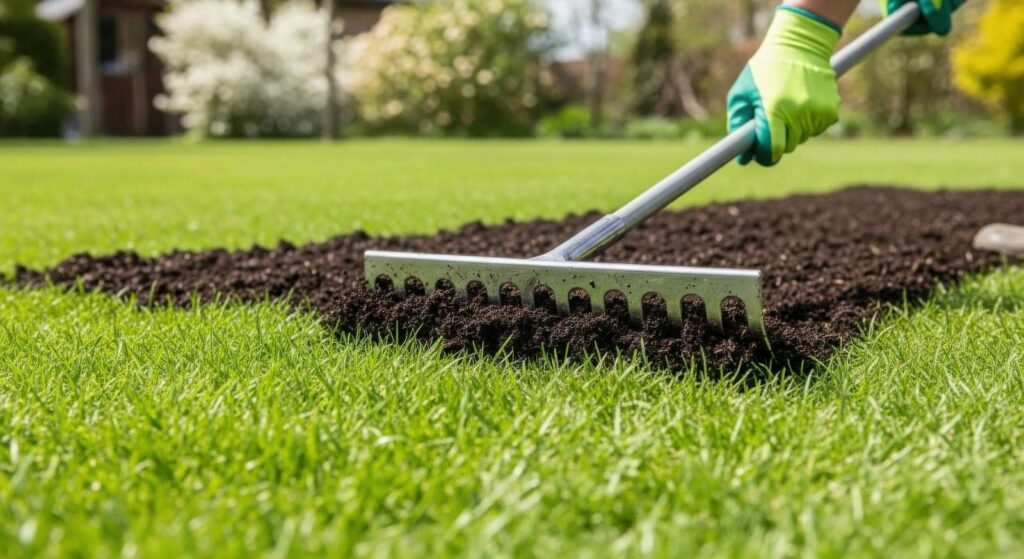
Composting offers a practical solution to enhance your lawn’s soil health while recycling organic waste. By transforming kitchen scraps and yard debris into nutrient-rich compost, you reap significant compost benefits. This natural fertilizer improves soil structure, promotes beneficial microorganisms, and enhances moisture retention.
You can choose from various compost types, such as hot composting for rapid results or cold composting for a more hands-off approach. Both methods enrich your lawn while reducing landfill waste.
Incorporating compost into your lawn care routine fosters a sense of community and environmental responsibility. As you share your knowledge and experiences with others, you’ll inspire a collective effort towards healthier, more vibrant lawns.
Embrace composting, and watch your lawn thrive!
Why Mulching Is Essential for Soil Enrichment
While many lawn care techniques focus on nutrients and fertilizers, mulching stands out as an essential practice for enriching your soil. By applying a layer of organic materials, you’re not just improving aesthetics; you’re enhancing soil health.
The mulch benefits include moisture retention, which reduces the need for frequent watering. As it breaks down, it also adds crucial nutrients back into the soil, fostering a thriving ecosystem. This organic matter encourages beneficial microorganisms, promoting nutrient cycling.
Plus, it helps suppress weeds, allowing your grass to flourish without competition. Embracing mulching creates a nurturing environment, connecting you with nature and your community of fellow lawn enthusiasts. It’s a simple yet powerful way to support your lawn’s long-term health and vitality.
How Cover Crops Enhance Soil Health
Cover crops are a powerful tool for enhancing soil health, primarily through nitrogen fixation and erosion control.
By planting these crops, you can naturally enrich your soil with essential nutrients while minimizing soil loss during heavy rains.
Understanding how to effectively use cover crops can transform your lawn into a thriving ecosystem.
Nitrogen Fixation Benefits
Nitrogen fixation plays an essential role in enhancing soil health, especially when you incorporate cover crops into your lawn care routine. By planting legumes like clover or vetch, you naturally enrich your soil with important nitrogen sources.
These plants work symbiotically with specific bacteria to convert atmospheric nitrogen into forms that your lawn can easily absorb. This process boosts microbial activity in the soil, which is essential for breaking down organic matter and improving nutrient availability.
As a result, your grass becomes greener, healthier, and more resilient. Embracing cover crops enhances your lawn’s vitality and fosters a sense of community among those who value sustainable practices.
Erosion Control Strategies
Incorporating cover crops into your lawn care enriches nitrogen levels and serves as an effective strategy for erosion control.
These crops act as natural vegetation barriers, helping to protect your soil from wind and water erosion. By promoting slope stabilization, cover crops can considerably reduce runoff and improve water retention in your lawn.
Consider these benefits of using cover crops:
- Protects bare soil from erosion
- Enhances soil structure and fertility
- Reduces weed competition
- Increases biodiversity in your lawn
- Improves moisture retention
Why Aeration Is Key to Lawn Soil?
Aeration plays an essential role in lawn care by enhancing nutrient absorption and improving water penetration.
When you aerate, you create channels in the soil that allow vital nutrients and moisture to reach grass roots more effectively.
This process not only promotes healthier growth but also fosters a more resilient lawn.
Enhanced Nutrient Absorption
While many homeowners focus on the surface appearance of their lawns, understanding the importance of aeration reveals its critical role in enhancing nutrient absorption.
Aeration improves soil structure, allowing nutrients to penetrate deeper, promoting effective nutrient cycling. This process boosts microbial activity, essential for breaking down organic matter and releasing nutrients.
By aerating your lawn, you create a thriving ecosystem that supports healthy growth.
- Increases oxygen levels in the soil
- Enhances root development
- Promotes beneficial microbial activity
- Aids in effective nutrient cycling
- Reduces soil compaction
Incorporating aeration into your lawn care routine will help ensure that your grass receives the nutrients it needs to flourish, creating a vibrant and healthy landscape for you and your family.
Improved Water Penetration
Understanding how aeration enhances nutrient absorption naturally leads to the topic of water penetration.
Aeration is vital for improving water retention in your lawn’s soil. When soil compaction occurs, it restricts water movement, causing uneven moisture distribution. By aerating your lawn, you create small holes that allow water to seep deeper into the ground, breaking through compacted layers.
This process not only improves drainage but also promotes better root growth by allowing roots access to both water and nutrients. As a result, your lawn will thrive, displaying vibrant color and resilience.
Regular aeration is essential for maintaining ideal soil health, ensuring your grass can absorb water efficiently and flourish in its environment.
Best Organic Fertilizers for Lawn Health
When it comes to maintaining a lush, healthy lawn, choosing the right organic fertilizers can make all the difference.
These fertilizers not only enrich the soil with organic matter but also help achieve a balanced nutrient profile crucial for growth. By selecting the right products, you ensure your lawn thrives naturally.
Consider these top organic fertilizers:
- Compost: Adds essential nutrients and improves soil structure.
- Fish Emulsion: Provides a quick nutrient boost with trace minerals.
- Bone Meal: Rich in phosphorus, it promotes root development.
- Kelp Meal: Enhances overall plant health with micronutrients.
- Manure: A great source of nitrogen, it enriches the soil’s organic content.
Using these options will substantially enhance your lawn’s health and resilience.
Testing Soil pH for Optimal Lawn Conditions
To ensure your lawn thrives, testing soil pH is essential, as it directly influences nutrient availability and plant health.
By conducting a soil test, you can determine your pH levels and understand your soil composition. This knowledge helps you achieve the right nutrient balance, ensuring your lawn gets what it needs to flourish.
Use testing methods like kits or professional services to assess your soil’s acidity or alkalinity. Seasonal testing is a smart practice, as it allows you to make timely adjustments.
If your pH isn’t ideal, explore amendment options like lime or sulfur to optimize conditions.
Frequently Asked Questions
How Often Should I Enrich My Lawn Soil?
You should enrich your lawn soil once or twice a year. Regular soil testing helps maintain nutrient balance, ensuring your lawn thrives. Adjust your approach based on test results to keep it healthy and vibrant.
Can Soil Amendments Harm Existing Plants?
Yes, soil amendments can harm existing plants if incorrectly applied. Plant sensitivity varies, so understanding soil amendment effects is essential. Always test your soil and consult guidelines to avoid damaging your cherished greenery.
What Is the Best Time to Aerate My Lawn?
You should aerate your lawn in spring or fall, depending on your grass type. Spring aeration encourages growth, while fall aeration helps recover from summer stress. Choose the right time to promote a thriving lawn.
How Do I Know if My Soil Is Healthy?
You can know your soil’s healthy by conducting soil testing. It reveals pH levels and nutrient balance, helping you identify deficiencies. Regular testing ensures your lawn thrives, fostering a vibrant community of lush greenery.
Are Chemical Fertilizers Better Than Organic Options?
You might think chemical fertilizers are magic potions, but organic options usually offer better nutrient release over time. While chemicals give a quick boost, organic practices build soil health, so consider which suits your lawn best.
Recap
By implementing these seven soil enrichment techniques, you’re not just nurturing your lawn—you’re setting the stage for a vibrant, thriving outdoor space. Imagine stepping onto lush, green grass, feeling its softness underfoot, and knowing you’ve cultivated this beauty through your efforts. But what if you could reveal even greater potential? As you continue to refine your approach, remember: the journey to a stunning lawn is ongoing, and each step you take can lead to unexpected rewards.
Recent Posts
Why Prevent Spring Weeds in Your Lawn?
You might not realize that spring weeds do more damage than just looking messy. They
5 Fall Turf Restoration & Fertilization Tips
Before you apply any fall fertilizer, you need to know what your turf is missing.
What Is the Best Fall Turf Restoration Plan?
Last fall, one small patch in a client’s lawn turned into a full repair job