
Contents
When managing your lawn, using natural weed repellents can be both effective and environmentally friendly. These alternatives to chemical herbicides target unwanted plants and promote soil health. You’ll find various options, from vinegar to corn gluten meal, each with distinct benefits. Understanding how to implement these methods can enhance your lawn care routine. Let’s explore the top five natural weed repellents that can help you achieve a healthier, weed-free lawn.
Key Takeaways
- Vinegar: A powerful herbicide alternative due to its acetic acid content, effective for killing weeds on contact.
- Boiling Water: Instantly destroys unwanted plants, making it a quick and easy solution for small areas.
- Salt: Dehydrates weeds effectively; use carefully to avoid damaging surrounding plants.
- Mulch: Suppresses weed growth while enriching soil, promoting a healthier garden ecosystem.
- Corn Gluten Meal: Acts as a natural pre-emergent herbicide, preventing weed seed germination effectively.
Why You Should Use Natural Weed Repellents
When you choose natural weed repellents, you’re not just opting for eco-friendly solutions; you’re also enhancing the health of your lawn.
These alternatives greatly reduce chemical runoff, promoting soil health and biodiversity in your garden. By using natural methods, you contribute to environmental benefits that resonate within your community, fostering a sense of belonging among like-minded individuals.
Additionally, natural weed repellents often prove to be more cost effective over time. They can reduce the need for expensive chemical treatments and minimize potential damage to your grass and surrounding plants.
Embracing these solutions nurtures your lawn and aligns your gardening practices with sustainable principles, creating a greener environment for everyone.
Top 5 Most Effective Natural Weed Repellents
Natural weed repellents offer effective alternatives to chemical solutions, ensuring your lawn remains vibrant and healthy.
Here are the top five options for your organic gardening needs:
Vinegar: Its acetic acid content acts as a potent herbicide alternative, killing weeds on contact.
Boiling Water: Pouring it over weeds is a simple, effective method that destroys unwanted plants instantly.
Salt: Use sparingly, as it dehydrates weeds but can also harm surrounding plants.
Mulch: A thick layer suppresses weed growth while enriching the soil.
Corn Gluten Meal: This natural pre-emergent herbicide prevents weed seeds from germinating.
Incorporating these methods can help you maintain a healthy lawn while embracing sustainable practices.
Best Practices for Applying Natural Weed Repellents
Applying natural weed repellents effectively requires careful consideration of timing, technique, and environmental conditions.
To enhance your results, focus on seasonal timing. Apply repellents during early spring or late fall when weeds are most vulnerable. Use application techniques like spot treatment for targeted areas, ensuring you minimize impact on desirable plants.
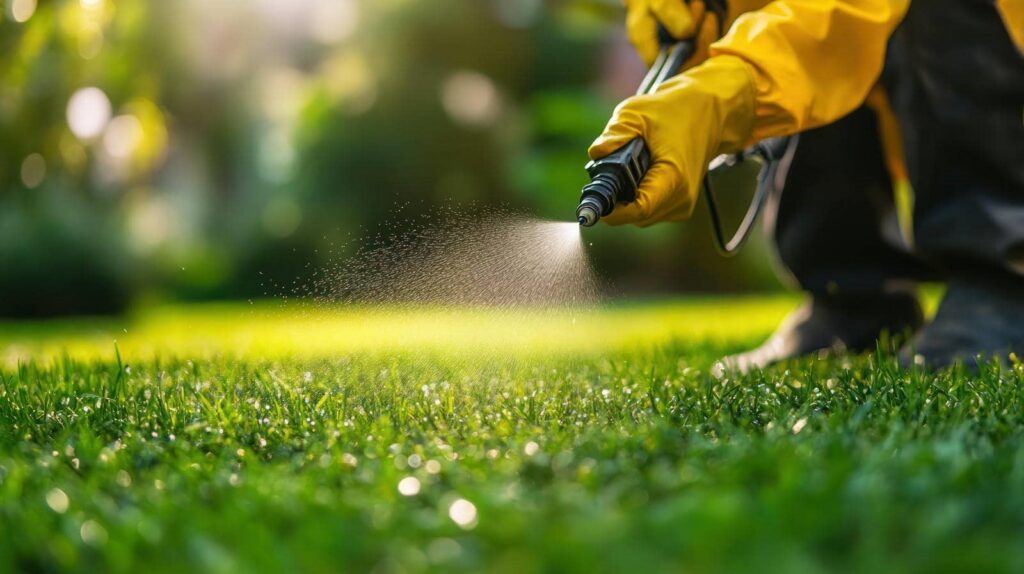
For liquid repellents, consider using a sprayer to achieve even coverage while avoiding drift. Always check the weather forecast; applying before rain can help activate the repellent but avoid windy days to prevent unintended spreading.
Additionally, monitor your lawn regularly to identify any emerging weeds, allowing for timely intervention. By following these best practices, you’ll foster a healthier lawn while maintaining a strong sense of community with fellow gardeners.
Integrating Weed Repellents With Lawn Care
Integrating weed repellents with your lawn care routine enhances the health of your grass and minimizes the competition for nutrients.
By combining these natural solutions with your regular maintenance, you’ll foster a thriving, lush lawn.
Here are some effective strategies:
Choose compatible repellents that align with your organic gardening principles.
Time applications to coincide with your lawn’s growth cycle for maximum effectiveness.
Monitor soil health to ensure nutrients are available, enhancing your grass’s resilience against weeds.
Employ diverse planting to create a natural barrier against invasive species.
Tips for Maintaining a Naturally Weed-Free Lawn
To maintain a naturally weed-free lawn, it’s essential to adopt a proactive approach that focuses on prevention rather than reaction. Regular lawn care practices like mowing at the correct height will promote healthy grass while inhibiting weed growth.
Make sure your soil health is ideal by testing pH levels and amending nutrients as needed. Aerating your lawn enhances root development and decreases compaction, creating an inhospitable environment for weeds.
Apply organic mulch around garden beds to suppress weed seeds. Finally, consider using companion planting techniques, as certain plants can repel weeds naturally.
Frequently Asked Questions
Are Natural Weed Repellents Safe for Pets and Children?
Yes, natural weed repellents can be safe for pets and children. Always check labels for pet-friendly options and follow safety precautions like keeping treated areas off-limits until dry to ensure everyone’s well-being.
How Long Do Natural Weed Repellents Last on Lawns?
Natural weed repellents typically last two to four weeks, depending on application techniques and weather conditions. For best effectiveness duration, apply evenly and consider reapplication after heavy rain or prolonged drought to maintain control.
Can I Make My Own Natural Weed Repellent at Home?
Yes, you can make your own natural weed repellent at home using homemade remedies. Essential oils like clove, peppermint, and tea tree effectively deter weeds, offering a safe, eco-friendly solution for your lawn care needs.
Do Natural Weed Repellents Harm Beneficial Insects?
Natural weed repellents can harm beneficial insects, with a reduction in populations. In organic gardening, you should choose repellents carefully to protect essential pollinators and maintain ecological balance.
How Do Weather Conditions Affect the Effectiveness of Natural Weed Repellents?
Weather patterns and humidity levels greatly impact natural weed repellents’ effectiveness. High humidity can enhance their potency, while extreme weather may dilute or wash away active ingredients, reducing their ability to deter unwanted growth effectively.
Final Thoughts
Using natural weed repellents protects your lawn and supports a healthier ecosystem. By opting for eco-friendly methods like vinegar or corn gluten meal, you can keep your lawn thriving while minimizing chemical exposure. Integrating these natural solutions into your lawn care routine can lead to a vibrant, weed-free landscape that benefits both your yard and the environment.
Recent Posts
5 Spring Tips for Organic Lawn Care
Spring offers a unique opportunity to transform your lawn into a lush, eco-friendly oasis. By
10 Best Organic Lawn Care Tips for Spring
Spring offers a prime opportunity to enhance your lawn organically. By focusing on soil health,
Spring Organic Lawn Care Tips for a Healthy Yard
If you’ve noticed patchy areas in your lawn after winter, it’s time to think about