
Contents
After turf restoration, you’ll need a sharp weed control plan to protect the stand as it establishes. Start by scouting thin areas and edges where pressure builds first, then target weeds with treatments that match the turf’s recovery stage and won’t add unnecessary stress. Just as important, keep mowing, irrigation, and fertility on point so the turf closes in fast and leaves weeds with fewer openings to exploit.
Key Takeaways
- Scout restored turf frequently, especially thin edges and disturbed areas, to catch spotty weed pressure early.
- Identify weed species before treatment and spot-spray only affected areas with label-approved herbicides.
- Use the lowest effective herbicide rate to protect new turf from unnecessary stress.
- Support turf recovery with proper mowing, deep infrequent watering, and balanced fertilization based on soil tests.
- Repair thin spots quickly, maintain clean equipment, and coordinate crew observations to prevent weeds from spreading.
Spot Weed Pressure in New Turf
As new turf settles in, you’ll often see spotty weed pressure before the stand fully thickens. You’re not failing; you’re reading an establishment phase.
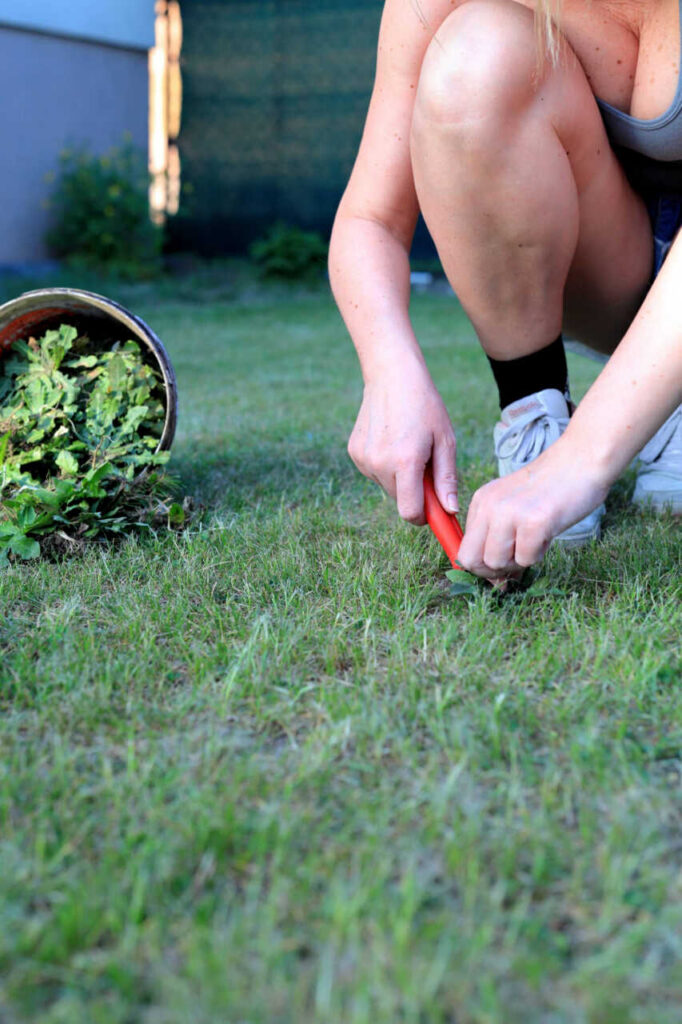
Use weed identification techniques early so you can tell broadleaf seedlings, grassy invaders, and sedges apart before they spread. Check thin areas, edges, and disturbed zones after watering or rainfall, when common turf weeds show fastest.
Flag problem spots, note leaf shape, growth habit, and emergence pattern, then compare them with your turf species and renovation timeline. Quick scouting helps you act with confidence and stay aligned with the rest of the crew.
When you catch pressure early, you protect uniform cover, reduce competition, and keep the new stand moving toward a denser, healthier finish.
Treat Weeds Without Harming New Turf
Once you’ve identified the pressure points, choose controls that target the weed without stressing young turf. You can protect new grass by matching the product to the weed stage and turf tolerance.
Use safe herbicides only when the label permits application on recently restored areas, and apply at the lowest effective rate. For light infestations, natural solutions can help you stay selective and avoid overcorrection.
- Spot-spray broadleaf weeds, not whole sections.
- Test any treatment on a small patch first.
- Water in only if the label requires it.
Keep your nozzle close, spray on calm days, and avoid mowing right before or after treatment.
When you work this way, you stay in control with the rest of the crew and give your turf a fair shot.
Prevent Future Weeds With Better Turf Care
Healthy turf is your best long-term weed defense, so focus on dense growth, steady recovery, and clean maintenance practices.
You can reduce weed pressure by dialing in mowing techniques that match your grass type and season. Keep blades sharp, mow at the right height, and never remove more than one-third of the leaf at once.
Water deeply but infrequently to push roots down and limit shallow weed germination. Schedule soil aeration when compaction builds, because open channels improve air, water, and nutrient movement.
Feed turf with balanced fertilizer based on soil testing, not guesswork. Repair thin spots fast with overseeding so weeds don’t claim bare ground.
Stay consistent, and your lawn team will keep weeds on the outside where they belong.
Frequently Asked Questions
When Should I First Mow Newly Restored Turf?
You should do the first mow once new turf reaches one-third above your mowing height, usually after roots anchor and blades can resist tugging. Keep your first mow sharp, light, and confident.
How Long Until New Turf Can Handle Foot Traffic?
Don’t rush it—new turf usually needs 3-6 weeks before light foot traffic. You should follow the turf establishment timeline and foot traffic guidelines, test rooting first, and avoid heavy use until it feels firmly anchored.
Can I Overseed After Applying a Weed Control Product?
Usually, you can’t overseed right after weed control. Check the label for overseeding timing, since many weed control methods block germination. You’ll fit in best by waiting the recommended interval, then seeding safely.
Which Weeds Require Professional Identification Before Treatment?
You’ll want professional identification for common weeds that mimic desirable turf, like nutsedge, spurge, dallisgrass, and poison ivy. Use identification methods like leaf shape, stem traits, and growth habit before you treat; you’ll avoid costly mistakes.
How Often Should I Test Soil After Turf Restoration?
Test your soil every 1–2 years after turf restoration, and sooner if growth stalls. You’ll track soil health and nutrient levels, then adjust amendments together, so your turf team stays coordinated and confident.
Wrap-Up
By scouting often, you’ll catch weed pressure early, especially in thin spots and along edges. By treating weeds with targeted, turf-safe herbicides, you’ll knock back invaders without setting new turf back. And by mowing, watering, and fertilizing correctly, you’ll build a dense lawn that keeps future weeds at bay. Stick with these basics, and you’ll stay ahead of the game, giving your restored turf the best shot at long-term success.
Recent Posts
How to Prevent Weeds Naturally in Lawns
You can prevent weeds naturally by making your lawn thick, healthy, and hard for invaders
7 Best Organic Lawn Weed Prevention Tips
If you want fewer weeds without relying on harsh chemicals, start by improving the lawn
What Organic Methods Prevent Weeds in Lawns?
Prevent Weeds in Lawns organically by building a thicker, healthier lawn that naturally leaves less