
Contents
If you want a lush, green lawn, lawn aeration is an essential step you shouldn’t overlook. Aeration alleviates soil compaction, allowing air, water, and nutrients to penetrate deeper, which promotes healthier grass growth. This process strengthens root systems and helps your lawn withstand stress from various factors. So, how can you tell if your lawn needs aeration? Let’s explore the signs and benefits that can transform your outdoor space.
Key Takeaways
- Lawn aeration alleviates soil compaction, allowing air, water, and nutrients to reach roots more effectively.
- It fosters healthier root systems, promoting stronger grass that withstands stress from foot traffic and drought.
- Aeration improves soil health and structure, contributing to a lush, green lawn and enhancing outdoor aesthetics.
- It reduces thatch buildup, preventing suffocation of grass and promoting robust growth.
- Regular aeration promotes biodiversity in your yard, benefiting the overall ecosystem and lawn vitality.
Understanding Lawn Aeration
Lawn aeration is an essential process that enhances the health and vigor of your grass, especially when soil compaction limits its growth. By perforating the soil with holes, you allow air, water, and nutrients to penetrate deeper into the ground. This improves your lawn’s overall health and promotes a robust soil structure, fostering healthier root systems.
When you aerate, you’re not just relieving compaction; you’re creating an environment where your grass can thrive. Regular aeration invigorates your lawn, leading to stronger turf that withstands stress from foot traffic, drought, and disease.
Benefits of Aerating Your Lawn
Aerating your lawn offers a multitude of benefits that go beyond just relieving soil compaction. By creating holes in the soil, you enhance air circulation, allowing essential nutrients and water to penetrate deeper. This process considerably improves soil health, fostering robust root growth.
When you establish a consistent aeration frequency—typically once or twice a year—you’ll notice a transformation in your lawn’s overall vigor.
Moreover, aeration helps reduce thatch buildup, which can suffocate your grass and lead to disease. Healthier grass means a lush, green lawn that enhances your outdoor space, making it a welcoming environment for family and friends.
You’ll enjoy the aesthetic appeal and contribute to the ecosystem by promoting biodiversity in your yard. Embrace the benefits of aerating your lawn, and you’ll cultivate a thriving landscape that you can be proud of for years to come.
Signs Your Lawn Needs Aeration
If your lawn shows signs of compacted soil, poor drainage, or thin grass coverage, it’s time to contemplate aeration.
Compacted soil restricts root growth, while poor drainage can lead to water pooling and disease.
Thin grass coverage indicates that your lawn is struggling to absorb nutrients, making aeration essential for revitalization.
Compacted Soil Issues
Because healthy grass thrives in well-aerated soil, recognizing the signs of compacted soil is essential for maintaining a vibrant lawn.
If you notice these issues, it’s time to evaluate aeration benefits:
- Poor Growth: Grass struggles to grow or appears sparse.
- Thatch Buildup: Excessive thatch inhibits nutrient absorption.
- Water Pooling: Water tends to collect rather than soak in.
- Footprints: Your footprints remain visible long after walking on the lawn.
These signs indicate soil compaction, which restricts root development and limits access to nutrients.
By addressing these issues through aeration, you’ll enhance soil structure, promote healthy grass growth, and create a lush, inviting space for family and friends.
Don’t wait—your lawn deserves it!
Poor Drainage Problems
When you notice water pooling on your lawn after a rainstorm, it’s a clear sign that poor drainage problems may be at play. This can lead to excessive water retention, suffocating your grass roots, and creating a breeding ground for pests and disease.
Low soil permeability is often the culprit, as compacted soil prevents water from draining effectively. Aeration can greatly improve this situation by creating small holes in the soil, allowing water, air, and nutrients to penetrate deeper.
This process enhances soil structure and boosts drainage, promoting healthier grass growth. If you want your lawn to thrive, addressing poor drainage through aeration is essential.
Don’t let standing water ruin your outdoor space—take action now!
Thin Grass Coverage
After tackling issues like poor drainage, you may notice another sign that your lawn needs attention: thin grass coverage. This can be frustrating, but recognizing the signs early can help restore your lawn’s health.
Here are some indicators of coverage issues:
Uneven Color: If you see patches of dull or yellow grass, it’s often a sign of inadequate roots.
Exposed Soil: Areas where soil is visible indicate that grass isn’t thriving.
Compacted Soil: If your lawn feels hard underfoot, it may restrict root growth.
Weed Proliferation: Weeds can easily invade thin grass areas, indicating a lack of healthy turf.
Addressing these issues with aeration can rejuvenate your lawn, ensuring it remains lush and vibrant for your family to enjoy.
Best Times to Aerate Your Lawn
Timing is essential for successful lawn aeration, and knowing the best times to aerate your lawn can greatly enhance its health.
The ideal seasons for aeration typically fall in early spring or early fall, depending on your grass type. Cool-season grasses thrive with fall aeration, while warm-season grasses benefit from spring.
When considering climate, pay attention to soil moisture and temperature. Aerating when the soil is slightly moist allows for easier penetration and reduces compaction.
Avoid aerating during extreme heat or drought, as it can stress your grass.
Aeration Techniques and Methods
There are several effective aeration techniques you can use to improve your lawn’s health and vigor. Understanding these methods will empower you to make the best choice for your yard.
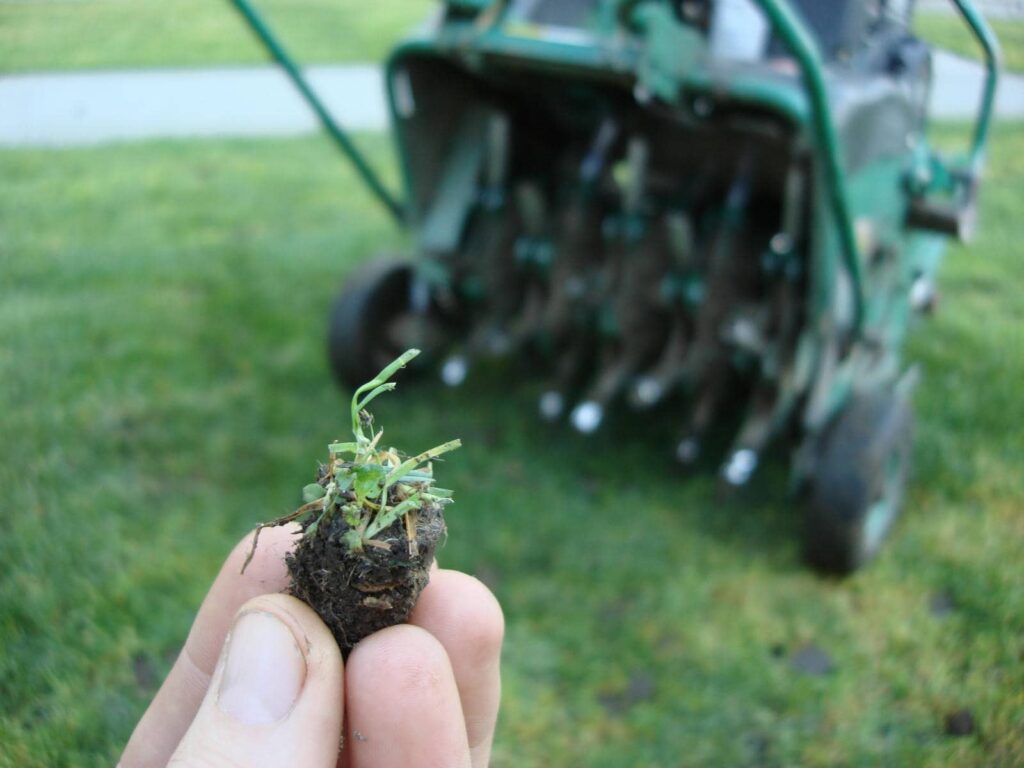
Core Aeration: This technique involves removing small plugs of soil to alleviate compaction and allow air, water, and nutrients to penetrate deeper into the soil.
Spike Aeration: Unlike core aeration, spike aeration uses solid tines to poke holes in the ground, which can relieve surface compaction but may not be as effective in improving soil structure.
Liquid Aeration: This method involves applying a liquid solution that breaks down soil compaction at a microscopic level, making nutrients more accessible.
Mechanical Aeration: Using powered equipment, this technique efficiently removes soil cores and is ideal for larger areas.
Tools Needed for Lawn Aeration
To successfully aerate your lawn, you’ll need a few essential tools that can make the process efficient and effective.
First, consider investing in quality aeration tools. A lawn aerator, especially a spike or core aerator, is vital for creating holes in the soil, allowing air, water, and nutrients to reach the roots.
If you prefer a hands-on approach, manual aerators are great options; they’re easy to use and perfect for smaller lawns.
You’ll also need a sturdy rake to remove any soil plugs that surface during aeration. Additionally, don’t forget to have a garden hose or sprinkler handy for post-aeration watering.
By equipping yourself with these essential aeration tools, you’re setting the stage for a healthier, more vibrant lawn.
Post-Aeration Lawn Care
After aerating your lawn, it’s crucial to focus on proper post-aeration care to maximize the benefits of your hard work.
Implementing these key practices will enhance your grass’s health and vigor:
Post Aeration Watering: Water your lawn deeply within 24 hours to help the soil recover and promote seed germination.
Post Aeration Fertilization: Apply a slow-release fertilizer to provide necessary nutrients, encouraging strong root development.
Avoid Heavy Traffic: Keep foot traffic to a minimum for at least two weeks to allow your grass to establish itself.
Mowing: Wait until your grass reaches a height of about 3 inches before mowing to ensure it can recover from the aeration process.
Common Myths About Lawn Aeration
Understanding the facts about lawn aeration can greatly enhance the benefits you gain from this process. There are several common aeration misconceptions that may prevent you from fully embracing lawn care.
For instance, some believe that aeration is only necessary for heavily compacted soil. In reality, even healthy lawns can benefit from regular aeration to improve nutrient absorption and root development.
Another myth debunking revolves around the belief that aeration will harm your grass. On the contrary, it promotes healthier growth by alleviating soil compaction.
Additionally, many think aeration must be done annually, but the frequency depends on your lawn’s specific needs, such as soil type and foot traffic.
Final Thoughts
By embracing lawn aeration, you’re revealing the secret to a vibrant, thriving yard. Picture your grass flourishing like a lush green carpet, roots digging deep into nutrient-rich soil, ready to withstand the wear and tear of daily life. With each aeration, you’re not just improving your lawn; you’re nurturing a resilient ecosystem that thrives under stress. So, grab that aerator and give your grass the revitalizing surge it craves—your outdoor oasis will thank you!
Recent Posts
5 Essential Practices for a Healthy Kentwood Lawn
Imagine a lush, green carpet stretching across your yard, inviting you to step outside and
Tips for a Thriving Lawn in Kentwood
Many homeowners overlook the importance of selecting the right grass type for their specific thriving
Top Lawn Care Tips for Grand Rapids Residents
Imagine stepping onto a vibrant, green lawn that feels lush underfoot, a demonstration of your