
Contents
Is it true that aerating your lawn can transform its health and appearance? Many homeowners overlook this essential step, thinking it’s unnecessary or too complicated. However, understanding the intricacies of aeration can release the potential of your grass. By exploring the right tools, techniques, and timing, you can elevate your lawn care game. What’s the best approach for your specific grass type, and how can you ensure lasting results?
Key Takeaways
- Aerate in fall for cool-season grasses and late spring for warm-season grasses to maximize recovery and growth.
- Use core aerators for effective soil plug removal, enhancing nutrient absorption and air penetration.
- Monitor soil moisture levels to determine the best timing for aeration and ensure optimal results.
- Deep watering and high-quality fertilizer application after aeration support grass recovery and promote a lush lawn.
- Avoid mowing immediately after aeration to allow grass to recover and thrive effectively.
Understanding Lawn Aeration and Its Benefits
Lawn aeration is an essential process for maintaining healthy grass and soil. By perforating the soil with holes, you allow air, water, and nutrients to penetrate deeply, promoting robust root growth. This practice greatly enhances lawn health, particularly in compacted soils where roots struggle to thrive.
Unfortunately, aeration myths often mislead homeowners into thinking it’s unnecessary or overly complicated. Many believe that aerating in spring is always best, but fall aeration can actually yield superior results, as grass recovers better after the stress of summer.
Additionally, some think that aeration will make their lawn look unsightly, but the benefits far outweigh any temporary appearance issues. By understanding the realities of aeration, you can create a flourishing lawn that serves as a welcoming space for family and friends.
Embrace the knowledge that proper aeration is a key step in achieving the lush lawn you desire.
Best Tools for Effective Aeration
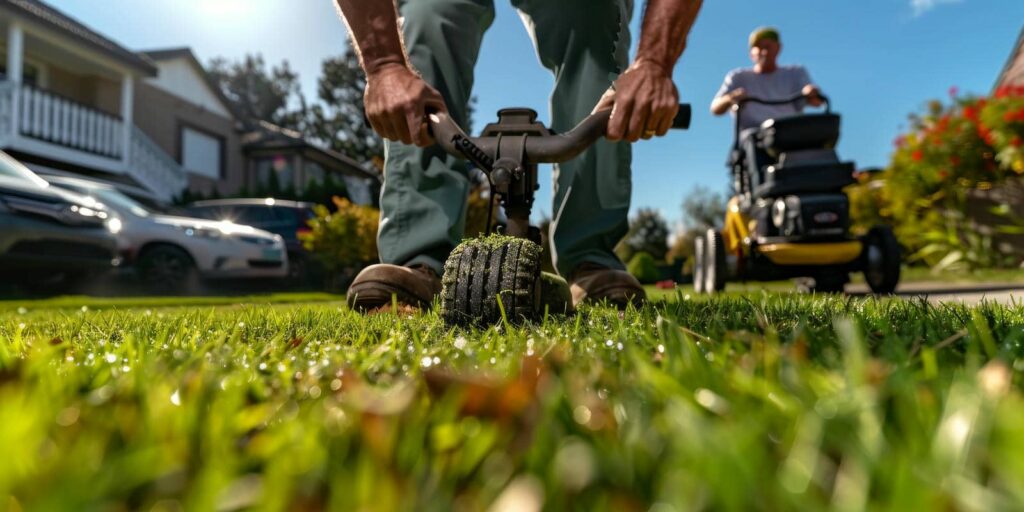
To achieve ideal results from your aeration efforts, selecting the right tools is key. The most effective aeration equipment includes spike aerators and core aerators. Spike aerators punch holes into the soil, allowing for immediate airflow, but they may compact the surrounding soil.
On the other hand, core aerators remove small plugs of soil, improving nutrient absorption and enhancing water retention—ideal for lawn care enthusiasts seeking deeper aeration.
For smaller lawns, manual aerators can suffice, but if you’re managing a larger space, consider a powered aerator. These machines save time and ensure thorough coverage.
Don’t overlook essential accessories like a soil moisture meter, as it helps gauge when your lawn is ready for aeration. Investing in quality tools boosts your lawn’s health and fosters a sense of community among fellow lawn care aficionados who appreciate lush, vibrant landscapes.
Timing Your Aeration for Optimal Results
When’s the best time to aerate your lawn for maximum benefit? The answer hinges on your local seasonal weather and the growth patterns of your grass. For cool-season grasses, early spring or early fall is ideal, while warm-season grasses thrive with summer aeration. Timing is essential; it allows your lawn to recover and flourish.
Here’s a quick reference table to help you decide:
| Grass Type | Best Aeration Time | Expected Lawn Growth |
|---|---|---|
| Cool-Season | Early Spring / Fall | Rapid recovery in fall |
| Warm-Season | Late Spring / Summer | Enhanced growth in summer |
| Transitional Zone | Spring and Fall | Balanced growth year-round |
Techniques for Aerating Different Grass Types
When it comes to aerating your lawn, understanding the specific needs of cool-season and warm-season grasses is essential.
Each type requires tailored methods to achieve ideal soil penetration and health.
Additionally, considering your soil type will further enhance the effectiveness of your aeration techniques.
Cool-Season Grass Methods
Although aerating cool-season grasses requires specific techniques based on grass type, the fundamental goal remains the same: to enhance soil health and improve water and nutrient absorption. Different cool-season varieties benefit from tailored maintenance practices, so knowing how to aerate properly is essential.
| Grass Type | Best Aeration Time | Recommended Method |
|---|---|---|
| Kentucky Bluegrass | Early Spring | Core aeration |
| Perennial Ryegrass | Fall | Spike aeration |
| Tall Fescue | Late Spring | Core aeration |
| Fine Fescue | Early Spring | Spike aeration |
| Creeping Bentgrass | Fall | Core aeration |
Warm-Season Grass Techniques
As temperatures rise, understanding the specific aeration techniques for warm-season grasses becomes vital for maintaining a healthy lawn.
These warm-season varieties thrive in hot climates and require tailored summer maintenance to flourish. To effectively aerate your warm-season grass, consider the following techniques:
Timing: Aerate during peak growing season, typically late spring or early summer.
Moisture: Confirm the soil is moist but not soggy for easier penetration
Equipment: Use a core aerator for peak soil extraction.
Overseeding: Pair aeration with overseeding to promote thicker growth.
Nutrient Boost: Follow up with a high-quality fertilizer to enhance recovery.
Soil Type Considerations
Understanding your soil type is key to optimizing aeration techniques, especially when working with different grass varieties.
For clay soils, which often have poor drainage and compacted areas, use core aeration to improve moisture retention and nutrient availability.
Sandy soils drain quickly but may lack nutrients; consider using a topdressing of organic matter after aeration to enhance pH levels and nutrient content.
Loamy soils strike a balance between retention and drainage, making them generally easier to aerate, but still benefit from regular aeration to maintain health.
Always assess compacted soils first, as they can hinder root growth.
Tailor your aeration approach to these conditions to ensure your lawn thrives beautifully.
Post-Aeration Care for a Thriving Lawn
Once you’ve completed aerating your lawn, effective post-aeration care is essential for maximizing the benefits of this rejuvenating process.
Start by ensuring proper post-aeration watering; this will help the soil absorb moisture and nutrients more effectively. Aim for deep watering to encourage root growth.
Next, consider a nutrient application, using a high-quality fertilizer tailored to your lawn’s needs. This will nourish your grass and promote recovery.
To further enhance your lawn’s health:
- Avoid mowing immediately to allow for recovery.
- Monitor soil moisture levels to prevent dry patches.
- Limit foot traffic on the lawn for at least a couple of weeks.
- Seed any bare spots, encouraging new growth.
- Keep an eye on pests and diseases, addressing them promptly.
Troubleshooting Common Aeration Issues
What do you do when your aeration efforts don’t yield the expected results? Start by examining common mistakes you might’ve made.
One prevalent issue is aerating at the wrong time; ideally, you should aerate during the growing season for your grass type. Also, consider the soil moisture; overly dry or wet soil can hinder effective aeration.
Many people fall for aeration myths, believing that more holes mean better results. In reality, the quality and depth of your aeration matter more than the quantity.
After aerating, ensure you provide adequate post-care, such as watering and fertilizing, to maximize benefits.
If your lawn still struggles, check for underlying issues such as compaction or pest problems. By addressing these common mistakes and debunking aeration myths, you can release the full potential of your lawn.
Wrap-Up
By mastering aeration, you’re not just enhancing your lawn’s health; you’re creating a vibrant outdoor space that turns heads. Coincidentally, while you’re improving air and nutrient flow, you might just discover a newfound passion for gardening. So grab that core aerator, time your efforts right, and watch your grass thrive. With a little care post-aeration, you’ll reveal the secret to a lush lawn that makes your neighbors envious and your outdoor gatherings unforgettable.
Recent Posts
Top Lawn Care Tips for Grand Rapids Residents
Imagine stepping onto a vibrant, green lawn that feels lush underfoot, a demonstration of your
3 Best Lawn Care Tips for Grand Rapids Area
Did you know that proper lawn care can increase your home’s value? In the Grand
Why Consider Unique Landscaping for Cascade Homes?
Imagine stepping into a Cascade home adorned with vibrant native plants, creating a thriving ecosystem