
Contents
When it comes to maintaining a lush, healthy lawn, understanding aeration techniques is essential. You might be surprised at how proper aeration can enhance your grass’s growth and resilience. Core aeration, spike aeration, and liquid aeration each offer unique benefits, but knowing when and how to implement these methods is key. Let’s explore these techniques further to help your lawn thrive under the right conditions.
Key Takeaways
- Core aeration is the most effective technique, removing soil plugs to enhance nutrient absorption and reduce compaction.
- Spike aeration creates holes for better drainage but may not alleviate soil compaction as effectively as core aeration.
- Liquid aeration uses solutions to break down compacted soil, improving drainage and promoting root growth.
- Aerate in spring or fall during active growth phases for optimal recovery and lawn health.
- Follow up with deep watering and high-quality fertilizer to maximize benefits after aeration.
Understanding Lawn Aeration
Lawn aeration is an essential process that helps your grass thrive by improving soil health. When you aerate, you create small holes in the soil, allowing air, water, and nutrients to penetrate deeper.
This process enhances soil structure, breaking up compacted layers that can suffocate roots. It’s crucial for maintaining lawn health, as healthy roots lead to vibrant grass.
You’ll want to take into account the timing and method of aeration for best results. For cool-season grasses, early spring or fall is ideal, while warm-season grasses benefit from summer.
You can use core aerators or spike aerators, with core aerators generally providing better results by removing soil plugs.
Benefits of Aerating Your Lawn
Aerating your lawn greatly boosts nutrient absorption by allowing fertilizers and water to penetrate the soil more effectively.
This process also enhances soil aeration, creating a healthier environment for root growth and microbial activity.
Improved Nutrient Absorption
When you take the time to aerate your lawn, you’re not just improving its appearance; you’re also enhancing its ability to absorb essential nutrients. Aeration opens up nutrient pathways, allowing fertilizers and organic matter to penetrate deeper into the soil. This process supports a thriving soil microbiome, which is vital for breaking down nutrients and facilitating their uptake by your grass. As a result, your lawn becomes healthier and more resilient.
| Benefit | Description | Impact on Lawn |
|---|---|---|
| Enhanced Nutrient Absorption | Improves access to nutrients in soil | Lush, green growth |
| Increased Soil Microbiome | Promotes beneficial microorganisms | Stronger root system |
| Better Water Penetration | Allows deeper water infiltration | Reduced runoff |
| Improved Soil Structure | Breaks up compacted soil | Healthier grass |
Enhanced Soil Aeration
One of the key benefits of enhanced soil aeration is its ability to alleviate soil compaction, which can severely hinder root growth and overall lawn health.
By aerating, you improve air exchange in the soil, allowing essential nutrients and moisture to reach deeper roots. This process also optimizes soil composition, creating a balanced environment where grass can thrive.
When you create openings in the soil, you encourage beneficial microorganisms to flourish, contributing to a healthier ecosystem beneath your turf.
Plus, enhanced aeration promotes better drainage, reducing water pooling and root rot risks.
When to Aerate Your Lawn
Have you ever wondered what the best time is to aerate your lawn for ideal results? Timing is key to promoting healthy lawn growth.
Generally, the best seasons to aerate are spring and fall, as these periods align with your grass’s active growth phases. In spring, once the soil temperature reaches about 55°F, your grass will be ready to recover and thrive after aeration.
On the other hand, fall aeration helps your lawn prepare for winter, ensuring it has the nutrients it needs to bounce back in the spring.
Watch for seasonal changes, like when your grass starts to green up, to determine the right moment. Aerating during these prime times minimizes stress on your lawn and maximizes its potential.
By understanding these seasonal cues, you’ll foster a vibrant, resilient lawn that can withstand the challenges of fluctuating weather.
Now’s the time to get your lawn ready for the seasons ahead!
Different Aeration Methods
Lawn aeration methods vary widely, each designed to improve soil health and promote robust grass growth. Understanding these methods can help you choose what’s best for your lawn’s needs.
Here are a few popular techniques:
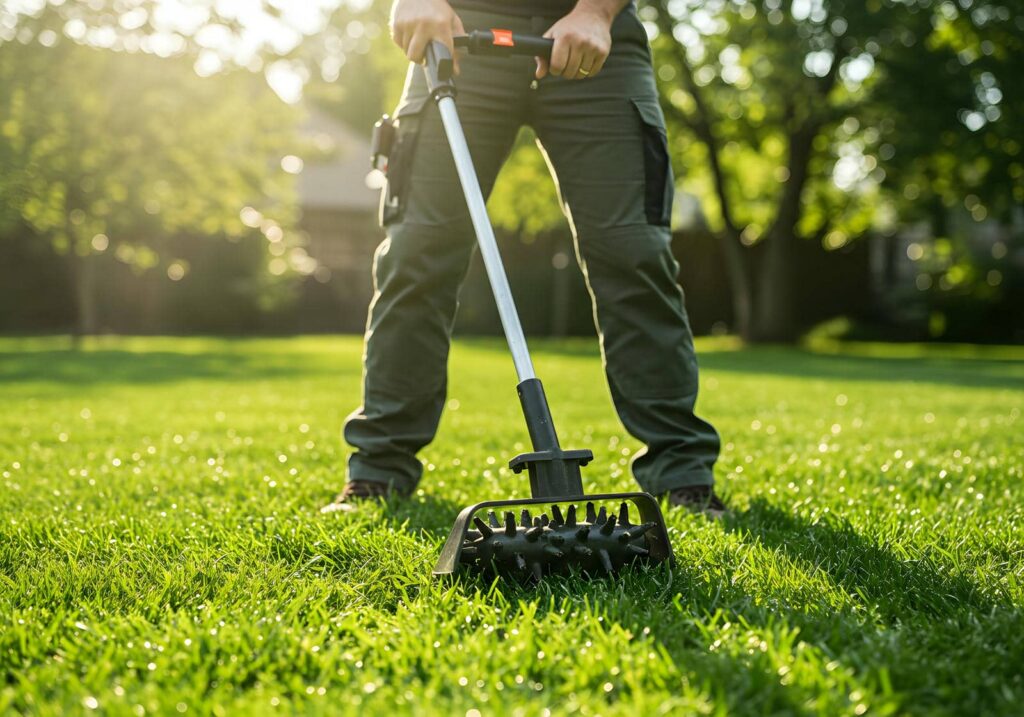
Spike Aeration: This involves creating holes in your lawn with a spiked tool, allowing for better drainage solutions.
Plug Aeration: This method removes small plugs of soil, allowing air, water, and nutrients to penetrate deeper while also improving soil structure.
Liquid Aeration: A more modern approach, liquid aeration uses special solutions that break down compacted soil and improve drainage.
Soil Amendments: Incorporating organic matter or nutrients post-aeration can enhance soil health and support grass growth.
Core Aeration Technique
Core aeration is one of the most effective techniques for improving lawn health, as it allows essential nutrients, water, and air to penetrate the soil more easily.
You’ll want to contemplate the best timing for aeration to maximize its benefits, typically during the growing season.
Additionally, having the right equipment on hand will make the process smoother and more efficient.
Benefits of Core Aeration
Aeration is an essential process for maintaining a healthy and vibrant lawn, and core aeration stands out as one of the most effective techniques. This method provides numerous core aeration benefits that greatly contribute to lawn health improvement.
By creating small holes in the soil, you allow essential elements to penetrate deeper, fostering a thriving ecosystem.
- Enhances nutrient absorption, helping grass grow stronger.
- Improves water retention, reducing the need for frequent watering.
- Reduces soil compaction, encouraging root development.
- Promotes beneficial microbial activity, which aids in organic matter breakdown.
Embracing core aeration revitalizes your lawn and connects you to a community of fellow lawn care enthusiasts who value lush green spaces.
Best Timing for Aeration
Timing your aeration is essential for maximizing its benefits and ensuring your lawn thrives. The ideal seasons for core aeration are spring and fall, as these periods allow your grass to recover quickly.
In spring, aerate when your grass is actively growing, typically when temperatures reach 60-75°F. For fall, aim for a window between late summer and early autumn, as cooler temperatures promote root growth.
Climate considerations also play a crucial role; if you live in a warmer region, fall may be your best bet. Conversely, in cooler areas, spring might be preferable.
Equipment Needed for Aeration
To achieve the best results from your lawn aeration, having the right equipment is key.
Investing in quality aeration tools can make a significant difference in your lawn maintenance routine. Here’s what you’ll need:
Core Aerator: This machine removes plugs of soil, promoting better air circulation.
Rake: Use this to gather and distribute the soil plugs evenly across your lawn.
Spray Marker: Mark areas that need extra attention or to avoid overlapping.
Lawn Roller: After aeration, a roller can help level out the lawn for an even finish.
With these essential tools, you’ll be well-equipped to revitalize your grass and create a thriving outdoor space.
Happy aerating!
Spike Aeration Technique
One effective method for improving your lawn’s health is the spike aeration technique. This method involves using a tool with spikes to puncture the soil, allowing air, water, and nutrients to penetrate deeper.
Here’s a quick overview of the spike aeration benefits and drawbacks:
| Benefits | Drawbacks | Best For |
|---|---|---|
| Enhances soil aeration | Less effective on compacted soil | Smaller lawns |
| Promotes root growth | Can cause surface damage | Moderate traffic areas |
| Improves water absorption | Requires manual effort | Lawns with minimal weeds |
| Increases nutrient uptake | Limited long-term impact | Quick seasonal fix |
| Cost-effective | Not suitable for all grass types | DIY enthusiasts |
While spike aeration can effectively rejuvenate your lawn, be mindful of its limitations. Understanding these factors will help you decide if it’s the right technique for you.
Choosing the Right Equipment
When selecting the right equipment for lawn aeration, it’s crucial to take into account the specific needs of your lawn and the various tools available.
Different aeration tools cater to different lawn types, so understanding your options will help you make an informed choice. Here are some key considerations:
Core Aerator: Removes soil plugs for maximum air and nutrient absorption.
Spike Aerator: Creates holes using spikes, suitable for compacted lawns.
Manual vs. Gas-Powered: Choose based on your lawn size and physical ability.
Equipment Maintenance: Regularly check and maintain your tools for longevity and performance.
Aftercare Following Aeration
After aerating your lawn, it’s essential to implement proper aftercare to maximize the benefits of the process.
Start by watering your lawn deeply but infrequently to promote lawn recovery. This helps the grass roots absorb nutrients and moisture from the aeration holes. Aim for about an inch of water per week, adjusting based on rainfall.
Next, consider applying a high-quality fertilizer to support your grass as it rebounds. This will enhance nutrient absorption through the aeration holes.
Avoid heavy foot traffic for a few weeks to give your lawn the time it needs to recover fully.
Finally, keep an eye on weeds during this period, as aeration can create opportunities for them to take root. Regularly check for any signs and address them promptly.
Frequency of Aeration
Typically, you should aerate your lawn once a year to maintain ideal health and vigor. However, the ideal aeration frequency may vary based on your lawn’s specific needs and environmental factors.
Following seasonal guidelines can help you determine the best time to aerate. Here are some tips to take into account:
Cool-season grasses: Aerate in the early spring or fall.
Warm-season grasses: Aim for late spring or early summer.
High-traffic areas: Take into account more frequent aeration, possibly twice a year.
Soil compaction: If you notice compacted soil, it might be time to aerate sooner.
Signs Your Lawn Needs Aeration
If your lawn feels hard underfoot or water tends to pool instead of soaking in, you might be dealing with compact soil.
These are clear indicators that your grass isn’t getting the air and moisture it needs to thrive.
Recognizing these signs early can help you take action and restore your lawn’s health.
Compact Soil Indicators
Have you noticed your lawn struggling to thrive despite regular watering and fertilization? This could be a sign of soil compaction negatively affecting your lawn’s health.
It’s crucial to recognize the indicators that tell you when it’s time to aerate. Look for these signs:
- Grass that feels spongy underfoot
- Difficulty pushing a garden fork into the ground
- Water pools on the surface after rain
- Thin patches of grass or bare spots
These compact soil indicators suggest that your lawn isn’t getting the oxygen, water, and nutrients it needs.
Poor Water Absorption
Soil compaction hampers grass growth and reduces water absorption. If you notice puddles forming after rain or your grass wilting despite watering, it’s time to reflect on aeration. Effective soil moisture management is vital for maintaining vibrant lawns. Implementing water retention strategies can enhance your grass’s resilience against drought.
Here’s a quick reference table to highlight the signs of poor water absorption:
| Sign | Indication |
|---|---|
| Puddles on the surface | Soil can’t absorb water |
| Wilting grass | Insufficient moisture levels |
| Uneven growth | Compacted soil is hindering roots |
Aeration creates channels in the soil, allowing water to penetrate effectively. By addressing these signs, you’ll cultivate a healthier, thriving lawn.
Summary
Think of lawn aeration as a revitalizing gust of clean air for your grass. By using the right techniques and timing, you’ll help your lawn thrive, much like a garden flourishing under the sun. Remember to follow up with deep watering and fertilization to support robust root growth. With regular aeration, you’ll keep your lawn healthy, vibrant, and ready to withstand the challenges of changing seasons. Your efforts will surely pay off in lush, green grass.
Recent Posts
5 Essential Practices for a Healthy Kentwood Lawn
Imagine a lush, green carpet stretching across your yard, inviting you to step outside and
Tips for a Thriving Lawn in Kentwood
Many homeowners overlook the importance of selecting the right grass type for their specific thriving
Top Lawn Care Tips for Grand Rapids Residents
Imagine stepping onto a vibrant, green lawn that feels lush underfoot, a demonstration of your