
Contents
Studies show that lawns subjected to core aeration can reduce pest populations. This technique improves nutrient and water absorption and enhances soil health, creating an environment less favorable to pests. Understanding the nuances of aeration methods and their timing can greatly impact your lawn’s resilience. So, how can you effectively implement these techniques for ideal pest management?
Key Takeaways
- Core aeration effectively alleviates soil compaction, promoting healthy root development and resilience against pests and diseases.
- Timing aeration during spring and autumn enhances root establishment and recovery, disrupting pest life cycles.
- Combining aeration with immediate fertilization maximizes nutrient absorption, fostering a healthier lawn that can resist pest infestations.
- Regular monitoring and population assessments post-aeration help identify and address potential pest issues proactively.
- Incorporating organic treatments during aeration, like compost, supports soil health and creates an inhospitable environment for pests.
Understanding Lawn Aeration and Its Benefits
Lawn aeration is an essential technique for maintaining healthy turf and managing pest populations. You’ll find that understanding the benefits overview can greatly enhance your lawn care practices.
By employing effective aeration techniques, you improve soil permeability, allowing water, nutrients, and oxygen to reach the roots more efficiently. This process strengthens grass resilience, making it less vulnerable to pests and diseases.
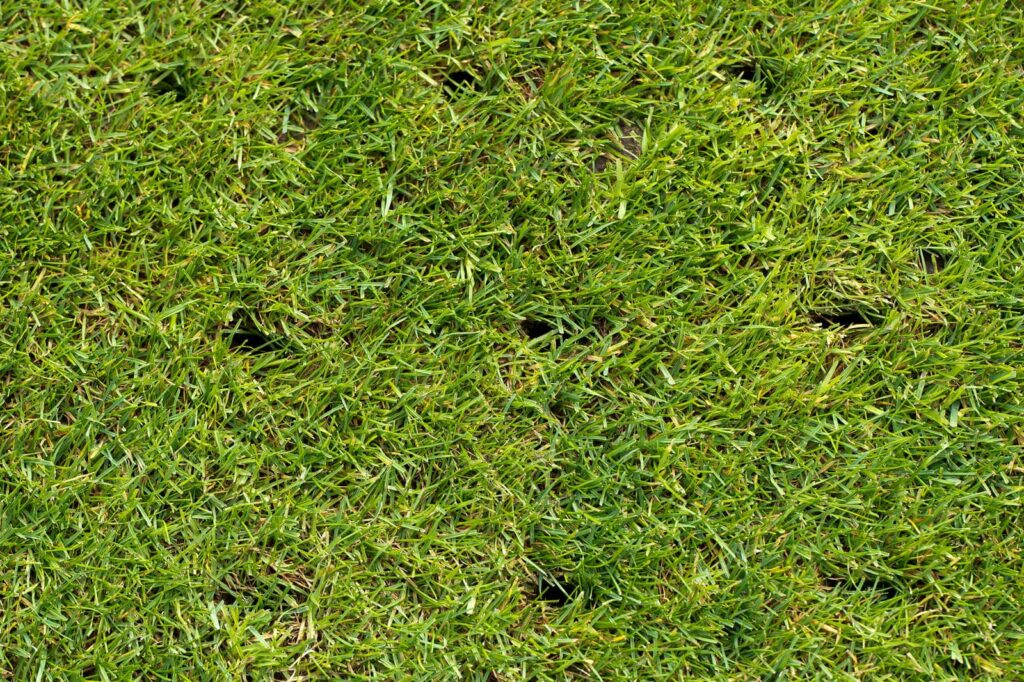
Aeration also alleviates soil compaction, which can hinder root development and promote unhealthy growth. When you create holes in the soil, you’re not just improving drainage; you’re also fostering beneficial microbial activity that helps break down organic matter.
Consequently, your lawn will thrive, reducing the likelihood of pest infestations. Additionally, by promoting a robust root system, you’re setting the stage for a vibrant ecosystem that enhances biodiversity.
Choosing the Right Aeration Method
Selecting an appropriate aeration method can greatly influence the effectiveness of your lawn care regimen. When choosing among various aeration techniques, consider factors like soil type, grass variety, and the specific pest issues you’re facing.
For example, core aeration is ideal for compacted soil, while spike aeration suits less dense areas.
You’ll also need to focus on selecting equipment that matches your lawn’s size and your physical capabilities. Manual aerators are cost-effective for smaller spaces, but larger lawns may benefit from powered alternatives.
Before making a decision, research the benefits and drawbacks of each option. Engaging with local gardening communities can provide insights into what works best in your region.
Timing Your Aeration for Maximum Effectiveness
To achieve ideal results from lawn aeration, you must consider seasonal weather patterns, soil moisture levels, and the life cycles of pests.
Timing your aeration effectively can enhance soil health while disrupting pest populations at critical stages.
Seasonal Weather Considerations
Understanding seasonal weather patterns is essential when timing your aeration for maximum effectiveness, especially since soil conditions can greatly influence the success of pest management efforts.
In spring weather, when temperatures rise and moisture levels increase, aeration can help relieve soil compaction, allowing roots to establish and thrive. This creates an environment less conducive to pests.
Conversely, during autumn conditions, aerating when the ground is moist and temperatures are cooler can promote root recovery before winter.
Timing your aeration to coincide with these seasonal shifts can markedly enhance turf health and resilience against pests.
Soil Moisture Levels
Soil moisture levels play an essential role in determining the ideal timing for aeration, as they directly impact soil structure and compaction.
When soil moisture is optimal, typically around 20-30%, you’ll find that the ground is pliable, allowing aerator tines to penetrate effectively. Aerating too dry can lead to increased compaction, while overly wet conditions may cause soil to clump, hindering aeration success.
Monitoring moisture retention is vital; timing your aeration after consistent rainfall or irrigation ensures that the soil is moist yet not saturated.
By understanding and managing soil moisture levels, you can maximize aeration’s benefits, enhancing your lawn’s health and resiliency against pests.
Pest Life Cycles
Timing your aeration effectively hinges on an awareness of pest life cycles, as these cycles dictate when certain pests are most vulnerable.
Understanding pest development and their lifecycle stages allows you to target your aeration efforts strategically. For instance, plan your aeration just before major pest outbreaks, typically during the shift between lifecycle stages. This timing disrupts pests as they emerge from eggs or larvae, greatly reducing their population.
Tools and Equipment for Lawn Aeration
When it comes to lawn aeration, selecting the right tools and equipment is vital for effective pest management.
You’ll find a range of options, from manual aeration tools to power aerators, each serving specific needs.
Additionally, various lawn aeration accessories can enhance your efficiency and results in this essential process.
Manual Aeration Tools
Manual aeration tools are essential for effectively managing lawn health and pest issues. When you consider manual aeration options, you’ll find various tools, such as spike aerators and core aerators.
Both serve distinct purposes, but their benefits comparison reveals that core aerators generally provide superior results by removing soil plugs, enhancing air, water, and nutrient penetration. This process promotes healthy grass growth and disrupts pest habitats, reducing infestations.
Using manual aeration tools allows for greater control over your lawn’s condition and offers a more personal connection to your landscape. By engaging in this hands-on approach, you’re contributing to a healthier ecosystem, fostering a sense of belonging with nature while addressing pest concerns effectively.
Power Aerators Overview
Power aerators are advanced tools designed to enhance lawn aeration efficiency and effectiveness, especially for larger areas.
There are various power aerator types, including tow-behind models and walk-behind units, each tailored to specific needs and preferences.
Using a power aerator allows you to create evenly spaced holes in the soil, promoting better air circulation, water infiltration, and nutrient absorption.
The benefits of aeration extend beyond just improving turf health; it also aids in pest management by reducing compaction and fostering a robust root system, making your lawn less susceptible to infestations.
Lawn Aeration Accessories
Investing in lawn aeration accessories can greatly enhance the effectiveness of your aeration efforts, complementing the use of power aerators.
Using the right tools improves soil health and optimizes pest management strategies. Here are three essential accessories to take into account:
Core Aerators: Remove soil plugs, allowing air and nutrients to penetrate deeper.
Aeration Sandals: Simple footwear that helps you aerate while walking, making the process more efficient.
Soil Testers: Gauge soil health and nutrient levels to better plan your aeration and fertilization.
Incorporating lawn rollers and compost spreaders can further support your aeration strategy, ensuring a thriving lawn that resists pests and diseases.
Equip yourself with these tools and watch your lawn flourish.
Combining Aeration With Fertilization
While many homeowners focus on aeration as a standalone practice, combining it with fertilization can greatly enhance your lawn’s health and resilience.
By aerating your lawn, you create channels for nutrients to penetrate deeper into the soil. This is where fertilization timing plays a vital role; applying fertilizer immediately after aeration maximizes its effectiveness.
The aeration benefits include improved oxygen flow and water retention, which are essential for nutrient absorption.
When you aerate, you’re loosening compacted soil, allowing fertilizers to reach the root zone more efficiently.
This synergy boosts grass growth and strengthens your lawn against pests.
Implementing this dual approach fosters a thriving ecosystem, helping you cultivate a lush, green lawn that your neighbors will envy.
Monitoring Pest Populations Post-Aeration
How can you effectively monitor pest populations after aerating your lawn?
Post-aeration is a critical time for pest monitoring, as the changes in soil structure can influence pest behavior. Conducting a thorough population assessment will help you gauge the effectiveness of your aeration efforts and identify any emerging issues.
Use sticky traps to capture flying insects and monitor their numbers over time.
Regularly inspect soil samples for signs of larvae or other pests that may thrive post-aeration.
Implement visual assessments through scouting to identify any irregularities in plant health.
Long-Term Lawn Care Strategies for Pest Prevention
To maintain a healthy lawn and effectively prevent pest infestations, implementing long-term care strategies is essential. You should adopt integrated pest management (IPM) practices, which prioritize proactive measures over reactive ones. This means regularly monitoring your lawn’s health and identifying potential pest issues before they escalate.
Incorporating organic lawn treatments can also enhance soil health and create an inhospitable environment for pests. For instance, using compost and natural fertilizers boosts nutrient levels and strengthens grass resilience.
Additionally, cultivating diverse plant species can disrupt pest life cycles, promoting a balanced ecosystem. Regular aeration improves soil health and allows beneficial microorganisms to thrive, further supporting your pest management efforts.
Summary
Incorporating effective lawn aeration techniques can greatly enhance your pest management strategy. Studies show that lawns with well-aerated soil can reduce pest populations. By improving soil health and promoting beneficial microorganisms, you’ll create an environment that’s less inviting to harmful pests. Remember, timing, proper methods, and combining aeration with organic treatments are key to achieving ideal results. With consistent care, your lawn will thrive and fend off unwanted invaders effectively.
Recent Posts
What Are the Best Grass Varieties for Kentwood?
When selecting the best grass varieties for Kentwood, you’ll want to evaluate factors like climate,
Seasonal Fertilization Strategies for Healthy Kentwood Lawns
Understanding the seasonal needs of your Kentwood lawn is essential for achieving a lush, healthy
Top Lawn Mowing Tips for Byron Center Residents
Maintaining a healthy lawn in Byron Center starts with understanding your lawn mowing needs. The