
Contents
Imagine your lawn thriving with vibrant green blades, free from compaction and ready to absorb all the nutrients it needs. To achieve this, you need to master the art of aeration. Timing, method, and aftercare are essential. What do you need to know about choosing the right time and technique for your grass type? Let’s explore the top three tips that can transform your lawn into a healthy, lush landscape.
Key Takeaways
- Aerate cool-season grasses in early spring or fall, and warm-season grasses in late spring or summer for optimal growth benefits.
- Choose core aeration for compacted soils and spike aeration for sandy soils; core aeration is generally more effective.
- Rent or purchase aeration equipment based on lawn size and frequency; ensure tools are well-maintained for best results.
- Water the lawn thoroughly before aeration to improve tool penetration and effectiveness.
- Follow up with regular mowing, quality fertilizer, and deep watering to support lawn recovery after aeration.
Determine the Right Time for Aeration
To achieve ideal results, you need to determine the right time for aeration based on your lawn’s specific needs and climate conditions. Seasonal indicators play an essential role here; for cool-season grasses, early spring or fall is best, while warm-season grasses thrive with aeration in late spring or early summer.
Pay attention to your lawn’s health as well—if you notice compacted soil, poor drainage, or reduced growth, it’s time to aerate.
Evaluate your local climate and rainfall patterns to decide on the most suitable time. Aerating after a rain or watering session can enhance effectiveness, as moist soil allows the aeration tools to penetrate easily.
Choose the Appropriate Aeration Method
Choosing the right aeration method is essential for maximizing the benefits to your lawn, especially when you consider factors like soil type and grass variety. Two popular methods are core aeration and spike aeration.
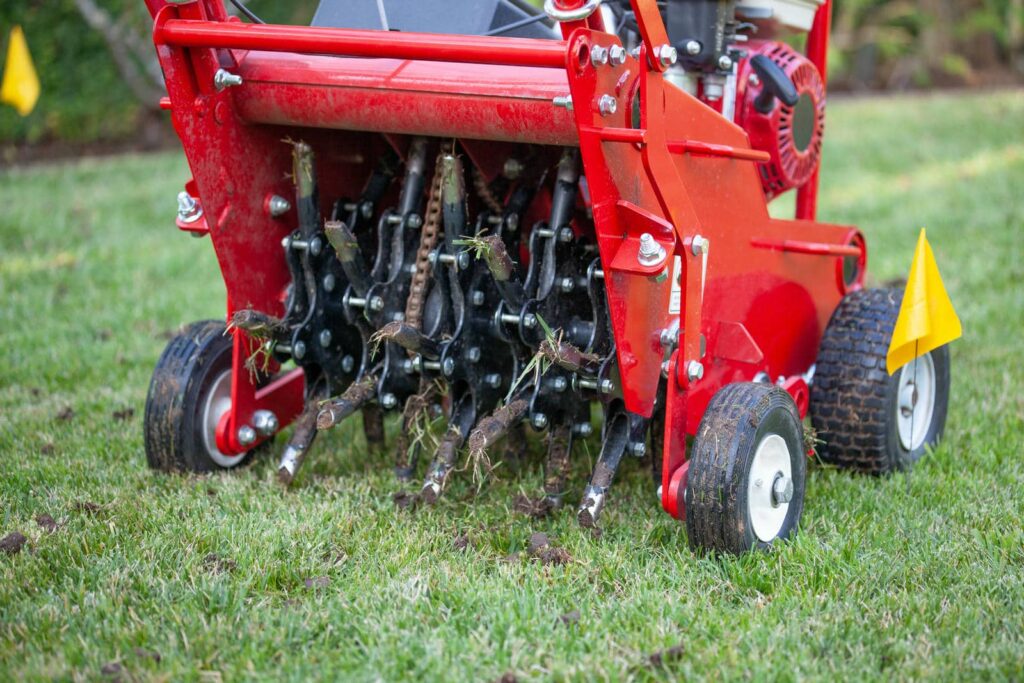
Core aeration involves removing small soil plugs from your lawn, which allows air, water, and nutrients to penetrate deeper into the soil. This method is ideal for compacted or clay soils. On the other hand, spike aeration uses a tool with spikes to create holes in the ground, making it a quicker option but less effective for heavily compacted areas.
Here’s a simple comparison to help you decide:
| Aeration Method | Best For |
|---|---|
| Core Aeration | Compacted, clay soils |
| Spike Aeration | Sandy soils, quick fixes |
| Frequency | Every 1-3 years |
| Equipment Needed | Aerator machine |
Evaluate your lawn’s needs and choose accordingly for the best results.
Follow up With Proper Lawn Care Practices
After selecting the right aeration method, it’s important to follow up with proper lawn care practices to ensure your efforts yield the best results.
Begin by ensuring consistent lawn maintenance, which includes regular mowing at the correct height. This helps your grass recover and thrive post-aeration.
Next, apply a quality fertilizer that promotes soil health. This nourishes the roots and encourages strong growth, particularly in the newly exposed soil.
Water your lawn deeply but infrequently, allowing moisture to penetrate the aeration holes and reach the roots effectively.
Additionally, consider overseeding to fill in any bare patches and enhance your lawn’s density. This improves aesthetics and contributes to overall soil health.
Review
By following these top three aeration tips, you’re setting the stage for a lush, vibrant lawn that invites barefoot strolls and backyard gatherings. Picture your grass breathing freely, roots stretching deep into rich soil, and vibrant green blades swaying in the breeze. With the right timing, effective aeration methods, and diligent post-care, you’ll cultivate a thriving outdoor oasis that enhances your home’s beauty and your enjoyment of nature’s splendor. Your dream lawn is just a few steps away!
Recent Posts
Top Lawn Care Tips for Grand Rapids Residents
Imagine stepping onto a vibrant, green lawn that feels lush underfoot, a demonstration of your
3 Best Lawn Care Tips for Grand Rapids Area
Did you know that proper lawn care can increase your home’s value? In the Grand
Why Consider Unique Landscaping for Cascade Homes?
Imagine stepping into a Cascade home adorned with vibrant native plants, creating a thriving ecosystem