
Contents
Lawn care is often overlooked after winter, with many homeowners underestimating the season’s impact on their grass. Assessing your lawn’s condition early is essential to address any hidden damage that could stall spring growth. By identifying what your lawn needs—whether it’s fertilization, aeration, or reseeding—you can create a tailored lawn care plan that sets the foundation for a lush, vibrant yard. Let’s explore effective ways to rejuvenate your grass and maintain its health throughout the growing season.
Key Takeaways
- Assess lawn damage by checking for brown patches, thinning areas, and pests to determine necessary recovery actions.
- Test soil health to identify deficiencies and apply balanced fertilizers based on results for optimal growth.
- Aerate compacted soil using a core aerator to improve air and water penetration, ideally when the soil is moist.
- Use pre-emergent herbicides in early spring to prevent weed growth and follow with manual weeding for targeted control.
- Water deeply and infrequently in the early morning to encourage strong root systems and adjust based on rainfall.
Assessing Your Lawn’s Condition After Winter
As spring approaches, it’s crucial to assess your lawn’s condition after winter to ensure it thrives in the warmer months.
Start with a thorough lawn damage assessment. Look for brown patches, thinning areas, or any signs of pests. Walk around your yard, taking note of the grass’s color and texture. Areas that feel spongy might indicate thatch buildup, while dead spots may require different approaches.
Once you’ve identified problem areas, implement winter recovery strategies. Reseed bare patches with a suitable grass variety for your region, ensuring good soil contact.
Aerate the soil in compacted areas to encourage root growth, and consider top-dressing with compost to improve soil health. If you find significant damage, you might need to consult a local lawn care expert for tailored advice.
Choosing the Right Fertilizer for Spring Growth
Choosing the right fertilizer for spring growth can greatly impact your lawn’s health and appearance.
Start by understanding the different fertilizer types available, such as granular, liquid, and slow-release options. Each has its benefits; for instance, slow-release fertilizers provide a steady nutrient supply over time, promoting healthy growth without the risk of burning your grass.
Next, focus on achieving the right nutrient balance. Look for a fertilizer with a balanced ratio of nitrogen, phosphorus, and potassium, often displayed in a three-number format (e.g., 10-10-10). Nitrogen encourages lush, green growth, while phosphorus supports root development, and potassium enhances overall resilience.
Finally, consider your lawn’s specific needs based on its grass type and soil condition. Testing your soil can help you determine any deficiencies and guide your fertilizer choice, ensuring your lawn thrives throughout the spring season.
Aerating Your Lawn for Improved Health
Aerating your lawn is crucial for promoting root health and improving soil structure.
By understanding the benefits of aeration, the best techniques to use, and the ideal timing for this process, you can greatly enhance your lawn’s vigor.
Let’s explore how proper aeration can transform your yard into a lush, green oasis.
Benefits of Aeration
While many homeowners focus on regular mowing and watering, aerating your lawn can greatly enhance its overall health and appearance. Aeration helps alleviate soil compaction, allowing air, water, and nutrients to penetrate deeper into the root zone. This process supports lawn rejuvenation and promotes a robust and vibrant lawn.
Here’s a quick overview of the benefits:
| Benefit | Description | Impact on Lawn Health |
|---|---|---|
| Improved Drainage | Reduces water pooling | Healthier root systems |
| Nutrient Absorption | Enhances nutrient uptake | Greener, lush grass |
| Root Growth | Encourages deeper root systems | Increased resilience |
| Pest Resistance | Strengthens grass against pests | Lower likelihood of infestations |
Investing in aeration can lead to a thriving lawn that you and your family can enjoy.
Best Aeration Techniques
When it comes to improving your lawn’s health, employing the right aeration techniques can make a significant difference.
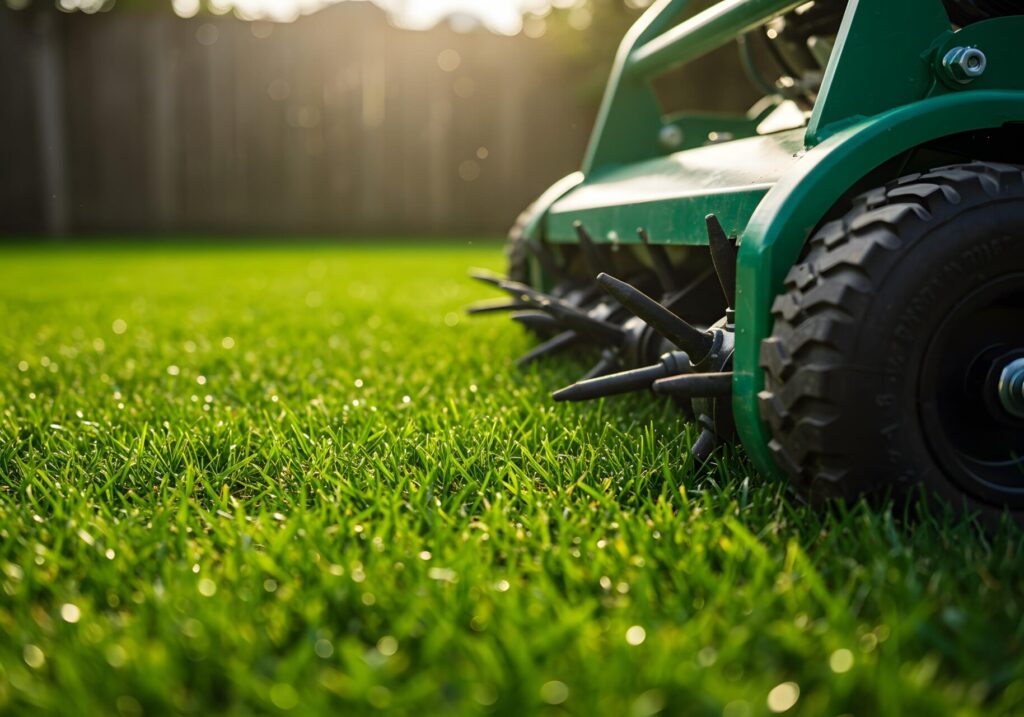
Start by evaluating your lawn’s condition; if you notice soil compaction, it’s time for lawn aeration. Use a core aerator, which removes small plugs of soil, allowing air, water, and nutrients to penetrate deeper. Aim for a spacing of about 2 to 4 inches between holes for ideal results.
Aerate when the soil is moist but not overly wet to ensure easier penetration. If your lawn is particularly compacted, consider double aerating in one season.
After aeration, overseed and apply a top-dressing of compost to give your grass a boost. You’ll foster a thriving lawn, creating a vibrant outdoor space you can be proud of.
Ideal Timing for Aeration
Choosing the right time for aeration is essential to your lawn’s overall health and vigor. Ideally, you should aerate in early spring or early fall, depending on your grass type.
Cool-season grasses thrive with spring aeration as they recover quickly from the process. On the other hand, warm-season grasses benefit from aeration in late spring when they’re actively growing.
Pay attention to soil moisture; aerating after a rainfall can improve results. Proper aeration timing enhances nutrient absorption and root growth, promoting healthy turf.
Effective Weed Control Techniques
To maintain a healthy lawn, you need effective weed control techniques.
Applying pre-emergent herbicides can prevent weeds before they sprout, while manual weeding helps you tackle established invaders.
Pre-emergent Herbicide Application
Although weeds can quickly overtake your lawn, applying pre-emergent herbicides effectively can keep them in check before they even sprout.
The key to success lies in pre-emergent timing; you’ll want to apply the herbicide in early spring, just as soil temperatures reach around 55°F. This ensures maximum effectiveness against germinating weeds.
Use application techniques like a broadcast spreader to ensure even coverage across your lawn. Avoid overlaps to prevent any potential damage to your grass.
After application, water your lawn lightly to activate the herbicide. Remember, regular monitoring and reapplication every 6-8 weeks will help maintain a healthy, weed-free lawn.
Manual Weeding Methods
When tackling weeds in your lawn, manual weeding methods can be highly effective and environmentally friendly. Hand weeding allows you to target specific problem areas without harming your grass. For best results, choose the right tools, like a weeding fork or hoe, to easily uproot stubborn weeds.
Before you start, make sure the soil is slightly moist; this makes it easier to pull weeds from their roots. Grip the weed firmly, pulling straight up to minimize root breakage.
Don’t forget to dispose of the weeds properly to prevent them from re-establishing. Regular hand weeding, along with proper tool selection, keeps your lawn looking pristine and fosters a sense of community as you share your successes with fellow gardeners.
Proper Watering Practices for Spring
Spring brings new life to your lawn, making proper watering practices essential for promoting healthy growth. Start by evaluating your lawn’s unique needs. Aim to water deeply and infrequently, which encourages deeper root systems and improves drought resistance.
Early morning is the best time to water; it reduces evaporation and allows moisture to penetrate the soil effectively.
Consider installing a drip irrigation system. This method delivers water directly to the roots, enhancing moisture retention and minimizing waste.
Monitor the soil’s moisture levels; a simple test involves digging down a few inches. If it feels dry, it’s time to water.
Be mindful of rainfall; adjust your watering schedule accordingly to avoid over-saturating the soil, which can lead to disease.
Mowing Tips for a Lush Lawn
After establishing a solid watering routine, it’s time to focus on mowing techniques that will keep your lawn lush and healthy.
Start by setting your mower at the correct mowing heights—generally, 3 to 4 inches for cool-season grasses and around 2 to 3 inches for warm-season varieties. Taller grass promotes deeper root growth and better moisture retention, creating a thicker lawn.
Regular mower maintenance is essential, too. Confirm your blades are sharp; dull blades tear the grass, leading to stress and disease.
Clean the mower deck after each use to prevent clippings from clogging and spreading disease.
Mow when the grass is dry to avoid clumping, and vary your mowing pattern to reduce soil compaction.
Finally, don’t remove more than one-third of the grass height at a time.
Summary
As spring’s gentle sun awakens the land, your lawn mirrors this renewal, thriving under your care. By evaluating its needs, nurturing it with the right fertilizer, and providing the breath of aeration, you’re guiding your grassy garden toward a vibrant season. With vigilant weed control and thoughtful watering, you’re crafting a lush oasis. Remember, each cut of the mower is a sculptor’s touch, shaping a masterpiece that beautifies and sustains life. Embrace this journey!
Recent Posts
Tips for a Thriving Lawn in Kentwood
Many homeowners overlook the importance of selecting the right grass type for their specific thriving
Top Lawn Care Tips for Grand Rapids Residents
Imagine stepping onto a vibrant, green lawn that feels lush underfoot, a demonstration of your
3 Best Lawn Care Tips for Grand Rapids Area
Did you know that proper lawn care can increase your home’s value? In the Grand