
Contents
When it comes to mastering lawn care, understanding how to manage weeds is essential. You need to identify common offenders like dandelions and crabgrass to target them effectively. Healthy soil plays a critical role in keeping these intruders at bay, while proper mowing techniques can enhance your lawn’s resilience. Curious about which grass types can best resist weeds in your area? Let’s explore these strategies to keep your lawn thriving.
Key Takeaways
- Identify common lawn weeds like dandelions and crabgrass to target your control efforts effectively.
- Maintain healthy soil with organic matter and regular testing to naturally inhibit weed growth.
- Mow your lawn at a height of 2.5 to 3 inches to shade and prevent weed establishment.
- Use organic weed control methods like hand-pulling and companion planting for a healthier lawn.
- Apply pre-emergent herbicides at the right time to prevent weed sprouting before they become established.
Identify Common Lawn Weeds
Identifying common lawn weeds is essential for maintaining a healthy yard. Start with dandelion identification; look for bright yellow flowers and jagged leaves.
Next, check for crabgrass characteristics, like its coarse texture and sprawling growth. You’ll also encounter various clover types, often with three leaves and a sweet scent.
Wild violet can be spotted by its heart-shaped leaves and purple blooms. Observe plantain species, which have broad leaves and a distinctive flower spike.
Chickweed varieties, known for their small white flowers, thrive in cool weather. Thistle recognition involves sharp, spiny leaves and purple flowers.
Finally, bindweed identification features twining stems and trumpet-shaped flowers. Knowing these weeds helps you reclaim your lawn and foster a vibrant outdoor space.
How Healthy Soil Helps Keep Weeds Away
When your soil is healthy, it naturally inhibits weed growth, making lawn care much easier. A balanced soil composition, rich in organic matter, provides the nutrients your grass needs while starving weeds.
Focus on achieving the right nutrient balance by regularly testing your soil. This helps you identify deficiencies that might encourage weeds to thrive.
Incorporate compost or natural fertilizers to boost soil health, and consider aerating your lawn to improve drainage and root development.
Healthy soil promotes dense grass growth, which outcompetes weeds for sunlight and resources. By nurturing your soil, you create a thriving environment that supports your lawn and fosters a sense of community and pride in your outdoor space.
The Role of Lawn Mowing in Weed Control
Mowing your lawn at the right height is essential for preventing weeds from taking over.
By adjusting your mowing frequency and timing, you can weaken weed growth while promoting healthier grass.
Understanding these factors can make a significant difference in your overall lawn care strategy.
Mowing Height Matters
Maintaining the right mowing height can greatly impact the health of your lawn and its ability to fend off weeds. By using proper mowing techniques, you can establish ideal heights that encourage robust grass growth.
Generally, keeping your grass at about 2.5 to 3 inches helps shade the soil, preventing weed seeds from germinating. Remember to make seasonal adjustments; during warmer months, taller grass can withstand heat and drought better.
When you mow, avoid cutting more than one-third of the grass height at a time, as this stresses the lawn. A healthy lawn is your best defense against weeds, so invest the time in mastering mowing heights to foster a thriving, weed-resistant landscape.
Frequency and Timing
To effectively control weeds, understanding the frequency and timing of your mowing is essential. Mowing regularly disrupts weed growth patterns, preventing them from establishing deep roots. Aim to mow your lawn every 5 to 7 days during peak growing seasons. This frequency helps maintain a healthy turf that competes better against weeds.
Pay attention to seasonal weed cycles, as different weeds thrive at various times of the year. For instance, early spring brings annual weeds, while perennials can be more prevalent in summer.
Adjust your mowing schedule accordingly to target these cycles effectively. By keeping your grass at the right height through timely mowing, you enhance its health and create an environment where weeds struggle to survive.
Best Grass Types for Weed Resistance in Your Area
When choosing the best grass types for weed resistance in your area, it’s essential to take into account your local climate and soil conditions.
Consider native grasses, as they’re adapted to your environment, promoting strong growth and minimizing weed competition.
Look for varieties with drought resistance; these grasses thrive even in dry spells, reducing the need for frequent watering and allowing them to outcompete weeds.
If your lawn has shaded areas, choose grass types with shade tolerance to maintain a lush appearance.
Additionally, ensure good soil compatibility by testing your soil type and pH, helping you select the most suitable grass.
How to Control Weeds Organically
Choosing the right grass types can greatly reduce weed competition, but sometimes, additional measures are necessary for effective control. One effective method is companion planting. By growing certain plants alongside your grass, you can create a natural barrier against weeds. For example, clover can outcompete many weeds while enriching the soil.
Encouraging beneficial insects, like ladybugs and lacewings, can also help. These insects prey on pests that might otherwise weaken your grass, allowing it to thrive and better resist weeds.
Regularly monitoring your lawn and hand-pulling any visible weeds can further support your organic efforts. By integrating these practices into your lawn care routine, you’ll cultivate a healthier, more vibrant lawn that you can be proud of.
Using Mulch to Suppress Weeds Effectively
Using mulch is one of the best ways to keep weeds at bay while enhancing your garden’s health. Different types of mulch offer unique benefits, and applying them correctly can make a significant difference in your lawn care routine.
Let’s explore how to choose the right mulch and apply it effectively for ideal results.
Benefits Of Mulching
Although many gardeners overlook it, mulching is a powerful tool for suppressing weeds and enhancing your lawn’s health.
Here’s a benefits overview that highlights why you should consider using mulching techniques:
Weed Suppression: A thick layer of mulch blocks sunlight, preventing weed seeds from germinating.
Soil Moisture Retention: Mulch helps retain moisture, reducing the need for frequent watering.
Temperature Regulation: It keeps soil temperatures stable, protecting roots from extreme heat or cold.
Nutrient Enrichment: Organic mulches decompose over time, enriching the soil with essential nutrients.
Types Of Mulch
When selecting the right type of mulch, consider how each option can effectively suppress weeds while benefiting your lawn.
Bark mulch and wood chips are excellent organic choices, breaking down slowly and enriching the soil.
Straw mulch is lightweight and perfect for vegetable gardens, while coconut coir retains moisture effectively.
For a more durable option, rubber mulch resists decay and is ideal for playgrounds.
If you’re looking for a clean, modern look, gravel mulch can provide excellent drainage.
Don’t forget landscape fabric underneath to block weeds while allowing water penetration.
Each type of mulch has unique benefits, so pick the one that fits your garden’s needs and helps you create a thriving, weed-free environment.
Application Techniques Explained
Applying mulch effectively can make a significant difference in weed suppression, and it’s easier than you might think. Start by selecting the right type of mulch that suits your garden’s needs.
Here are some practical tips to help you:
Apply a 2-3 inch layer: This thickness blocks sunlight and prevents weed growth.
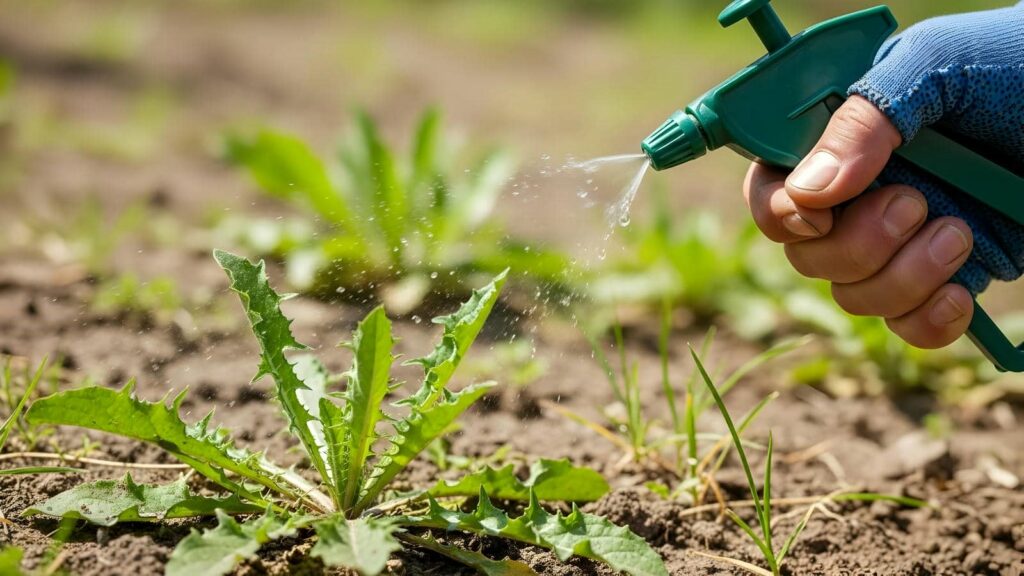
Use spray techniques: Before laying mulch, use a weed killer to target any existing weeds.
Consider granule application: Mix granules into the soil before mulching for added protection.
Replenish yearly: Over time, mulch decomposes, so refresh it annually to maintain its effectiveness.
How Regular Lawn Aeration Reduces Weeds
Regular lawn aeration plays an essential role in reducing weed growth by improving soil health and promoting stronger grass roots.
When you use effective aeration techniques, you break up soil compaction, allowing air, water, and nutrients to reach the roots more efficiently. This encourages your grass to grow thicker and healthier, making it more competitive against weeds.
By creating small holes in the soil, you also help alleviate issues caused by compacted earth, which can hinder root development. An aerated lawn has less space for weed seeds to settle and thrive.
Aim to aerate your lawn at least once a year, especially during the growing season, to keep those pesky weeds at bay and foster a lush, vibrant landscape.
Applying Pre-Emergent Herbicides
Take control of your lawn’s health by applying pre-emergent herbicides at the right time. Effective pre-emergent timing is essential to prevent those pesky weeds before they sprout. Here’s how to ensure a successful herbicide application:
Know your weeds: Identify which weeds threaten your lawn to choose the right herbicide.
Watch the weather: Apply before the soil temperature reaches 55°F to tackle summer annuals.
Follow instructions: Read the label carefully for correct dosage and application method.
Water wisely: Lightly water your lawn post-application to activate the herbicide without washing it away.
Effective Natural Lawn Care to Prevent Weeds
To effectively prevent weeds naturally, start by incorporating mulching techniques that suppress unwanted growth while enriching your soil.
Additionally, consider using natural herbicides, which can target specific weeds without harming your lawn.
Mulching Techniques For Weeds
While you might think of mulch solely as an aesthetic addition to your garden, it plays an essential role in weed prevention. By using the right mulch materials and applying them correctly, you can create an environment that discourages weeds while enhancing your landscape’s beauty.
Choose organic options: Wood chips, straw, or shredded leaves break down naturally, enriching the soil.
Apply a thick layer: Aim for 2-3 inches; this blocks sunlight and smothers weed seeds.
Consider mulching frequency: Replenish your mulch every few months to maintain effectiveness.
Keep mulch away from plant stems: This prevents rot and encourages healthy growth.
With these techniques, you’ll cultivate a thriving lawn while keeping those pesky weeds at bay!
Natural Herbicide Options Available
After establishing effective mulching techniques, consider incorporating natural herbicides into your lawn care routine.
Essential oils like clove oil can effectively target weeds without harming your grass. You can create vinegar solutions for a quick and potent option, while salt treatment works well for tougher weeds but should be used sparingly to avoid damaging your soil.
Corn gluten serves as a pre-emergent herbicide, preventing weeds before they sprout. For a gentle touch, baking soda can help control weed growth, and citrus peels can deter pests.
Combine soap mixtures with these ingredients for enhanced effectiveness. By using these natural herbicides, you’re fostering a healthier lawn while cultivating a sense of community in your gardening efforts.
Signs You Need Professional Weed Management Services?
How can you tell when it’s time to call in the experts for weed management? Look for these weed indicators that suggest a professional assessment is necessary:
Persistent growth: If weeds keep popping up despite your best efforts, it’s a sign that your methods aren’t cutting it.
Diversity of weeds: A mix of different weed types can indicate an underlying issue that requires specialized knowledge to tackle.
Poor lawn health: If your lawn looks patchy or unhealthy, weeds may be taking over valuable nutrients.
Time constraints: If you’re too busy to maintain your lawn properly, hiring professionals can save you time and ensure effective management.
Recognizing these signs can help you enjoy a healthy, thriving lawn without the weed hassle.
Frequently Asked Questions
How Often Should I Water My Lawn to Prevent Weeds?
You should water your lawn deeply about once a week to maintain ideal moisture levels. This frequency encourages healthy grass growth, which can outcompete weeds, ensuring your lawn stays lush and vibrant throughout the season.
What Time of Year Is Best for Weed Control?
Think of your lawn as a canvas. Spring strategies like pre-emergent herbicides set the stage, while autumn approaches help finalize your masterpiece. Timing’s essential; tackle weeds early for a vibrant, healthy lawn all year round.
Can Weeds Affect My Lawn’s Health and Growth?
Yes, weeds can severely impact your lawn’s health and growth. Different weed types compete for nutrients and water, weakening your grass. Managing them ensures better soil quality, promoting a lush, thriving lawn that you’ll enjoy.
How Can I Tell if My Lawn Soil Is Healthy?
You can tell your lawn soil’s healthy by testing its pH and checking nutrient balance. Healthy soil should have a pH between 6.0 and 7.5, with adequate levels of nitrogen, phosphorus, and potassium.
Are There Any Lawn Care Myths About Weeds?
Yes, many myths exist about weeds. For instance, you don’t need harsh chemicals for weed control. Instead, focus on weed identification and embrace organic solutions like mulching and hand-pulling to maintain a healthy lawn.
Final Thoughts
By focusing on healthy soil and proper lawn care techniques, you can effectively manage weeds without feeling overwhelmed. You might worry that organic methods take too long to show results, but with patience and consistency, you’ll see your lawn thrive. Regular maintenance, like mowing and aeration, strengthens your grass, making it a formidable opponent against weeds. Embrace these strategies, and you’ll enjoy a lush lawn and a healthier environment.
Recent Posts
Top 7 Weed Repellents for Your Lawn
Like a shield defending against invaders, effective weed repellents can protect your lawn’s health. You
Top Organic Weed Repellents for Healthy Lawns
If you want a healthy lawn without relying on harsh chemicals, exploring organic weed repellents
Top Organic Solutions for Lawn Pest Control
You might think that effective lawn pest control always requires harsh chemicals, but that’s not