
Contents
If you’re looking to maintain a healthy lawn in Grand Rapids, understanding organic lawn fertilization methods is essential. These techniques nourish your grass and enhance soil health and promote biodiversity. From compost tea to mulching mowers, each method offers unique benefits. By optimizing your fertilization strategy, you can create a sustainable lawn that thrives. Let’s explore these effective approaches and find the right fit for your yard.
Key Takeaways
- Utilize compost tea for nutrient-rich fertilization, enhancing lawn health and resilience against pests in Grand Rapids’ climate.
- Apply organic granular fertilizers to ensure steady nutrient release and improve soil health without harmful chemicals.
- Incorporate fish emulsion and seaweed fertilizers to promote root development and drought resistance during the growing season.
- Perform regular soil testing to identify nutrient deficiencies and customize fertilization for optimal lawn growth in local conditions.
- Use mulching mowers to recycle grass clippings, enriching the soil and reducing waste while maintaining a vibrant lawn.
Compost Tea Application
When you want to enhance your lawn’s health naturally, applying compost tea can be a game-changer. This nutrient-rich liquid fertilizer is packed with beneficial microorganisms and essential nutrients, offering numerous compost benefits.
To brew compost tea, you’ll need high-quality compost, water, and some simple brewing techniques. Start by mixing one part compost with five parts water in a breathable container; using an aerator helps introduce oxygen, promoting microbial growth. Let it steep for 24 to 48 hours, then strain the mixture to separate the solids.
Once brewed, apply the tea directly to your lawn using a sprayer or watering can. This application method allows the microorganisms to thrive, enhancing soil health and nutrient availability.
Regularly using compost tea can improve your lawn’s resilience against pests and diseases, fostering a vibrant green space for you and your community to enjoy. Embrace this organic method, and watch your lawn transform!
Organic Granular Fertilizers
Organic granular fertilizers offer a powerful way to nourish your lawn while promoting environmental health.
These fertilizers provide essential organic nutrients and act as effective soil amendments, enhancing your soil’s structure and fertility. They release nutrients slowly, ensuring a steady supply for your grass while minimizing the risk of runoff.
Here are some benefits of using organic granular fertilizers:
- Improved soil health: They enhance microbial activity and soil structure.
- Sustainable growth: Support long-term lawn health without harmful chemicals.
- Nutrient balance: Deliver a mix of essential nutrients like nitrogen, phosphorus, and potassium.
- Environmental safety: Reduce pollution and promote biodiversity.
- Easy application: Simple to spread evenly across your lawn.
Mulching Mowers for Nutrient Recycling
While many lawn care enthusiasts focus on fertilization methods, using mulching mowers can greatly enhance nutrient recycling in your lawn.
Mulching techniques return finely chopped grass clippings back to the soil, providing essential nutrients that naturally enrich your lawn. This process not only reduces waste but also promotes a healthier turf by retaining moisture and minimizing the need for additional fertilizers.
To maximize the benefits of mulching, ensure your mower is well-maintained. Regularly sharpen the blades for a clean cut, and check the mower’s height settings to match your grass type.
Proper mower maintenance enhances the efficiency of mulching, allowing clippings to decompose quickly and effectively.
Incorporating mulching mowers into your lawn care routine fosters a sustainable ecosystem, making your lawn vibrant and resilient while fostering a sense of community among fellow garden enthusiasts.
Together, you can create lush, organic green spaces!
Green Manure Cover Crops
Green manure cover crops offer numerous benefits, including enhanced soil fertility and improved structure.
When you choose the right types of cover crops, such as clover or rye, you can effectively boost nutrient levels and suppress weeds.
Implementing best planting practices will ensure that you maximize these advantages for a healthier lawn.
Benefits of Green Manure
Utilizing green manure cover crops can greatly enhance soil health and fertility, especially when you integrate them into your lawn care routine.
By planting these crops, you’re beautifying your lawn while creating a thriving ecosystem.
Here are some key benefits of using green manure:
Improves soil structure: Enhances porosity and drainage.
Increases organic matter: Adds nutrients as they decompose.
Suppresses weeds: Reduces competition for your primary plants.
Enhances microbial activity: Boosts beneficial organisms in the soil.
Prevents erosion: Protects soil from wind and water damage.
Incorporating green manure into your practices will support soil health and contribute to a more sustainable and productive lawn.
You’ll be nurturing your landscape for years to come.
Types of Cover Crops
Integrating cover crops into your lawn care strategy can greatly enhance the benefits you gain from green manure. Cover crop varieties like clover, rye, and vetch are excellent choices for enriching your soil.
These crops improve nutrient cycling, suppress weeds, and prevent erosion, all while contributing organic matter to your lawn. Each variety offers unique cover crop benefits; for instance, clover fixes nitrogen, while rye provides a robust root system that enhances soil structure.
Additionally, planting diverse cover crops can create a thriving ecosystem, attracting beneficial insects and enhancing biodiversity. By selecting the right cover crops, you can ensure your lawn thrives naturally, resulting in healthier grass and a more vibrant outdoor space.
Best Planting Practices
When planting green manure cover crops, timing and method are essential for maximizing their benefits.
Follow these best practices to enhance your soil health and support native plants:
Choose the right species: Select cover crops that thrive in your region.
Plant at the right time: Aim for late summer or early fall for ideal growth before winter.
Incorporate into soil: Turn under the cover crops before they flower, allowing for effective decomposition.
Use as soil amendments: Enhance nutrient content and improve soil structure with the organic matter from the decomposed crops.
Rotate regularly: Change cover crop species annually to prevent pest buildup and maintain soil diversity.
Fish Emulsion and Seaweed Fertilizers
Fish emulsion and seaweed fertilizers stand out as powerful organic options for enhancing lawn health and vigor. Fish emulsion benefits include providing essential nutrients like nitrogen, phosphorus, and potassium, which promote robust growth and improve soil biology.
When you apply fish emulsion, you’re not just feeding your grass; you’re fostering a thriving ecosystem in your soil.
Seaweed fertilizers, rich in seaweed nutrient content, further enhance lawn health. They contain micronutrients, amino acids, and natural growth hormones that stimulate root development and improve drought resistance.
By incorporating these fertilizers into your lawn care routine, you’ll notice stronger roots and greener blades, leading to a lush, vibrant lawn.
When using these organic options, remember to dilute them properly and apply during the growing season for best results.
You’ll feel a sense of belonging to a community that values sustainable practices while enjoying the beauty of your healthy lawn.
Organic Slow-Release Fertilizers
Building on the benefits of fish emulsion and seaweed fertilizers, organic slow-release fertilizers offer a practical solution for sustained lawn nourishment.
These fertilizers provide a steady supply of nutrients, minimizing the risk of over-fertilization and reducing leaching into water sources.
Here are some slow-release benefits and application techniques to take into account:
Improved nutrient availability: Nutrients are released gradually, aligning with the lawn’s growth cycles.
Reduced environmental impact: Less runoff means you’re protecting local waterways.
Enhanced microbial activity: Organic components support beneficial soil microbes.
Long-lasting effects: Fewer applications save you time and effort.
Cost-effective: Better nutrient retention means you’ll spend less in the long run.
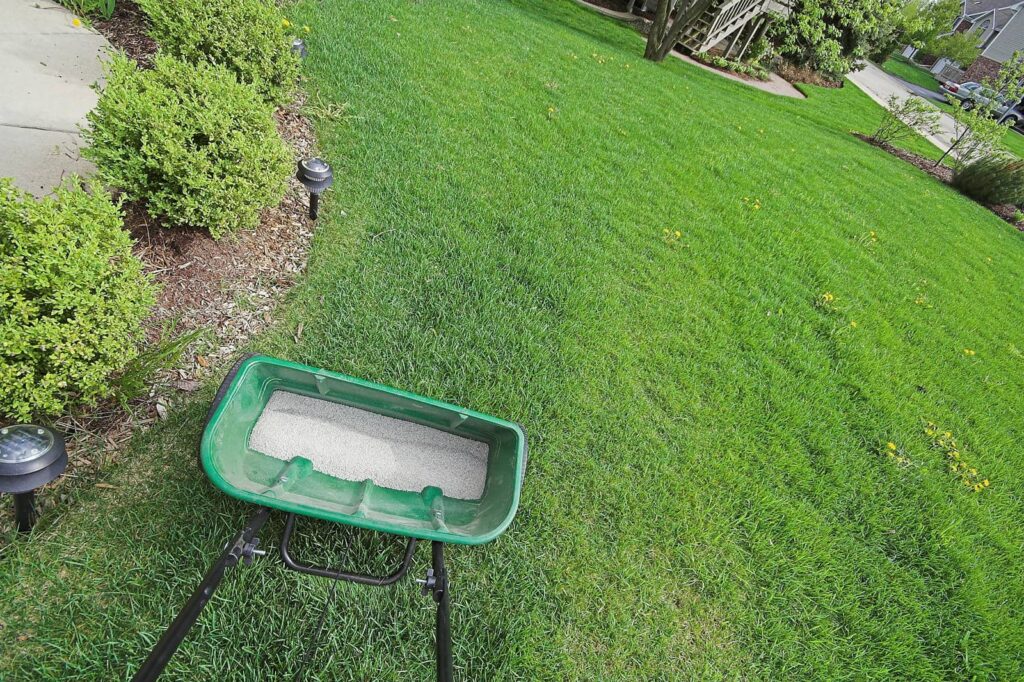
To apply, evenly spread the fertilizer using a broadcast spreader, ensuring you follow recommended rates for best results.
This way, you’ll foster a healthier, greener lawn that thrives year-round.
Soil Testing and Custom Blends
To achieve ideal lawn health, understanding your soil’s specific nutrient needs is essential. Start by conducting a soil test, which will measure soil pH and identify any nutrient deficiencies.
This information is vital for determining what your lawn lacks and what it needs to thrive.
Once you’ve received your results, you can create a custom blend of organic fertilizers tailored to your soil’s unique composition.
For instance, if your soil pH is too low, you might need to add lime, while nutrient deficiencies in nitrogen, phosphorus, or potassium could require specific organic amendments.
Frequently Asked Questions
How Often Should I Apply Organic Fertilizers to My Lawn?
You should apply organic fertilizers every 6 to 8 weeks during the growing season. This regular fertilizer application boosts lawn health, ensuring nutrient availability and promoting robust growth while preventing nutrient runoff into the environment.
Are There Specific Organic Fertilizers Best for Grand Rapids’ Climate?
Yes, you’ll want to contemplate local soil and climate considerations. Look for organic fertilizers rich in nitrogen, phosphorus, and potassium, like composted manure or bone meal, tailored for Grand Rapids’ unique environmental conditions.
Can I Use Organic Fertilizers on My Vegetable Garden Too?
Yes, you can use organic fertilizers in your vegetable garden. Compost benefits include enriching soil and providing essential vegetable nutrients, promoting healthy growth while ensuring a sustainable and eco-friendly approach to gardening that fosters community connection.
Is It Safe for Pets to Walk on a Recently Fertilized Lawn?
After a lawn’s treated, it’s generally best to keep pets off for at least 24 hours. This ensures pet safety, allowing the fertilizers to settle and minimizing any risk during your lawn care routine.
What Signs Indicate My Lawn Needs Fertilization?
You’ll notice your lawn needs fertilization if you see yellowing grass or patchy growth. These signs indicate nutrient deficiencies, so addressing them promptly will help restore your lawn’s health and vibrancy, creating a welcoming outdoor space.
Wrap-Up
By embracing these organic lawn fertilization methods, you’re not just feeding your grass; you’re nurturing an entire ecosystem. Imagine your lawn transforming into a lush, green carpet, teeming with life. Each application of compost tea, every layer of mulch, and the careful selection of fertilizers create a symphony of growth and resilience. Picture the vibrant colors and robust health of your lawn as you watch it thrive, all while contributing to a sustainable environment. Are you ready to make the change?
Recent Posts
10 Best Organic Lawn Care Tips for Spring
Spring offers a prime opportunity to enhance your lawn organically. By focusing on soil health,
Spring Organic Lawn Care Tips for a Healthy Yard
If you’ve noticed patchy areas in your lawn after winter, it’s time to think about
Boost Your Lawn: Soil Enrichment Strategies
Your lawn can either thrive or struggle, depending on the health of its soil. Evaluating