
Contents
To promote healthy Kentwood grass, you need to understand the intricacies of soil composition and nutrient requirements. Timing your fertilization techniques correctly and selecting the appropriate fertilizer type are essential steps. Additionally, soil testing can pinpoint deficiencies, allowing for targeted interventions. With the right strategies in place, your grass can thrive. However, the nuances of application techniques and seasonal adjustments could be the key to achieving ideal results. What methods will you consider implementing?
Key Takeaways
- Fertilize Kentwood grass in early spring with slow-release nitrogen to support robust growth and recovery from winter stress.
- Conduct regular soil testing to identify nutrient deficiencies and adjust fertilization strategies accordingly for optimal health.
- Use granular fertilizers for a steady nutrient release, ensuring long-term benefits and minimizing the risk of runoff.
- Apply balanced fertilizers rich in potassium in the fall to strengthen root systems before winter dormancy.
- Monitor grass for signs of nutrient deficiencies, such as yellowing leaves, to address issues promptly for healthy growth.
Understanding Soil Composition for Optimal Growth
Understanding soil composition is vital for fostering ideal grass growth, as it directly influences nutrient availability, drainage, and root development.
To create the best environment for your grass, you need to assess soil acidity and nutrient retention. Testing your soil’s pH reveals its acidity levels, which greatly affect nutrient absorption. Most grasses thrive in slightly acidic to neutral pH levels, typically between 6.0 and 7.0. If your soil is too acidic, it can limit nutrient availability, leading to stunted growth.
Improving nutrient retention is equally important. Loamy soils, rich in organic matter, hold nutrients effectively, ensuring your grass receives the essential elements it needs.
You should consider incorporating compost or organic fertilizers to enhance this retention. By understanding these factors, you’ll create a healthier, thriving lawn that looks great and fosters a sense of community among fellow gardening enthusiasts.
Best Times to Fertilize Kentwood Grass
When determining the best times to fertilize Kentwood grass, it’s essential to align your fertilization schedule with the grass’s growth cycles.
For ideal results, consider these key timings:
Early Spring: Fertilize when the grass starts to green up, usually around late March to early April. This timing boosts initial growth and prepares the lawn for the warmer months.
Late Summer: Apply a second round of fertilizer in late August to early September. This helps the grass recover from summer stress and promotes root development before fall.
Post-Mowing: It’s also beneficial to fertilize shortly after mowing. This encourages quick recovery and enhances nutrient absorption.
Choosing the Right Fertilizer Type
How do you choose the right fertilizer type for your Kentwood grass? Start by understanding the different fertilizer formulations available, such as granular and liquid options.
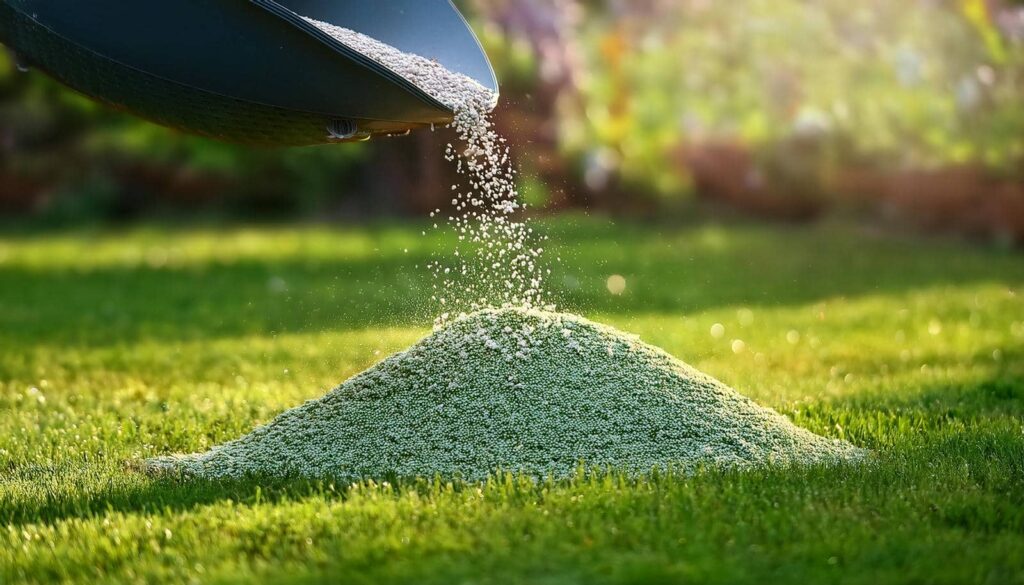
Granular fertilizers offer a slower nutrient release, providing a steady supply of nutrients over time, which is ideal for long-term grass health. In contrast, liquid fertilizers deliver nutrients quickly, making them suitable for immediate needs, like during growth spurts.
Next, consider the nutrient composition. Look for fertilizers balanced in nitrogen, phosphorus, and potassium (N-P-K), tailored to your grass’s specific growth stage.
For instance, a high nitrogen formulation supports lush growth, while a balanced mix aids overall health.
Lastly, timing your application is essential. Choose fertilizers that match your grass’s growth cycle to optimize nutrient uptake.
The Importance of Soil Testing
Soil testing is essential for achieving ideal grass health, as it provides fundamental insights into the nutrient levels and pH balance of your lawn.
By understanding the condition of your soil, you can make informed decisions to promote robust growth.
Here are three key benefits of soil testing:
Identifies Soil Nutrient Deficiencies: Testing reveals which nutrients your grass lacks, allowing you to tailor your fertilization strategy effectively.
Determines pH Balance: Knowing your soil’s pH helps you understand its acidity or alkalinity, which directly impacts nutrient availability.
Enhances Fertilization Efficiency: With accurate data, you can apply the right type and amount of fertilizer, reducing waste and promoting a healthier lawn.
Organic vs. Synthetic Fertilizers
When choosing between organic and synthetic fertilizers, it’s crucial to understand their nutrient composition differences and how each affects your grass’s health.
Additionally, consider the environmental impact of your choice and the long-term cost-effectiveness of both options.
Evaluating these factors will help you make an informed decision for peak grass growth.
Nutrient Composition Differences
While both organic and synthetic fertilizers aim to enhance grass growth, their nutrient compositions differ markedly, impacting their effectiveness and environmental sustainability.
Understanding these differences can help you make informed choices for your lawn care.
Nutrient Ratios: Organic fertilizers typically have lower nutrient ratios, releasing nutrients slowly, which promotes healthier soil biology.
Soil Amendments: Organic options improve soil structure and moisture retention, while synthetic fertilizers focus primarily on quick nutrient delivery.
Nutrient Source: Organic fertilizers derive from natural materials, providing a wider range of micronutrients compared to synthetic alternatives.
Environmental Impact Considerations
The choice between organic and synthetic fertilizers considerably impacts the environment, particularly regarding nutrient runoff and soil health.
Organic fertilizers, derived from natural sources, promote sustainable practices by enhancing soil structure and microbial activity, fostering an ecological balance. They release nutrients slowly, reducing the risk of leaching into water systems.
Conversely, synthetic fertilizers, while effective for quick nutrient delivery, can lead to excess runoff, contributing to water pollution and disrupting local ecosystems.
Cost-Effectiveness Comparison
Choosing between organic and synthetic fertilizers involves environmental considerations and a significant cost-effectiveness analysis.
You’ll want to evaluate the following factors when determining which option fits your needs and budget:
Initial Costs: Organic fertilizers often have a higher upfront cost compared to synthetic options, but they may provide long-term soil benefits.
Application Frequency: Synthetic fertilizers typically require more frequent applications, which can add to overall expenses.
Long-Term Soil Health: Organic fertilizers improve soil structure, potentially reducing future costs related to soil amendments.
Application Techniques for Even Coverage
Ensuring even coverage during fertilization is crucial for promoting healthy grass growth, as uneven application can result in patchy lawns and nutrient deficiencies.
Start by calibrating your sprayer to ensure the right amount of fertilizer is distributed evenly. Accurate sprayer calibration helps you avoid over-application in some areas while under-applying in others.
Next, adjust your spreader settings according to the fertilizer type and your lawn’s size. It’s important to follow the manufacturer’s guidelines on spreader settings for best results.
Make parallel passes across your lawn, overlapping slightly to avoid gaps. Consider using a checkerboard pattern for larger areas to enhance coverage consistency.
Finally, pay attention to weather conditions; applying fertilizer when the wind is calm can prevent drift and ensure even distribution.
Watering Practices After Fertilization
Once you’ve applied fertilizer, it’s crucial to implement effective watering practices to maximize nutrient absorption and promote healthy grass growth.
Post-fertilization irrigation plays a critical role in ensuring that your grass receives the nutrients it needs. Here are three key practices to follow:
Initial Watering: Water your lawn lightly within 24 hours after fertilization. This helps to dissolve the fertilizer and initiate nutrient uptake.
Deep Watering: About one week later, provide a deep soak to encourage roots to grow deeper and enhance moisture retention techniques.
Regular Schedule: Maintain a consistent watering schedule, aiming for about 1 inch of water per week, adjusting for rainfall, to ensure ongoing nutrient availability.
Signs of Nutrient Deficiency in Grass
When your grass exhibits yellowing leaf tips, it’s a clear signal of nutrient deficiency.
You might also notice stunted growth patterns or poor root development, indicating that your grass isn’t receiving the essential nutrients it needs.
Recognizing these signs early allows you to take corrective action for ideal lawn health.
Yellowing Leaf Tips
Yellowing leaf tips are a clear indicator that your grass may be suffering from nutrient deficiencies. If you notice these yellowing leaves, it’s essential to diagnose the issue promptly to restore your lawn’s health.
Here are three common causes of nutrient imbalance:
Nitrogen Deficiency: Low nitrogen levels often lead to chlorosis, causing leaves to yellow from the tip down.
Iron Deficiency: This results in yellowing between the veins, while the veins remain green.
Potassium Deficiency: A lack of potassium can cause the leaf tips to turn yellow and dry out, affecting overall growth.
Stunted Growth Patterns
Stunted growth patterns in grass often signal underlying nutrient deficiencies that need immediate attention.
When you notice your grass isn’t reaching its full height, it’s likely due to a nutrient imbalance, particularly nitrogen, phosphorus, or potassium. These essential nutrients are important for robust growth and development.
A lack of nitrogen typically leads to poor leaf production, while insufficient phosphorus can hinder root growth.
If you identify these stunted growth symptoms, it’s essential to test your soil to pinpoint the exact deficiencies.
Once you know what’s lacking, you can apply the appropriate fertilizers to restore balance.
Poor Root Development
Poor root development often indicates that your grass is struggling to access essential nutrients, resulting in an unhealthy lawn.
To address this issue, focus on enhancing root health through effective practices. Here are three key signs of nutrient deficiency that you should monitor:
Shallow Roots: Roots fail to penetrate deeply, limiting nutrient absorption.
Discoloration: Grass may turn yellow or brown, signaling a lack of crucial nutrients.
Weak Growth: You may notice sparse growth or patches, indicating poor soil conditions.
Improving soil aeration can alleviate compaction, allowing roots to expand and access nutrients more efficiently.
Seasonal Adjustments for Fertilization Strategies
As the seasons change, your approach to fertilizing grass must adapt to the varying environmental conditions and nutrient needs of the soil.
In spring, as temperatures rise and grass growth accelerates, apply a slow-release nitrogen fertilizer to promote robust development. During this time, monitor the soil moisture levels, as seasonal weather can influence nutrient uptake.
As summer arrives, focus on maintaining healthy grass through proper irrigation and lighter fertilization, as excessive nutrients can lead to stress during heat waves.
Shifting into fall, it’s crucial to provide a balanced fertilizer rich in potassium to enhance root strength and prepare your grass for winter dormancy.
Lastly, in winter, avoid fertilization altogether, allowing the grass to rest.
Tailoring your fertilization strategies to each season supports ideal grass growth and fosters a thriving lawn community that you can take pride in.
Frequently Asked Questions
Can Over-Fertilizing Harm My Kentwood Grass?
Yes, over-fertilizing can harm your Kentwood grass. Symptoms include browning tips and uneven growth. Maintaining soil nutrient balance is essential; too many nutrients disrupt absorption, leading to weakened grass and increased susceptibility to diseases.
How Long Does Fertilizer Take to Show Results?
Fertilizer typically shows results within 1 to 3 weeks, depending on the fertilizer type and conditions. Monitor grass growth indicators like color and density to assess fertilizer absorption timelines and the overall health of your Kentwood grass.
Are There Specific Fertilizers for Shaded Areas?
In shaded areas, you’ll want to use shaded fertilizers specifically designed for low-light conditions. These promote robust grass growth, ensuring your lawn thrives like a hidden gem in a lush, green forest.
Can I Fertilize During a Drought?
You shouldn’t fertilize during a drought; drought effects can stress grass, reducing its ability to absorb nutrients. Prioritize watering first to maintain grass health, then consider fertilizing when conditions improve for ideal results.
How Do I Store Leftover Fertilizer Safely?
Imagine a treasure chest; for fertilizer safety, seal it tightly in its original container, store it in a cool, dry place away from children and pets, and follow these storage tips to preserve effectiveness.
Summary
Incorporating effective fertilization techniques is essential for maintaining healthy Kentwood grass. By applying a slow-release nitrogen fertilizer in early spring and a potassium-rich fertilizer in the fall, you’ll foster robust growth and strong roots. Regular soil testing ensures that you meet specific nutrient needs, while proper irrigation and the addition of organic matter enhance nutrient retention. Prioritizing these practices will lead to a thriving, resilient lawn.
Recent Posts
Top Lawn Care Tips for Grand Rapids Residents
Imagine stepping onto a vibrant, green lawn that feels lush underfoot, a demonstration of your
3 Best Lawn Care Tips for Grand Rapids Area
Did you know that proper lawn care can increase your home’s value? In the Grand
Why Consider Unique Landscaping for Cascade Homes?
Imagine stepping into a Cascade home adorned with vibrant native plants, creating a thriving ecosystem