
Contents
Imagine your lawn as a delicate ecosystem, much like a thriving forest that requires the right conditions to flourish. For Michigan residents, understanding your unique soil type is the first step toward achieving a vibrant lawn. However, knowing when and how to fertilize can make all the difference in maintaining that lush appearance. What should you consider before applying that first round of fertilizer? Let’s explore the essential tips that will keep your lawn healthy year-round.
Key Takeaways
- Conduct regular soil testing to determine pH and nutrient levels, ensuring tailored fertilization for optimal lawn health.
- Choose fertilizers with a balanced N-P-K ratio, considering organic options for improved soil health and environmental impact.
- Time your fertilization strategically: apply high-nitrogen fertilizers in early spring and nutrient-rich formulations in fall for winter preparation.
- Use proper application techniques, such as even distribution with a spreader and timely watering after application, to enhance nutrient uptake.
- Avoid common mistakes like over-fertilization and uneven application to prevent lawn damage and promote consistent growth.
Understanding Michigan’s Soil Types
While you might think of soil as just dirt, understanding Michigan’s diverse soil types is essential for effective lawn fertilization. Michigan’s soil varies widely, impacting factors like soil pH and drainage issues.
For instance, sandy soils drain quickly but may lack essential nutrients, while clay soils retain moisture but can lead to drainage problems. Evaluating your soil texture helps you determine how well nutrients will be absorbed by your grass.
Incorporating organic matter is a practical way to improve soil structure and nutrient availability. Adding compost enhances the soil’s fertility and helps balance its pH, promoting a healthy lawn.
It’s important to test your soil regularly, as knowing its specific characteristics allows you to tailor your fertilization strategy effectively. By understanding these factors, you’ll create a thriving lawn that belongs to the vibrant community of Michigan residents dedicated to lush, healthy landscapes.
Choosing the Right Fertilizer for Your Lawn
How can you ensure your lawn receives the necessary nutrients? Choosing the right fertilizer is essential for a thriving lawn.
Consider these key factors when selecting your product:
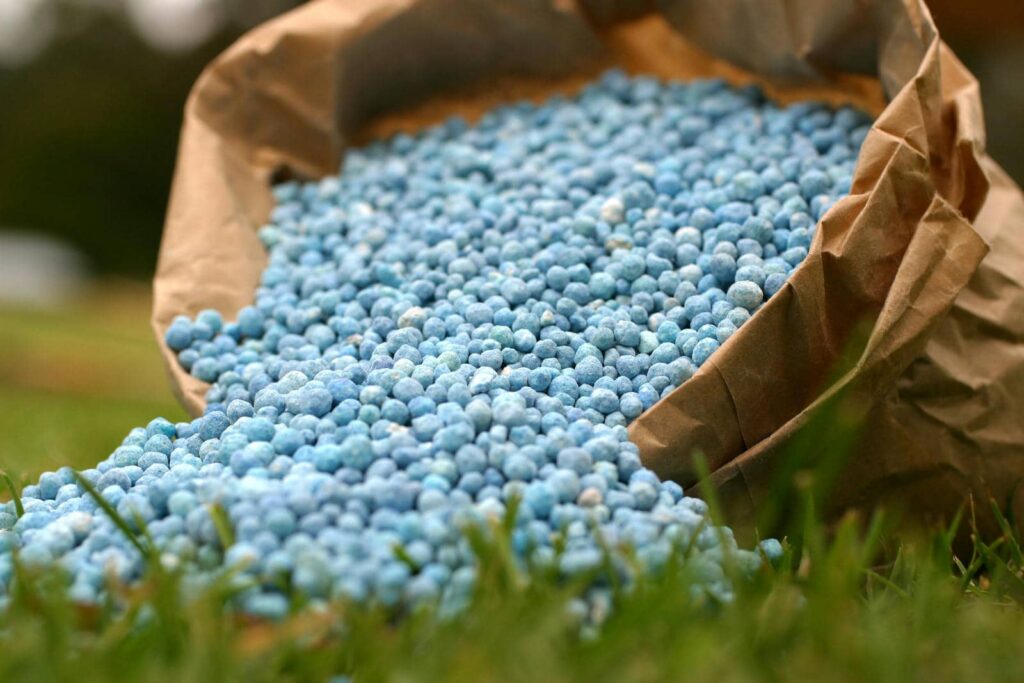
- Nutrient Ratio: Look for fertilizers with a balanced N-P-K ratio (Nitrogen, Phosphorus, Potassium) tailored to your lawn’s specific needs.
- Natural Fertilizer Options: Explore environmentally friendly choices, like compost or organic fertilizers, that improve soil health without harming the ecosystem.
- Slow-Release Formulas: Opt for slow-release fertilizers to provide a steady supply of nutrients over time, reducing the risk of nutrient runoff.
- Soil Test Results: Conduct a soil test to identify nutrient deficiencies and pH levels, ensuring you choose the most effective fertilizer for your lawn’s unique conditions.
Ideal Timing for Lawn Fertilization
Timing your lawn fertilization is essential for ideal growth and health.
In Michigan, you’ll want to focus on a spring fertilization schedule to kickstart your lawn’s growth, followed by targeted applications in the fall to strengthen roots before winter.
Understanding these key periods will help you maximize nutrient uptake and improve your turf’s resilience.
Spring Fertilization Schedule
As temperatures begin to rise in Michigan, it’s essential to establish a spring fertilization schedule that aligns with your lawn’s growth cycle.
Proper timing maximizes spring fertilization benefits, ensuring your lawn thrives. Here’s a practical schedule you can follow for effective spring lawn care:
- Late March to Early April: Apply a pre-emergent herbicide and starter fertilizer to support early growth.
- Mid-April: Assess soil temperature; fertilize when it reaches 55°F.
- Late April: Spread a balanced fertilizer to promote robust root development.
- May: Monitor your lawn’s health and moisture levels, applying additional nutrients as needed.
Following this schedule enhances your lawn’s appearance and establishes a foundation for healthy growth throughout the season.
Fall Fertilization Timing
After a successful spring season, focusing on fall fertilization can greatly boost your lawn’s resilience against winter stress.
Timing is vital; ideally, you want to fertilize in early to mid-fall when temperatures cool but before the ground freezes. This aligns with fall weather considerations that promote nutrient absorption, allowing grass roots to strengthen before winter.
Use slow-release fertilizers that provide essential nutrients over time. Implement lawn recovery techniques, such as aeration, to enhance soil health and nutrient uptake.
This combination ensures your lawn enters winter well-prepared. By following these guidelines, you’ll support your lawn’s health and foster a sense of community as you share these practices with fellow Michigan residents.
The Importance of Soil Testing
Understanding your soil’s composition is essential for healthy lawn growth in Michigan.
By testing your soil, you can identify nutrient deficiencies and receive tailored fertilizer recommendations that will enhance your lawn’s vigor.
This proactive approach ensures that you’re applying fertilizer strategically and optimizing your lawn care practices for the best results.
Understanding Soil Composition
Soil is the foundation of a healthy lawn, and knowing its composition is essential for effective fertilization.
Understanding your soil’s unique characteristics helps you make informed decisions about nutrient management. Here are four key factors to evaluate:
- Soil pH: This affects nutrient availability. Aim for a pH between 6.0 and 7.0 for ideal growth.
- Organic Matter: High organic content enhances nutrient retention and improves soil structure.
- Texture: Clay, sand, or loam affects water drainage and nutrient holding capacity.
- Nutrient Levels: Regular testing reveals deficiencies or excesses, allowing you to balance your fertilization strategy.
Nutrient Deficiency Identification
While your lawn may appear lush and green, hidden nutrient deficiencies can undermine its health and vigor. To identify these deficiencies, you need to recognize nutrient symptoms.
For instance, yellowing leaves often indicate nitrogen deficiency, while stunted growth might suggest a lack of phosphorus. Understanding these signs helps you pinpoint deficiency causes, from poor soil quality to imbalanced pH levels.
Soil testing is essential, as it reveals nutrient levels and guides your fertilization strategy. By analyzing soil samples, you’ll learn exactly what your lawn needs, preventing over-fertilization and ensuring peak health.
Regular testing fosters a thriving lawn that looks good and belongs to the vibrant community of well-maintained green spaces in Michigan.
Optimal Fertilizer Recommendations
Identifying nutrient deficiencies is just the beginning; the next step is selecting the right fertilizer to address those specific needs. Achieving an ideal nutrient balance in your lawn can greatly enhance growth and health.
Here are some practical fertilizer application techniques to take into account:
- Choose the Right Type: Match fertilizer type (granular, liquid) to your lawn’s needs.
- Follow Soil Test Results: Use the recommendations from your soil test to guide your fertilizer selection.
- Timing Matters: Apply fertilizers during the growing season for maximum absorption.
- Adjust Application Rates: Follow guidelines to avoid over-fertilization, which can harm your lawn.
How to Properly Apply Fertilizer
When applying fertilizer, timing and technique can make all the difference in achieving a lush, healthy lawn. First, choose the right fertilizer for your grass type and soil condition.
Next, familiarize yourself with ideal application methods. A broadcast spreader works well for even distribution, while a drop spreader targets specific areas. Always set your spreader to the recommended rate; over-fertilizing can harm your lawn.
Before you begin, mow your grass to the appropriate height and verify the lawn is dry. Apply fertilizer on a calm day to minimize drift, ideally during the early morning or late afternoon.
Water your lawn after application to help the nutrients penetrate the soil.
Finally, consider the season; spring and fall are prime times for fertilizer application. By using these fertilizer application techniques, you’ll cultivate a vibrant lawn that fosters community pride and enhances your outdoor space.
Organic vs. Synthetic Fertilizers
When choosing between organic and synthetic fertilizers, you need to evaluate their nutrient compositions, as they provide different ratios of essential elements for your lawn.
Additionally, the environmental impact of each option can vary greatly, affecting local ecosystems and groundwater.
Finally, cost and availability can play a vital role in your decision, influencing which type fits your budget and access.
Nutrient Composition Differences
Understanding the differences in nutrient composition between organic and synthetic fertilizers is essential for achieving a thriving lawn in Michigan.
When choosing between these options, consider the following nutrient ratios and their benefits:
- Organic Fertilizers: Often contain a balanced mix of nitrogen, phosphorus, and potassium, along with beneficial microbes that improve soil health.
- Synthetic Fertilizers: Typically provide higher nutrient concentrations for quick green-up but may lack the soil amendments necessary for long-term health.
- Release Rate: Organic fertilizers release nutrients gradually, promoting steady growth, while synthetic options offer immediate results.
- Soil Interaction: Organic fertilizers enhance soil structure and moisture retention, benefiting your lawn in the long run.
Environmental Impact Considerations
Although both organic and synthetic fertilizers play essential roles in lawn care, their environmental impacts differ considerably, influencing your choice as a Michigan resident.
Organic fertilizers, derived from natural sources, support sustainable practices and enhance soil health, promoting ecosystem preservation. They release nutrients slowly, reducing the risk of runoff and water pollution.
On the other hand, synthetic fertilizers deliver quick results but may contribute to nutrient leaching, harming nearby waterways and wildlife.
As you consider your lawn care options, think about how your choice affects the environment. Embracing organic fertilizers benefits your lawn and fosters a healthier ecosystem for your community, making you a more responsible steward of Michigan’s natural resources.
Cost and Availability Factors
While evaluating your lawn care options, it’s crucial to weigh the cost and availability of both organic and synthetic fertilizers.
Understanding fertilizer pricing helps you make informed decisions tailored to your budget and lawn needs. Here are key factors to reflect on:
- Cost: Organic fertilizers often have a higher upfront cost compared to synthetic options.
- Availability: Check with local suppliers; organic products may be less accessible in certain areas.
- Nutrient Release: Synthetic fertilizers provide quick results, while organics release nutrients more slowly.
- Long-term Benefits: Organic fertilizers improve soil health, potentially reducing future costs.
The Role of Grass Type in Fertilization
When selecting the right fertilizer for your lawn, the type of grass you have plays a crucial role in determining its nutritional needs.
For instance, Kentucky bluegrass thrives in Michigan’s climate but has specific nutrient requirements, especially nitrogen, to maintain its lush appearance.
On the other hand, fescue varieties are more drought-resistant and require a different balance of nutrients, often benefitting from higher phosphorus levels to support root development.
If you’ve got ryegrass, take advantage of its quick establishment and vigorous growth by applying a balanced fertilizer that promotes healthy foliage.
Understanding these season-specific requirements allows you to tailor your fertilization approach effectively.
By recognizing the unique needs of your grass type, you can create a thriving lawn that looks great and contributes to the overall health of your outdoor space.
Proper fertilization ensures your lawn remains vibrant throughout Michigan’s changing seasons.
Seasonal Fertilization Strategies
To effectively nourish your lawn throughout the year, it’s essential to adopt seasonal fertilization strategies tailored to Michigan’s climate. Here are some early spring tips and summer fertilization practices to keep your lawn vibrant:
- Early Spring (April): Apply a balanced fertilizer with a high nitrogen content to promote growth as your grass awakens from dormancy.
- Late Spring (May): Consider a slow-release fertilizer to sustain growth and enhance root development during warmer weather.
- Summer (June-July): Use a fertilizer with lower nitrogen levels to prevent overstressing your grass during heatwaves. Focus on moisture retention with mulching.
- Fall (September): End the season with a nutrient-rich fertilizer to prepare your lawn for winter dormancy, ensuring it has the necessary nutrients to thrive next spring.
Common Mistakes to Avoid
Even though you may have the best intentions for your lawn, common fertilization mistakes can undermine your efforts and lead to poor results.
Over-fertilizing risks can damage your grass, causing burn and promoting disease. Don’t ignore soil needs; testing is essential to determine nutrient requirements.
Improper application techniques, like uneven spreading, can create patches of lush growth and bare spots. Timing errors, such as fertilizing too early or too late, can hinder your lawn’s health.
Using the wrong type of fertilizer for your grass variety can also lead to issues. Remember to water after applying, as neglecting this step can prevent nutrients from reaching the roots.
Misunderstanding labels can result in applying too much or too little. Finally, don’t skip testing your soil and be mindful of seasonal misjudgments.
Overlooking local advice can mean missing key insights tailored to Michigan’s specific climate.
Maintaining a Healthy Lawn After Fertilization
How can you ensure your lawn remains healthy after fertilization? Following a structured maintenance plan is essential. Here are some key practices to keep in mind:
- Lawn Watering: Maintain consistent watering, especially during seasonal droughts. Deep watering promotes root health.
- Soil Aeration: Aerate your soil at least once a year. This process enhances nutrient absorption and improves drainage.
- Mowing Techniques: Use sharp lawn equipment for clean cuts. Mow at the right height to encourage dense growth and discourage weeds.
- Pest and Weed Management: Regularly inspect for pests and apply control measures promptly. Implement effective weed management strategies to prevent competition for nutrients.
Frequently Asked Questions
Can I Fertilize My Lawn After Heavy Rainfall?
You shouldn’t fertilize your lawn right after heavy rainfall. The soil’s absorption rate is low, hindering nutrient uptake. Allow your lawn recovery time for better absorption and healthier growth before applying any fertilizers.
How Do Pets React to Recently Fertilized Lawns?
Pets often react negatively to recently fertilized lawns; some dogs can experience gastrointestinal upset when exposed. For their safety, ensure proper lawn care by keeping them off treated areas for at least 24 hours.
Is It Safe to Fertilize During Drought Conditions?
Fertilizing during drought conditions isn’t ideal. Drought stress weakens plants, making it harder for them to absorb nutrients. Prioritize soil health first—wait until conditions improve to ensure your lawn thrives and benefits from fertilization.
What Are Signs of Over-Fertilization on My Lawn?
You’ll notice over-fertilization symptoms like yellowing grass, burnt tips, and excessive growth. This often indicates a lawn nutrient imbalance. Regularly test your soil to ensure proper nutrient levels and maintain a vibrant, healthy lawn.
Can Lawn Fertilization Harm Nearby Plants and Flowers?
Yes, lawn fertilization can harm nearby plants and flowers if there’s lawn chemical runoff, leading to plant sensitivity issues. Always apply fertilizers carefully to avoid unintended damage to your cherished garden companions.
Recap
By understanding soil types and following a strategic fertilization plan, you can considerably enhance your lawn’s health. This leads to a more vibrant lawn and helps reduce weeds and pests. Remember to test your soil regularly, choose the right fertilizer, and time your applications wisely. With these practices, you’ll enjoy a lush, thriving lawn that benefits both you and the environment.
Recent Posts
3 Best Lawn Care Tips for Grand Rapids Area
Did you know that proper lawn care can increase your home’s value? In the Grand
Why Consider Unique Landscaping for Cascade Homes?
Imagine stepping into a Cascade home adorned with vibrant native plants, creating a thriving ecosystem
5 Tips for Effective Weed Control in Grand Rapids
If you’re dealing with pesky weeds in Grand Rapids, you’re not alone. Understanding local weed