
Contents
Did you know that aerating your lawn can greatly improve grass health by reducing soil compaction and enhancing nutrient absorption? Timing is vital for effective aeration, as it varies for cool-season and warm-season grasses. But before you grab that aerator, there are essential steps you need to follow to prepare your lawn properly. Let’s explore the best practices for achieving a lush, resilient lawn this season.
Key Takeaways
- Aerate your lawn in early fall when the grass is actively growing to promote recovery and health before winter.
- Ensure soil is damp but not soggy for optimal aeration results; check moisture levels before starting.
- Choose core aeration for significant compaction issues, as it enhances airflow and nutrient absorption.
- Follow up with thorough watering and apply balanced fertilizer to support recovery and promote grass growth.
- Regularly monitor lawn health after aeration to adjust care routines and address any emerging issues promptly.
Understand the Benefits of Lawn Aeration
When you understand the benefits of lawn aeration, you’re taking an essential step toward achieving a lush, healthy lawn. Aeration improves soil compaction, allowing air, water, and nutrients to reach grass roots more effectively. This process promotes better grass growth, helping your lawn thrive.
Many people hold misconceptions about aeration, thinking it’s only necessary for struggling lawns. In reality, even healthy grass benefits from regular aeration. It enhances root development, increases drought resistance, and boosts overall health.
By addressing soil issues and breaking up thatch, you’re creating an environment where grass can flourish.
Plus, aeration encourages beneficial microbial activity, which contributes to nutrient absorption.
Determine the Right Time for Aeration
Knowing when to aerate your lawn is essential for its health.
Consider seasonal timing, soil moisture levels, and the type of grass you have to achieve the best results.
Seasonal Timing Considerations
Choosing the right time for lawn aeration can greatly impact your grass’s health, so it’s important to take into account seasonal factors.
Here’s what you should consider:
Spring Aeration: Target late spring when your grass is actively growing. This helps it recover quickly from the aeration process.
Fall Aeration: Aerate in early fall to prepare your lawn for winter. The cooler temperatures and increased moisture promote recovery and root growth.
Regular Assessment: Keep an eye on your lawn’s health throughout the year. If it appears compacted or stressed, it may be time for aeration, regardless of the season.
Soil Moisture Levels
Soil moisture levels play an essential role in determining the best time for lawn aeration. Before you grab that aerator, check the soil moisture.
Ideally, your soil should be damp but not soggy. If it’s too dry, aeration can stress your grass and hinder moisture retention. On the other hand, overly wet soil can lead to clumping and ineffective aeration.
A good rule of thumb is to aerate when the soil is moist enough to hold together, yet crumbles easily in your hand. This balance ensures your lawn gets the oxygen and nutrients it needs for healthy growth.
Grass Type Factors
When it comes to determining the right time for lawn aeration, understanding your grass type is essential. Different grass types have unique needs, especially fescue varieties, which thrive in cooler temperatures.
Here are three key factors to take into account:
Cool-Season Grasses: Aerate in early spring or fall when temperatures are mild, promoting recovery.
Warm-Season Grasses: Best to aerate during late spring or early summer when the grass is actively growing.
Drought Resistance: If your lawn struggles with drought, think about aerating when moisture levels are adequate to improve root health.
Choose the Best Aeration Method
When it comes to aerating your lawn, choosing the right method is essential for promoting healthy grass.
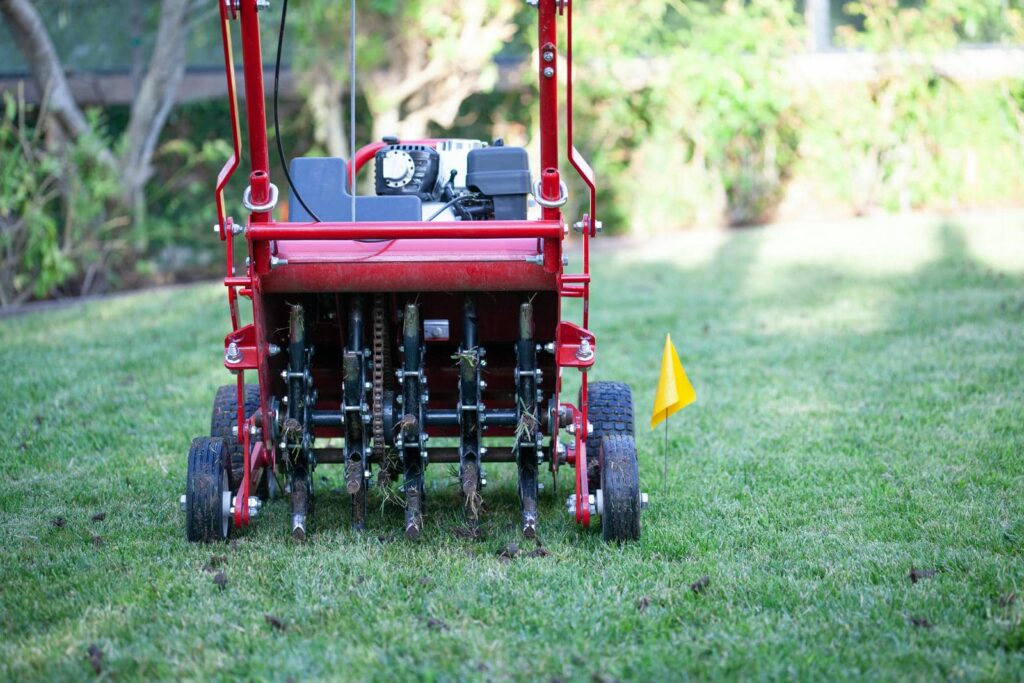
Core aeration pulls out soil plugs, improving airflow and nutrient absorption, while spike aeration simply creates holes without removing any soil.
Understanding the benefits of each technique will help you make an informed decision for your lawn care routine.
Core Aeration Benefits
Although various aeration methods exist, core aeration stands out for its effectiveness in promoting healthy grass. Understanding the core benefits can help you dispel common aeration myths and make informed choices for your lawn care.
Here are three key advantages of core aeration:
Improved Soil Health: By removing soil plugs, you enhance oxygen flow, promoting root growth.
Enhanced Nutrient Absorption: Core aeration allows fertilizers and water to penetrate deeper, ensuring your grass gets the nutrients it needs.
Reduced Compaction: It relieves compacted soil, creating a thriving environment for your grass to flourish.
Embracing core aeration can lead to a vibrant lawn, fostering a sense of community pride and ownership among you and your neighbors.
Spike Aeration Techniques
While core aeration offers significant benefits, spike aeration is another method worth considering for your lawn care routine. A spike aerator creates small holes in your lawn, helping to alleviate lawn compaction while allowing nutrients, air, and water to reach the roots more effectively.
This method is particularly useful for lawns with minor compaction issues or those that need a quick boost.
To use a spike aerator, simply walk across your lawn in straight lines to ensure you cover the entire area. Be mindful of the spacing between each pass; this ensures you’re maximizing the aeration effect.
Prepare Your Lawn Before Aeration
Preparing your lawn before aeration is essential for achieving ideal results. By using effective lawn preparation techniques, you’ll set the stage for healthier grass. Here’s what you need to do:
Mow Your Lawn: Cut your grass to about 2-3 inches. This height makes it easier for aeration tools to penetrate the soil.
Clear Debris: Remove any leaves, branches, or other debris. A clean surface ensures the aerator works efficiently.
Test Your Soil: Use soil testing methods to determine pH and nutrient levels. Understanding your soil composition helps you apply the right amendments post-aeration.
Taking these steps will help your lawn thrive after aeration. By investing a little effort now, you’ll create an environment where your grass can flourish, fostering a sense of pride in your outdoor space.
Aerate During Optimal Weather Conditions
Choosing the right weather conditions for aeration is essential to your lawn’s recovery and growth. Aim for days with ideal temperatures, ideally between 60°F and 75°F. This range allows your grass to thrive without stress, promoting healthy root development.
Keep an eye on local weather patterns, avoiding extremes like heavy rain or scorching heat. Aerating when the soil is slightly moist can make a significant difference, as this helps the aerator penetrate the ground more easily.
A dry lawn can lead to compacted soil, while soggy conditions may cause damage to your grass.
Follow up With Proper Lawn Care
After aerating your lawn on a sunny day, following up with proper care is key to ensuring your grass recovers and flourishes.
To keep your lawn thriving, integrate these essential steps into your lawn maintenance schedules:
- Water Thoroughly: Make sure your lawn receives consistent moisture for the best recovery.
Water deeply but infrequently to encourage deep root growth.
- Post Aeration Fertilization: Apply a balanced fertilizer to provide essential nutrients.
This helps boost grass recovery and promotes healthy growth.
- Mow with Care: Wait a week or two before mowing to allow the grass to establish itself.
When you do, set your mower to a higher setting to avoid stressing the new growth.
Incorporate Overseeding After Aeration
Incorporating overseeding after aeration can greatly enhance your lawn’s overall health and appearance. This technique helps introduce new grass seeds to your yard, filling in bare spots and improving density.
One of the key overseeding benefits is that it promotes a more resilient lawn, better able to withstand pests and diseases.
To get started, choose a high-quality grass seed that matches your existing lawn type. Use overseeding techniques like broadcasting the seeds evenly across the aerated areas, ensuring they make good contact with the soil.
You can also lightly rake the surface to cover the seeds and protect them from birds.
Timing is essential; aim to overseed shortly after aeration for the best results. By combining these two practices, you’ll create a lush, healthy lawn that you can be proud of, fostering a sense of belonging in your outdoor space.
Water Your Lawn Post-Aeration
Watering your lawn post-aeration is essential for maximizing the benefits of this process.
After aerating, your lawn needs adequate moisture to help the soil and grass recover, ensuring nutrients and air reach the roots effectively.
Here are some lawn hydration techniques to follow:
Water immediately: Give your lawn a good soak right after aeration to help settle the soil and promote seed germination if you’ve overseeded.
Deep Watering: Aim for about 1 to 1.5 inches of water per week, ensuring the moisture penetrates deeply. This encourages strong root growth.
Frequency: Water in the early morning or late afternoon to reduce evaporation and allow the grass to absorb moisture efficiently.
Regularly Monitor Lawn Health
Keeping an eye on your lawn’s health is key to maintaining its vibrant appearance and resilience. Regular lawn inspections can help you spot issues early, preventing costly repairs. Start by checking for signs of pests, weeds, or disease. Make soil testing a priority too; it reveals nutrient deficiencies and pH levels, guiding your fertilization efforts.
| Inspection Type | Recommended Frequency |
|---|---|
| Visual Checks | Weekly |
| Soil Testing | Twice a Year |
| Pest Monitoring | Monthly |
| Watering Checks | Weekly |
| Fertilizer Application | Per Soil Test |
Wrap-Up
By aerating your lawn, you can boost grass health and improve root growth, and increase lawn density. Remember, timing is everything—late spring and early fall are ideal for cool- and warm-season grasses, respectively. After aeration, don’t forget to follow up with proper care, including watering and overseeding. With these tips, you’ll be on your way to a lush, vibrant lawn that thrives all season long.
Recent Posts
10 Best Organic Lawn Care Tips for Spring
Spring offers a prime opportunity to enhance your lawn organically. By focusing on soil health,
Spring Organic Lawn Care Tips for a Healthy Yard
If you’ve noticed patchy areas in your lawn after winter, it’s time to think about
Boost Your Lawn: Soil Enrichment Strategies
Your lawn can either thrive or struggle, depending on the health of its soil. Evaluating