
Contents
Managing lawn pests effectively requires a strategic approach that combines observation with action. By understanding common pests and employing integrated pest management techniques, you can create a sustainable environment. Regular monitoring and targeted interventions are key. As you explore the options available, you’ll discover how natural remedies and preventive measures can enhance your lawn’s health. But what specific strategies should you prioritize for best results?
Key Takeaways
- Regularly monitor pest populations and identify thresholds for timely intervention using tools like sticky traps and soil sampling.
- Implement Integrated Pest Management (IPM) by introducing natural predators and fostering a balanced ecosystem for effective pest control.
- Utilize natural remedies such as neem oil and diatomaceous earth to disrupt pest life cycles and promote sustainable lawn health.
- Prioritize soil health through testing, tailored fertilization, and aeration to improve grass resilience against pest invasions.
- Engage with professional pest control services for tailored treatment plans and expert advice on managing specific lawn pest issues.
Understanding Common Lawn Pests
Lawn pests can wreak havoc on your lush green landscape, making it essential to identify them quickly. To protect your investment, you’ll need effective pest identification techniques.
Start by observing the lawn for signs of lawn damage, such as yellowing grass, irregular patches, or increased insect activity. Each pest leaves distinct clues; for example, grubs often create dead spots, while chinch bugs cause browning at the edges of your lawn.
Inspect the grass blades closely for tiny insects or webbing, which can indicate a spider mite or aphid infestation. Additionally, consider the time of year, as some pests are seasonal.
Implementing these identification techniques helps you diagnose the problem and fosters a sense of community among fellow gardeners who share similar challenges.
Integrated Pest Management (IPM) Techniques
To effectively manage lawn pests, you need to monitor pest populations regularly, ensuring you identify issues before they escalate.
Utilizing natural predators can also greatly enhance your pest control strategy, as they help maintain a balanced ecosystem.
Monitoring Pest Populations
Effective monitoring of pest populations is essential for implementing Integrated Pest Management (IPM) techniques, as it allows you to identify issues before they escalate.
By understanding pest population thresholds, you can determine when intervention is necessary. Utilize various monitoring tools to keep your lawn healthy:
- Sticky Traps: These help capture flying pests and provide insight into their presence.
- Soil Sampling: Analyzing soil can reveal pest activity below the surface, allowing for timely action.
- Regular Inspections: Frequent checks of your lawn can help you spot early signs of infestation.
With these strategies, you’ll be better equipped to manage pests effectively, fostering a thriving lawn and a sense of community among fellow gardeners.
Natural Predator Utilization
While many homeowners resort to chemical pesticides, utilizing natural predators can offer a sustainable and environmentally friendly approach to pest management.
By introducing beneficial insects like ladybugs and lacewings into your lawn, you can effectively control pest populations while promoting ecosystem balance. These predators feed on common lawn pests such as aphids and spider mites, reducing the need for harmful chemicals.
To attract these beneficial insects, consider planting diverse flowers and herbs that provide food and habitat. Regularly monitoring your lawn will help you identify any emerging pest issues, allowing you to maintain a healthy landscape.
Embracing natural predators enhances the liveliness of your lawn and fosters a sense of community among environmentally conscious homeowners.
Natural Remedies for Pest Control
As you explore options for pest control in your lawn, natural remedies offer a sustainable alternative to chemical treatments.
Utilizing herbal solutions and essential oils can effectively manage pests while promoting a healthy ecosystem. Here are three effective natural remedies to evaluate:
Neem Oil: Extracted from the seeds of the neem tree, this oil disrupts pest life cycles and repels insects without harming beneficial species.
Peppermint Oil: Known for its strong aroma, peppermint oil can deter ants, spiders, and other pests. Mix it with water and spray around the affected areas.
Diatomaceous Earth: This natural powder is made from fossilized algae. Sprinkle it on your lawn to dehydrate and eliminate soft-bodied insects like slugs and aphids.
Chemical Options for Lawn Pest Control
When considering chemical options for lawn pest control, you’ll encounter various types of pesticides designed for specific pests and situations.
Understanding effective application techniques is essential to maximizing their efficacy and minimizing environmental impact.
Additionally, adhering to safety precautions ensures that you protect yourself and your lawn while managing pest populations effectively.
Types of Pesticides
Understanding the various types of pesticides available for lawn pest control is essential for effectively managing unwanted pests.
Here’s a breakdown of the key pesticide formulations you might consider:
Insecticides: Target and eliminate specific insect pests, ensuring your lawn remains healthy and vibrant.
Herbicides: These come in various herbicide types, focusing on controlling unwanted weeds without harming your grass.
Fungicides: Designed to combat fungal issues that can devastate your lawn, helping to maintain its overall health.
Choosing the right pesticide formulation depends on your specific pest problem and lawn conditions.
Application Techniques
Effective application techniques are essential for maximizing the impact of chemical options in lawn pest control. You’ll want to choose the right method to ensure even distribution and effectiveness. Spray techniques are popular for targeting pests directly, while soil application allows for systemic absorption by plants.
Here’s a quick comparison:
| Application Method | Benefits |
|---|---|
| Spray Techniques | Immediate pest control, targeted application |
| Soil Application | Long-lasting effects, systemic protection |
Understanding these techniques helps you tailor your approach based on the specific pest problem you face. Remember, the right application controls pests effectively and promotes a healthier lawn ecosystem.
Safety Precautions
Although chemical options can be highly effective in managing lawn pests, it’s essential to prioritize safety during their application.
To ensure safe handling and minimize risks, follow these precautions:
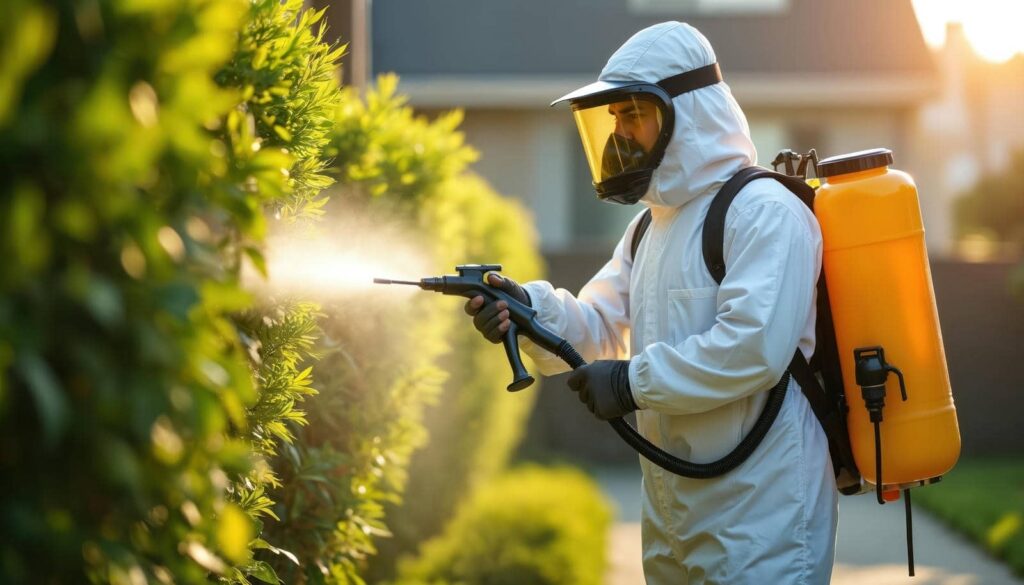
Wear Protective Gear: Always don gloves, goggles, and a mask to shield yourself from harmful chemicals.
Read Labels Carefully: Each product has specific instructions; understanding these guidelines is critical for safe use.
Avoid Windy Days: Applying chemicals on calm days prevents drift, reducing exposure to you and nearby plants.
Preventative Measures for Lawn Health
To maintain a healthy lawn, implementing preventative measures is crucial for thwarting pests before they establish a foothold.
Start by prioritizing soil health—healthy soil fosters robust grass that can better resist pest invasions. Regularly test your soil to understand its nutrient content and pH levels. Based on these results, tailor your lawn fertilization strategy to provide the necessary nutrients for growth. Opt for slow-release fertilizers to ensure a consistent supply of nutrients, which supports grass vitality over time.
Additionally, encourage biodiversity in your lawn by introducing a mix of grasses and plants. This diversity enhances aesthetic appeal and disrupts pest life cycles.
Finally, regularly monitor your lawn for early signs of pests. By staying vigilant and proactive, you can create an environment that minimizes pest problems and secures a thriving lawn for you and your community.
The Role of Lawn Aeration in Pest Management
When you aerate your lawn, you’re not just improving its overall health; you’re also creating an inhospitable environment for pests.
Aeration benefits your lawn by enhancing soil health, which is essential for deterring unwanted insects. By alleviating soil compaction and promoting better air and nutrient circulation, you’re setting the stage for a thriving ecosystem that pests find unwelcoming.
Here are three key benefits of aeration in pest management:
Improved Drainage: Aeration allows water to penetrate deeper, preventing standing water that attracts pests like mosquitoes.
Enhanced Root Growth: Healthy roots lead to stronger grass, making it harder for pests to establish themselves.
Nutrient Availability: Aerated soil better absorbs fertilizers, fostering a robust lawn that can withstand pest pressure.
Incorporating aeration into your lawn care routine fosters soil health and greatly reduces pest problems.
Timing Your Pest Control Efforts
Effective pest control hinges on timing, as applying treatments at the right moment can greatly enhance their efficacy. To achieve an ideal application, you need to develop a strong sense of seasonal awareness. Different pests emerge during specific times of the year, so understanding their life cycles lets you target them effectively.
For instance, early spring is often suitable for managing grubs, while late summer may focus on dealing with adult mosquitoes.
Monitoring your lawn regularly allows you to identify pest populations before they become problematic. By timing your interventions based on observed pest activity and environmental conditions, you can minimize damage and reduce treatment frequency.
Additionally, consider weather patterns; applying treatments before rain can wash them away, while applying them during dry spells can limit their effectiveness.
Ultimately, strategic timing protects your lawn and builds a sense of community in shared lawn care practices.
The Importance of Regular Lawn Maintenance
While many homeowners may overlook the routine upkeep of their lawns, regular maintenance is essential for preventing pest infestations and promoting overall lawn health.
Consistent lawn care ensures a vibrant landscape and creates a barrier against unwanted pests.
Here are three key seasonal practices you should adopt:
Mowing: Regular mowing helps maintain an ideal grass height, reducing the habitat for pests.
Aeration: Aerating your lawn improves soil health, allowing water and nutrients to reach the roots more effectively.
Fertilization: Applying the right fertilizers at the right times boosts grass resilience, making it less susceptible to pests and diseases.
Collaborating With Professional Pest Control Services
Maintaining a healthy lawn can sometimes be a challenge, especially when pests threaten to disrupt your efforts. Collaborating with professional pest control services can make a significant difference in safeguarding your green space.
These experts conduct a thorough pest control assessment, identifying specific issues that may not be apparent to you. Once they pinpoint the problem, they’ll develop a tailored treatment plan that suits your lawn’s unique needs.
This targeted approach eradicates existing pests and helps prevent future infestations. By working together, you gain access to expert knowledge and advanced techniques that enhance the health and appearance of your lawn.
Additionally, engaging professionals fosters a sense of community, as you connect with local experts who share your passion for lawn care. Trusting their expertise allows you to focus on nurturing your lawn, knowing it’s in capable hands.
Recap
Incorporating smart strategies for lawn pest management keeps your yard healthy and enhances your enjoyment of the outdoors. You can reduce grubs by applying neem oil while maintaining a healthy soil environment, resulting in a vibrant lawn. By staying proactive with regular inspections, utilizing both natural and chemical remedies, and prioritizing lawn health, you’ll create a thriving ecosystem that deters pests and encourages lush growth.
Recent Posts
Top Lawn Care Tips for Grand Rapids Residents
Imagine stepping onto a vibrant, green lawn that feels lush underfoot, a demonstration of your
3 Best Lawn Care Tips for Grand Rapids Area
Did you know that proper lawn care can increase your home’s value? In the Grand
Why Consider Unique Landscaping for Cascade Homes?
Imagine stepping into a Cascade home adorned with vibrant native plants, creating a thriving ecosystem