
Contents
While your lawn may flourish in spring, it can struggle under summer’s heat if not properly aerated. Timing your aeration is crucial for promoting healthy growth throughout the seasons. In spring, moist soil is ideal for aerating, but summer requires a different approach to combat heat stress. Understanding these seasonal nuances can greatly influence your lawn’s health. So, what’s the best strategy to guarantee your turf thrives come fall?
Key Takeaways
- Aerate in early to mid-spring when soil is moist to enhance drainage and reduce compaction for optimal growth.
- Summer aeration should be done during cooler times of the day for better air circulation and nutrient penetration.
- Fall aeration promotes root development and moisture retention, preparing the lawn for winter dormancy and spring recovery.
- Soil type plays a crucial role; sandy soils require frequent aeration, while clay soils benefit from deeper aeration.
- Monitor local climate conditions to determine the best timing for aeration, ensuring effectiveness and recovery of the lawn.
Understanding Lawn Aeration
When you consider maintaining a healthy lawn, understanding lawn aeration is essential to promoting strong root growth and enhancing soil health.
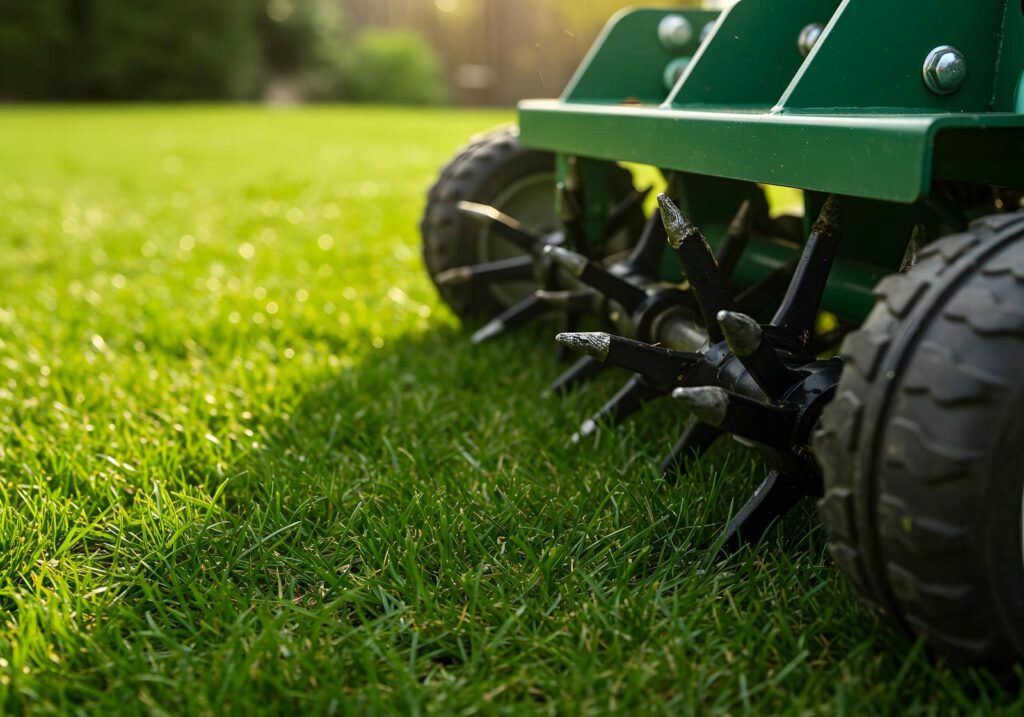
Aeration involves perforating the soil with holes to allow air, water, and nutrients to penetrate deeper, fostering ideal root development. By alleviating soil compaction, you create a thriving environment for grass roots, enabling them to spread and absorb crucial resources more effectively.
Regular aeration greatly improves lawn health, particularly in high-traffic areas where soil can become compacted. This process encourages beneficial microbial activity, which aids in breaking down organic matter and releasing nutrients back into the soil.
Additionally, aeration helps reduce thatch buildup, ensuring your lawn stays lush and vibrant. Understanding the mechanics of lawn aeration empowers you to take proactive steps toward maintaining a robust and healthy lawn, ultimately fostering a sense of pride and belonging in your outdoor space.
Spring Aeration Timing
Spring is a pivotal time for lawn aeration, as it sets the stage for robust grass growth throughout the warmer months. Timing your spring aeration effectively enhances soil drainage, reduces compaction, and allows nutrients from spring fertilization to penetrate deeper into the soil. Generally, aim to aerate when the soil is moist but not saturated, usually in early to mid-spring.
| Benefits of Spring Aeration | Timing Tips | Post-Aeration Care |
|---|---|---|
| Improved root development | Aerate when soil is moist | Follow with spring fertilization |
| Enhanced nutrient absorption | Avoid aerating during dry spells | Water regularly for best results |
| Increased resilience | Check local climate forecasts | Monitor for pests and weeds |
Summer Aeration Considerations
Although summer is often seen as a time for relaxation, it’s also crucial to contemplate lawn aeration during this season, especially if your grass shows signs of stress from heat or drought.
Aerating your lawn can help alleviate summer stress by improving air circulation, allowing essential nutrients and water to penetrate deeper into the soil. This is particularly important for varieties with lower heat tolerance, which may struggle under intense sunlight.
When considering summer aeration, timing is critical. Aim for cooler parts of the day, ideally early morning or late afternoon, to minimize additional stress on your lawn.
Additionally, verify your soil is moist but not overly wet, as this can enhance the aeration process. By taking these steps, you’ll foster a healthier lawn that can better withstand the rigors of summer, guaranteeing it thrives for the seasons to come.
Fall Aeration Benefits
As temperatures cool and your lawn prepares for dormancy, fall aeration offers significant benefits that can enhance its health and resilience. This process creates small holes in the soil, allowing essential nutrients, air, and water to reach the roots more effectively.
With fall root development in focus, your grass can establish a stronger foundation before winter sets in.
Additionally, aeration improves fall moisture retention, which is vital as the season progresses. By alleviating soil compaction, it enables your lawn to absorb and retain more water, reducing stress during dry spells.
The enhanced airflow promotes microbial activity, which aids in breaking down thatch, further enriching the soil.
As you invest in fall aeration, you’re not just preparing your lawn for winter; you’re fostering a thriving, resilient landscape that will bounce back beautifully in the spring.
Embrace these benefits and watch your lawn flourish!
Winter Lawn Care Practices
With fall aeration setting the stage for a healthy lawn, implementing winter lawn care practices becomes essential for maintaining that progress.
Begin your winter preparation by ensuring your lawn is free of debris and leaves, as these can suffocate grass and promote disease. Regular snow removal is vital; clear snow from high-traffic areas to prevent soil compaction and protect your grass from ice formation.
Consider applying a winter fertilizer to support root development, which enhances growth once spring arrives. If you live in an area prone to heavy snowfall, using a snow blower or shovel to manage snow effectively will help maintain your lawn’s health.
Additionally, you might want to monitor soil moisture levels; a well-hydrated lawn can better withstand winter stress.
Factors Influencing Aeration Schedule
When planning your lawn aeration schedule, consider factors like soil type, grass variety, and seasonal climate patterns.
Different soil compositions can affect compaction levels, while specific grass types may have unique needs for aeration timing.
Additionally, understanding your local climate will help you optimize aeration for your lawn’s health and growth.
Soil Type Considerations
Understanding your soil type is essential for optimizing your lawn aeration schedule, since different soils respond uniquely to aeration. Knowing whether you have sandy soil or clay soil can guide your approach to aeration.
Sandy Soil: Drains quickly and benefits from more frequent aeration.
Clay Soil: Compacts easily, requiring deeper aeration to improve drainage and root growth.
Loamy Soil: Balances moisture retention and drainage; aeration should be done moderately.
Silty Soil: Holds nutrients well but can become compacted; aerate to maintain health.
Grass Variety Selection
Choosing the right grass variety for your lawn plays a crucial role in determining your aeration schedule. For instance, if you’ve chosen fescue varieties, which thrive in cooler temperatures, your best aeration time is typically in early spring or fall.
These periods align with their active growth phases, promoting recovery from aeration. On the other hand, zoysia grass, a warm-season variety, benefits from aeration in late spring as it enters its growth cycle.
Understanding these growth patterns guarantees that you aerate when your grass can effectively heal and thrive. By aligning your aeration practices with your grass type, you create a lush, resilient lawn that can withstand seasonal stressors and enhance your outdoor space’s beauty.
Seasonal Climate Patterns
The timing of lawn aeration is greatly influenced by seasonal climate patterns, which can vary greatly depending on your location. Understanding these patterns helps you optimize your aeration schedule for better lawn health.
Consider the following factors:
Temperature fluctuations: Warm-season grasses thrive when soil temperatures rise, while cool-season grasses prefer cooler conditions.
Precipitation trends: Regular rain can affect soil moisture, impacting aeration effectiveness.
Climate change effects: Shifts in seasonal trends may alter traditional aeration timing.
Regional climate variations: Local climate conditions can dictate when your lawn is ready for aeration.
Review
By strategically timing your lawn aeration, you can greatly enhance its health and vigor throughout the year. For instance, a homeowner in Ohio saw a 40% increase in grass density after consistently aerating in early spring and late summer. This simple adjustment not only improved root growth but also made the lawn more drought-resistant. Don’t overlook the importance of aeration; aligning it with seasonal conditions can transform your lawn into a lush, vibrant oasis.
Recent Posts
Tips for a Thriving Lawn in Kentwood
Many homeowners overlook the importance of selecting the right grass type for their specific thriving
Top Lawn Care Tips for Grand Rapids Residents
Imagine stepping onto a vibrant, green lawn that feels lush underfoot, a demonstration of your
3 Best Lawn Care Tips for Grand Rapids Area
Did you know that proper lawn care can increase your home’s value? In the Grand