
Contents
Imagine your lawn, vibrant and lush, thriving under the sun while pests are kept at bay. Lawn aeration is a critical practice that enhances grass health and plays a key role in pest management. By understanding the process and timing of aeration, you can greatly improve soil quality and deter unwanted insects. Discover the effective techniques and tools that can transform your lawn into a resilient ecosystem.
Key Takeaways
- Aerate your lawn in early spring or fall when grass is actively growing to enhance resilience against pests.
- Use a core aerator to create holes that improve air circulation and nutrient absorption, promoting healthier grass.
- Topdress with compost post-aeration to enhance soil quality, which helps grass resist pest infestations.
- Implement organic pest repellents like essential oils during and after aeration to deter unwanted insects.
- Regularly monitor lawn health through visual inspections and soil testing to identify potential pest issues early.
Importance of Lawn Aeration for Pest Management
While you may not realize it, lawn aeration plays an essential role in managing pests effectively. By creating small holes in the soil, you improve air circulation and water absorption, which promotes healthier grass. Healthier lawns are less susceptible to pest infestations, making lawn aeration a vital part of your pest prevention strategies.
One of the significant lawn aeration benefits is its ability to alleviate soil compaction, allowing nutrients to reach the grass roots more efficiently. When your lawn thrives, it naturally wards off pests like grubs and chinch bugs.
Additionally, aeration encourages deeper root growth, enhancing the resilience of your lawn against various pests.
Incorporating aeration into your lawn care routine fosters a robust ecosystem and enhances your outdoor space’s overall health, creating a more enjoyable environment for you and your family.
Embrace this method, and you’ll cultivate a thriving, pest-resistant lawn.
Understanding Soil Compaction and Its Effects
Soil compaction occurs when soil particles are pressed together, reducing pore space and limiting air and water movement.
This condition can severely impact grass health by inhibiting root growth and nutrient absorption.
Understanding these effects is essential for maintaining a thriving lawn.
Soil Compaction Explained
Compacted soil can considerably hinder your lawn’s health and growth. When soil structure becomes dense, it restricts the movement of air, water, and nutrients, leading to adverse compaction effects.
This density creates an environment where roots struggle to establish and expand, resulting in poor drainage and increased runoff. Over time, essential microorganisms may decline, further degrading soil quality.
You might notice areas of your lawn where grass appears weak or dies off, signaling that compaction is at play. To combat these issues, understanding how compaction occurs—often due to heavy foot traffic or machinery—is key.
Impact on Grass Health
Compaction directly impacts grass health by limiting root development and nutrient absorption. When soil becomes compacted, it restricts the space available for roots to grow, which can stunt grass growth considerably.
Healthy soil is essential for maintaining ideal soil health; it allows important air, water, and nutrients to flow freely. Without aeration, your lawn struggles to thrive, often leading to weak grass that’s more susceptible to diseases and pests.
By aerating your lawn regularly, you alleviate compaction, promoting deeper root systems and enhancing nutrient uptake. This practice fosters lush grass growth and improves overall soil health, creating a vibrant lawn environment.
Embrace aeration as a key step towards a thriving, pest-resistant lawn.
Timing Your Aeration for Maximum Impact
To achieve ideal results from lawn aeration, you must carefully consider the timing of your efforts. The best seasons for aeration typically fall in early spring and early fall. During these periods, grass is actively growing, which helps it recover quickly from the aeration process.
Weather considerations are also essential; aim for days when the soil is slightly moist but not overly wet. This moisture level ensures that the tines of your aerator penetrate the ground effectively.
Aerating during extreme heat or drought can stress your lawn further, while cold temperatures may hinder recovery. By aligning your aeration with these best seasons and weather conditions, you’ll promote healthier grass and deter pests that thrive in compacted soil.
Planning your aeration around these factors fosters a vibrant lawn that you can be proud of, fostering a sense of community among fellow lawn care enthusiasts.
Tools and Equipment for Lawn Aeration
Once you understand the ideal timing for aeration, it’s important to equip yourself with the right tools and equipment to ensure effective results.
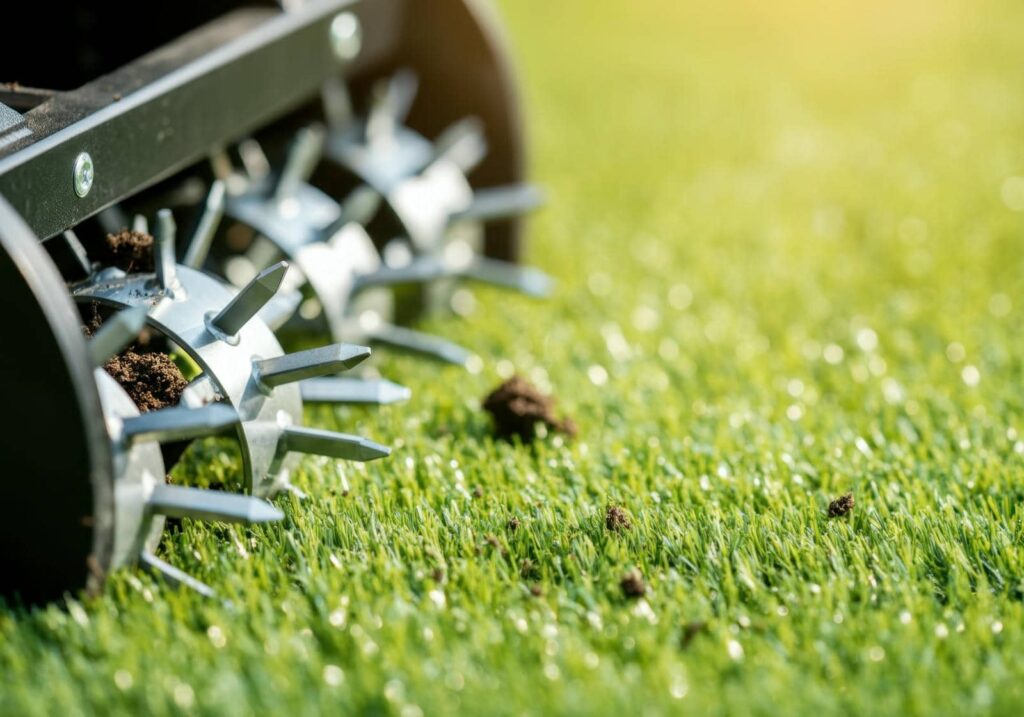
Start with a core aerator or spike aerator; these aeration tools create holes in your lawn to improve airflow and nutrient absorption. If you’re tackling a larger area, consider renting a motorized aerator for efficiency.
Additionally, you’ll need a rake to remove the plugs of soil generated during the process.
Don’t overlook the importance of equipment maintenance; regularly check your tools for wear and tear, ensuring they function properly. Properly maintained tools work better and last longer, saving you money in the long run.
Finally, always wear appropriate safety gear, including gloves and eye protection, to keep yourself safe during the aeration process.
Equip yourself well, and your lawn will flourish.
Techniques for Effective Lawn Aeration
While understanding the right tools is essential, mastering the techniques for effective lawn aeration is equally important.
To achieve ideal results, begin by determining the appropriate aeration frequency for your lawn type. Generally, most lawns benefit from aeration once or twice a year, ideally during the growing season when the grass can recover quickly.
Next, focus on the timing of your aeration. Aerate after a rainfall or watering, ensuring the soil is moist but not overly saturated. This allows your aerator to penetrate the soil more easily.
When you aerate, use a crisscross pattern to cover the entire area efficiently, making sure to create holes spaced about 2-4 inches apart.
After aeration, consider topdressing with compost to enhance soil quality and promote grass growth. By implementing these lawn aeration techniques, you’ll support a healthy lawn that’s less susceptible to pests.
Benefits of Aeration Beyond Pest Control
Aeration helps control pests and greatly improves overall lawn health and vigor. By enhancing soil structure, you’re promoting stronger root development. This leads to better water retention, nutrient absorption, and overall lawn recovery. Regular aeration can also reduce soil compaction, allowing air to circulate more freely.
Here’s a quick overview of the benefits of aeration:
| Benefit | Description |
|---|---|
| Improved Nutrient Access | Roots can access nutrients more efficiently. |
| Enhanced Water Permeability | Water penetrates deeper into the soil. |
| Increased Soil Microbial Activity | Promotes a healthier ecosystem in the soil. |
To maximize these benefits, consider the right aeration frequency based on your lawn’s specific needs. Following a consistent aeration schedule ensures your grass remains lush and resilient, creating a beautiful space for you and your community to enjoy.
Combining Aeration With Fertilization
Combining aeration with fertilization considerably enhances nutrient absorption in your lawn.
By improving soil structure, aeration allows fertilizers to penetrate more deeply, promoting healthier grass growth.
Additionally, this method can incorporate targeted pest control techniques, creating a more robust lawn ecosystem.
Enhanced Nutrient Absorption
When you aerate your lawn, it reduces soil compaction and creates ideal conditions for nutrient absorption, especially when paired with fertilization.
This process enhances nutrient cycling, allowing essential elements to penetrate deeper into the soil. As you aerate, you create channels that enable fertilizers to reach the root zone more effectively, fostering a thriving environment for soil microorganisms.
These microorganisms play an important role in breaking down organic matter and releasing nutrients that your grass needs.
By combining aeration with fertilization, you ensure your lawn receives optimal nutrition, promoting healthy growth and pest resistance.
This method cultivates a vibrant lawn that looks great and contributes to the overall ecosystem.
Improved Soil Structure
Maximizing nutrient absorption through aeration naturally leads to improved soil structure, which is essential for a healthy lawn. When you aerate and fertilize simultaneously, you enhance soil permeability, allowing air, water, and nutrients to reach deeper roots. This ideal environment promotes robust root development, making your lawn more resilient against pests.
Here’s a quick overview of the benefits of combining aeration with fertilization:
| Benefit | Description |
|---|---|
| Enhanced Soil Permeability | Increases water and nutrient flow to roots. |
| Improved Root Development | Supports deeper, healthier root systems. |
| Reduced Soil Compaction | Facilitates better air exchange in soil. |
| Increased Microbial Activity | Promotes a thriving ecosystem in the soil. |
Targeted Pest Control Techniques
How can aeration and targeted pest control work together to enhance your lawn’s health? By combining aeration with fertilization strategies, you promote a thriving ecosystem that supports biological pest control.
Aeration creates pathways for air, nutrients, and water, allowing organic repellents to penetrate the soil more effectively. This fosters healthier grass and plants, which naturally resist pests.
After aerating, apply organic fertilizers to stimulate growth and improve soil quality. This strengthens your lawn, making it less susceptible to infestations.
Additionally, integrate biological pest control methods by introducing beneficial insects that prey on harmful pests. This holistic approach deters pests and nurtures a robust lawn that you can take pride in, creating a welcoming outdoor space for everyone.
Maintaining Your Lawn Post-Aeration
Though aeration markedly enhances your lawn’s health, proper maintenance afterward is vital for maximizing its benefits. After aerating, make sure you follow a structured lawn care routine to promote recovery and pest prevention.
| Maintenance Task | Frequency |
|---|---|
| Watering | 2-3 times a week |
| Fertilizing | Every 6-8 weeks |
| Mowing | Weekly during growth |
Start by watering deeply to help the soil absorb nutrients. Fertilizing is essential for replenishing lost nutrients, so apply a balanced fertilizer to encourage growth. Finally, regular mowing keeps your grass healthy and dense, reducing the opportunity for pests to invade. By adhering to these guidelines, you’ll create a thriving lawn that looks great and stands resilient against pests. Remember, consistent care post-aeration lays the foundation for a vibrant lawn community you can be proud of.
Natural Pest Deterrents to Use After Aeration
After aerating your lawn, using natural pest deterrents can enhance its health and resilience.
Essential oils, known for their pest-repelling properties, can be applied effectively, while companion planting strategies create a balanced ecosystem that naturally wards off unwanted insects.
Implementing these methods will protect your lawn and promote overall soil and plant health.
Essential Oils Benefits
Once you’ve aerated your lawn, incorporating essential oils can greatly enhance its health by acting as natural pest deterrents.
These oils possess aromatic properties that repel various pests, making your lawn less inviting for unwanted visitors. By choosing the right essential oils, you can promote a thriving environment for your grass while keeping pests at bay.
Lavender: Known for its calming scent, it acts as a strong pest repellent against mosquitoes and flies.
Peppermint: Its invigorating aroma deters ants and spiders effectively.
Eucalyptus: This oil’s potent fragrance repels a range of insects.
Tea Tree: Renowned for its antimicrobial qualities, it also serves as a natural pest deterrent.
Utilizing these oils post-aeration can greatly improve your lawn’s ecosystem.
Companion Planting Strategies
Companion planting offers a strategic approach to enhancing your lawn’s health and appearance, especially after aeration. By incorporating a variety of plants, you can promote crop diversity, which increases the resilience of your lawn ecosystem.
For instance, planting marigolds alongside your grass can deter nematodes and other pests, while herbs like basil repel unwanted insects. This combination bolsters pest resistance while fostering a thriving environment for beneficial organisms.
When you strategically select companions based on their natural deterrent properties, you create a harmonious balance that supports your lawn’s health. Embracing these companion planting strategies after aeration can lead to a healthier, more vibrant lawn, establishing a strong sense of community among your plants.
Monitoring Lawn Health and Pest Activity
How can you effectively monitor your lawn’s health and detect pest activity? Consistent lawn monitoring is essential for early pest identification and maintaining a vibrant lawn.
Start by regularly inspecting your grass for changes in color, texture, or growth patterns, as these can indicate underlying issues. Additionally, evaluating soil moisture and compaction will help you understand your lawn’s overall health.
Consider these methods for effective monitoring:
Visual inspections: Look for signs of pests such as holes in leaves or droppings.
Soil testing: Check pH and nutrient levels to ensure ideal growth conditions.
Regular watering: Maintain hydration but avoid overwatering, which can invite pests.
Pest traps: Use sticky traps to monitor insect populations and identify potential threats.
Wrap-Up
By implementing these lawn aeration tricks, you’re enhancing your grass’s health and creating a resilient barrier against pests. You might think it’s too much effort, but the vibrant, thriving lawn you’ll cultivate is well worth it. The satisfaction of seeing your outdoor space flourish while naturally deterring pests will outweigh any initial investment of time and energy. Take these steps, and watch your lawn transform into a healthy ecosystem that you and your family can enjoy.
Recent Posts
Top Lawn Care Tips for Grand Rapids Residents
Imagine stepping onto a vibrant, green lawn that feels lush underfoot, a demonstration of your
3 Best Lawn Care Tips for Grand Rapids Area
Did you know that proper lawn care can increase your home’s value? In the Grand
Why Consider Unique Landscaping for Cascade Homes?
Imagine stepping into a Cascade home adorned with vibrant native plants, creating a thriving ecosystem