
Contents
If you want a lush, healthy lawn, understanding lawn aeration is essential. It’s not just about punching holes in the ground; it’s about timing, technique, and tools. Whether you’re dealing with cool-season or warm-season grasses, knowing when and how to aerate can enhance your lawn’s health considerably. But before you grab that aerator, there are some vital steps you should take to prepare your lawn effectively. Let’s explore those first.
Key Takeaways
- Aerate your lawn during spring for cool-season grasses and fall for warm-season grasses to promote healthy growth.
- Use a core aerator for best results, as it removes soil plugs to enhance air and nutrient penetration.
- Water your lawn thoroughly after aeration to support grass recovery and nutrient absorption.
- Avoid over-aerating; only aerate when soil is compacted or shows signs of poor health.
- Prepare your lawn by mowing and clearing debris before aeration for optimal effectiveness.
Understanding Lawn Aeration
Lawn aeration is an essential practice for maintaining a healthy and vibrant lawn. It involves perforating the soil with holes to allow air, water, and nutrients to penetrate deep into the root zone.
This process greatly improves lawn health by alleviating soil compaction, which can suffocate roots and hinder growth. When soil becomes compacted, it prevents essential elements from reaching grass roots, leading to a lackluster appearance and increased susceptibility to disease.
When to Aerate Your Lawn
Knowing when to aerate your lawn is essential for its health and vigor.
Typically, the best times for aeration are in the spring and fall, but you should also watch for signs that your lawn needs it, like compacted soil or poor drainage.
Ideal Seasons for Aeration
While many homeowners focus on mowing and fertilizing, timing your lawn aeration is equally essential for achieving a healthy, vibrant yard.
The ideal seasons for aeration are spring and fall. Spring aeration works best for cool-season grasses, typically when your grass begins to grow actively. This helps relieve soil compaction and allows nutrients to penetrate more effectively.
On the other hand, fall aeration is perfect for warm-season grasses, as it prepares your lawn for winter dormancy and spring growth. Aerating during these prime times encourages root development, improves soil health, and enhances overall turf resilience.
Signs Your Lawn Needs
A healthy lawn exhibits certain telltale signs that indicate it’s time for aeration. If you notice lawn discoloration, such as yellowing patches or a general dullness, it’s a strong signal that your grass is struggling. This often results from compacted soil, which restricts root growth and nutrient absorption.
Another sign is when water pools or runs off instead of soaking in; this indicates that the soil is too dense. Additionally, if your lawn feels spongy or bounces back quickly after walking on it, that’s another clue.
Tools Needed for Aeration
To achieve effective lawn aeration, you’ll need a few essential tools that can make the process smoother and more efficient.
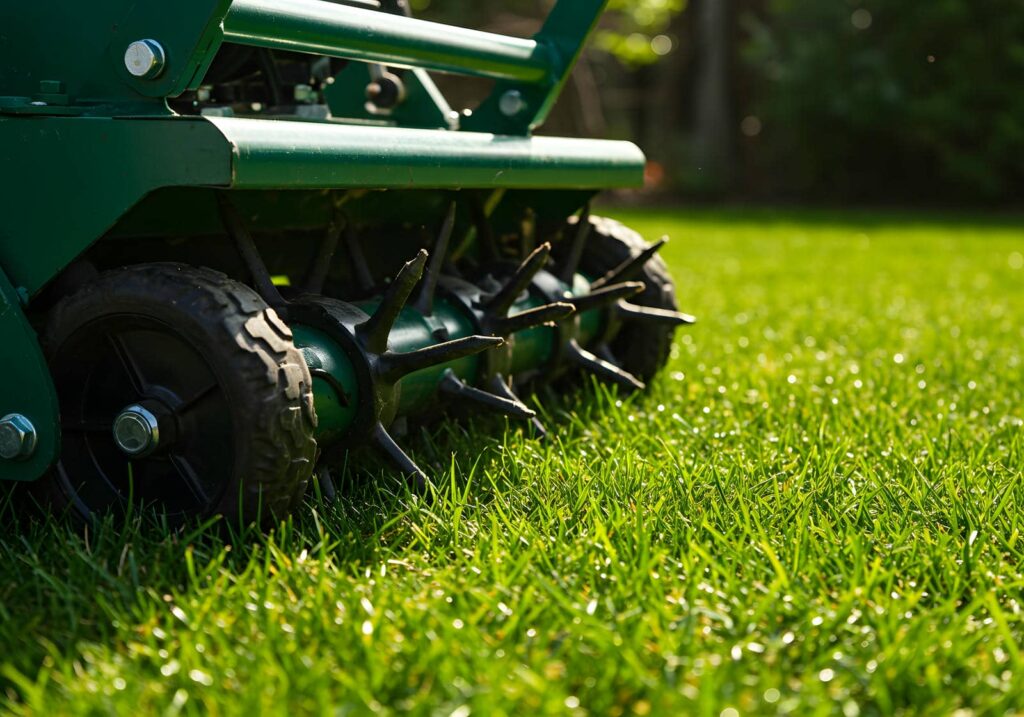
First, invest in quality aeration equipment, such as a core aerator or spike aerator. Core aerators remove small plugs of soil, allowing nutrients and water to penetrate deeper, while spike aerators simply poke holes into the ground.
You’ll also benefit from a lawn rake to gather those soil plugs after aeration, ensuring your lawn remains tidy.
Don’t forget a pair of sturdy shoes or boots, ideally with spike attachments, to help you walk over your lawn without compacting the soil.
Types of Aeration Techniques
Once you’ve gathered the right tools, understanding the various aeration techniques can enhance your lawn care efforts.
Two primary methods stand out: core aeration and spike aeration. Each technique offers unique benefits, so choosing the right one for your lawn is key.
- Core Aeration: This method removes small plugs of soil, improving air, water, and nutrient penetration.
- Spike Aeration: Using a spiked tool, this technique creates holes in the soil without removing any material, which can be beneficial for quick relief.
- Frequency: Consider aerating your lawn at least once a year for ideal results.
- Timing: The best time to aerate is during the growing season when your lawn can recover quickly.
Preparing Your Lawn for Aeration
Before you start the aeration process, it’s essential to prepare your lawn to maximize the benefits.
Begin by conducting soil testing to assess your lawn’s health and nutrient levels. This step will help you determine any deficiencies that need addressing before aeration.
Next, make sure your lawn is properly mowed. Trim the grass to about 2-3 inches, allowing for better penetration of air and nutrients. Remove any debris, like leaves or branches, that could obstruct the aeration process.
If you’ve recently applied any fertilizers or pesticides, give them some time to settle into the soil.
Additionally, consider the moisture level of your lawn; aerating when the soil is slightly moist (but not soggy) will yield the best results.
Aftercare Following Aeration
After aerating your lawn, proper aftercare is essential for ideal recovery and growth.
Make sure you water your lawn thoroughly to help the soil absorb nutrients, and consider fertilization to boost grass health.
If you’re looking to thicken your lawn, this is the perfect time to apply grass seed for a lush, vibrant finish.
Watering the Lawn
While you may be keen to see your lawn flourish post-aeration, proper watering is essential for ensuring the health of your grass.
Adequate lawn hydration helps the roots recover and promotes moisture retention in the soil. Here are some key tips to help you water effectively:
- Water deeply but infrequently to encourage deep root growth.
- Aim for about 1 inch of water per week, adjusting for rainfall.
- Water early in the morning to minimize evaporation and fungal growth.
- Monitor soil moisture, using a screwdriver to check for softness.
Fertilization Timing
One essential aspect of lawn care that many homeowners overlook is the timing of fertilization after aeration.
After aerating, your lawn’s soil is primed to absorb nutrients effectively, so timing your fertilization is vital. Aim to apply fertilizer within a week of aeration to help your grass recover and flourish.
Choose the right fertilizer types, such as slow-release or organic options, to match your lawn’s specific nutrient needs. Check the nutrient levels on the label to ensure your lawn gets the balance it requires.
Grass Seed Application
To ensure your lawn thrives after aeration, applying grass seed correctly is essential. This step enhances growth and helps fill in bare spots. Here’s how to make certain you get it right:
- Choose the Right Seed: Opt for a seed variety suited to your climate and lawn type.
- Prepare the Soil: Rake the aerated soil lightly to create a good seedbed.
- Use Proper Application Techniques: Spread the seed evenly, aiming for about 5-10 seeds per square inch.
- Water Wisely: Keep the soil consistently moist, but avoid overwatering to prevent seed washout.
Best Practices for Seasonal Aeration
As the seasons change, knowing the best practices for seasonal aeration can greatly enhance your lawn’s health and appearance.
Start by evaluating your lawn’s soil compaction; if it feels hard and dry, it’s time to aerate. The ideal aeration frequency depends on your grass type and soil conditions, but generally, once or twice a year is sufficient. Early spring or fall is the best time to aerate, as these seasons promote recovery and growth.
Before aerating, mow your lawn shorter than usual to ensure the aerator can penetrate the soil effectively. Also, mark any sprinkler heads or irrigation lines to avoid damage.
After aeration, consider overseeding to fill in bare spots and improve density. Finally, water your lawn well after aeration to help the soil recover and promote nutrient absorption.
Following these practices will set your lawn up for success!
Common Mistakes to Avoid
Lawn aeration can considerably enhance your yard’s health, but many homeowners fall into common pitfalls that undermine their efforts.
By steering clear of these mistakes, you can ensure your lawn thrives:
- Over-aerating the lawn: Aerate only when necessary. Too much can harm the grass roots.
- Neglecting soil quality: Test your soil beforehand. Poor soil can hinder aeration benefits.
- Ignoring timing: Aerate during the right season for your grass type. Aerating at the wrong time can stress your lawn.
- Skipping post-aeration care: Fertilize and water properly after aeration to maximize results.
Avoiding these mistakes helps you achieve a lush, vibrant lawn that you can enjoy and be proud of.
Final Thoughts
In the grand scheme of lawn care, you might think aeration is just a chore. Ironically, it’s one of the simplest and most effective ways to revive your lawn’s health. By following these tips, you’re not just creating a lush landscape; you’re also sparing yourself the headache of dealing with a dying lawn later. So, while it may seem like just another task, remember: investing a little effort now pays off with a vibrant yard that’ll make your neighbors envious.
Recent Posts
Top 5 Organic Lawn Disease Prevention Tips
Just as a sturdy fortress withstands the test of time, your lawn needs a solid
Natural Solutions for Lawn Disease Prevention
To prevent lawn diseases, to enhance soil health, and to foster a healthy ecosystem, you
10 Best Ways Overseeding Prevents Lawn Diseases
Overseeding is an essential practice for maintaining a healthy lawn and preventing diseases. By enhancing