
Contents
Understanding the types of weeds in your lawn is essential for effective weed control. You’ll want to consider both natural and chemical control methods that suit your specific situation. Each approach has its strengths and weaknesses, and knowing when to apply them can make all the difference. Let’s explore the most effective strategies for keeping your lawn healthy and weed-free.
Key Takeaways
- Use pre-emergent herbicides in early spring to prevent weed seed germination before they sprout.
- Enhance soil health through regular aeration and proper fertilization to promote strong grass growth.
- Apply selective herbicides to target specific weeds while protecting your lawn grass.
- Utilize natural methods like mulching and organic herbicides for environmentally responsible weed control.
- Maintain a thick lawn by mowing appropriately and watering regularly to outcompete weeds for resources.
Understanding Different Types of Weeds
When you step onto your lawn, you mightn’t realize that various types of weeds can greatly impact its health and appearance. Understanding the difference between broadleaf weeds and grassy weeds is essential for maintaining a vibrant lawn.
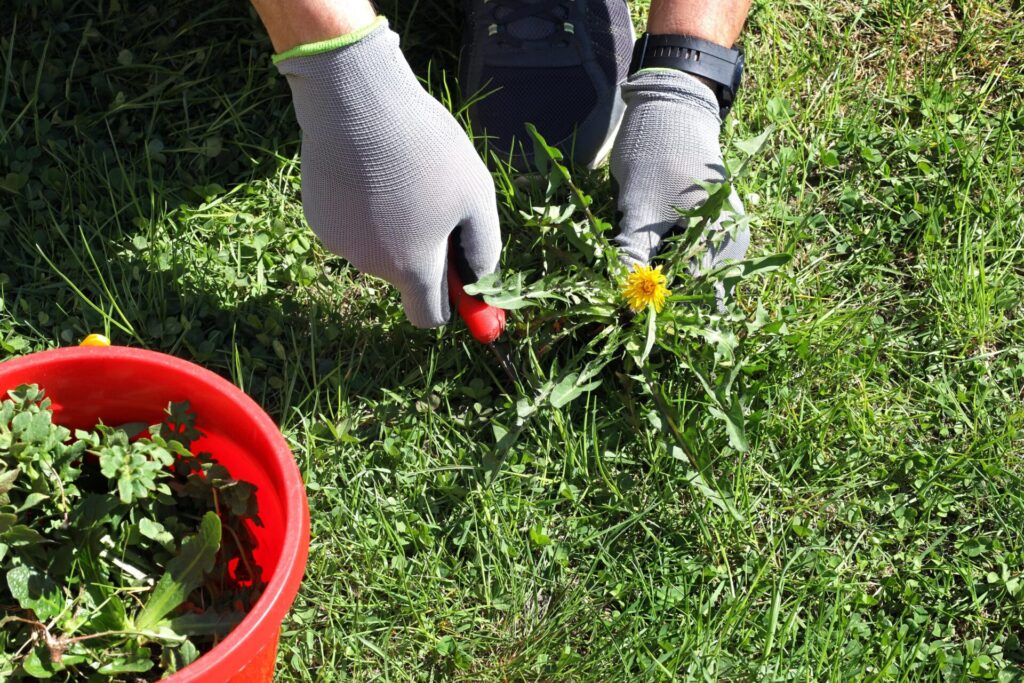
Broadleaf weeds, like dandelions and clover, often have wide leaves and can quickly spread, competing with your grass for nutrients and water. They tend to thrive in compacted soil, making it vital to regularly aerate your lawn to discourage their growth.
On the other hand, grassy weeds, such as crabgrass and foxtail, resemble your lawn grass and can be tricky to identify. They usually sprout in bare or thin areas, so keeping your lawn dense and healthy is key to preventing them.
Natural Weed Control Methods
Natural weed control methods offer effective alternatives to chemical treatments, allowing you to maintain a healthy lawn while being environmentally conscious.
One of the best strategies is to use organic herbicides made from natural ingredients, which target unwanted plants without harming your lawn or the surrounding ecosystem. Look for options containing vinegar or clove oil, as they can effectively eliminate weeds when applied correctly.
Additionally, mulching techniques can considerably suppress weed growth. By applying a thick layer of organic mulch around your plants, you’ll block sunlight and create a barrier that prevents weed seeds from germinating.
This keeps your lawn tidy and enriches the soil as the mulch breaks down.
Combining these methods will help you cultivate a lush, vibrant lawn while fostering a sense of community and responsibility towards the environment.
Embrace these natural approaches and enjoy a weed-free yard!
Chemical Weed Control Options
Chemical weed control options provide targeted solutions for homeowners struggling with stubborn weeds that natural methods may not fully eradicate.
When you’re facing aggressive invaders like dandelions or crabgrass, selective herbicides can be your best friend. These products are designed to kill specific weeds while leaving your desirable grass unharmed.
Before you start herbicide application, it’s essential to read the label and follow the instructions carefully.
Timing is key; applying herbicides during the plants’ active growth phase ensures maximum effectiveness. You’ll also want to take into account the weather—applying on a calm day minimizes drift and ensures the product stays where you need it most.
Preventive Measures for Weed Management
To effectively manage weeds in your lawn, incorporating preventive measures can save you time and effort in the long run.
Start by enhancing your soil health; healthy soil promotes strong grass, which naturally suppresses weed growth. Consider applying pre-emergent herbicides during early spring, as they prevent weed seeds from germinating. Timing is essential, so keep an eye on soil temperatures to ensure peak effectiveness.
Additionally, maintain a thick lawn by following proper mowing practices and adequate watering. A dense turf can outcompete weeds for sunlight and nutrients. Regularly aerate your lawn to improve water infiltration and root growth, further strengthening your grass.
Don’t forget to mulch garden beds to block light from reaching weed seeds.
Best Practices for Lawn Maintenance
Maintaining a healthy lawn goes hand-in-hand with the preventive measures you’ve already implemented. Regular lawn aeration techniques are essential; they help reduce soil compaction, allowing air, water, and nutrients to reach the roots more effectively.
Aim to aerate your lawn at least once a year, preferably in the spring or fall when grass is actively growing.
In addition, follow seasonal fertilization tips to keep your lawn lush and resilient. Use a slow-release fertilizer during the growing season to provide a steady supply of nutrients.
Remember to apply it according to your specific grass type’s needs and local soil conditions.
Don’t forget about proper mowing practices—keep your mower blades sharp and set at the right height to promote healthy growth.
Wrap-Up
In the battle against weeds, a well-rounded approach is your best weapon. By combining natural methods like mulching and organic herbicides with selective chemicals when necessary, you can create a lush, vibrant lawn that thrives. Think of your grass as a fortress, standing strong against the invading weeds. Regular maintenance, including aeration and fertilization, reinforces this stronghold, ensuring that your lawn remains healthy and weed-free. With diligence and care, you’ll cultivate a beautiful outdoor space.
Recent Posts
10 Best Organic Lawn Care Tips for Spring
Spring offers a prime opportunity to enhance your lawn organically. By focusing on soil health,
Spring Organic Lawn Care Tips for a Healthy Yard
If you’ve noticed patchy areas in your lawn after winter, it’s time to think about
Boost Your Lawn: Soil Enrichment Strategies
Your lawn can either thrive or struggle, depending on the health of its soil. Evaluating