
Contents
When it comes to nurturing your lawn, timing can be everything. In 2025, you’ll want to focus on strategic aeration periods to maximize your grass’s growth potential. By understanding the ideal times for aeration, along with essential preparation and care techniques, you can transform your lawn into a vibrant green space. Discover how to align your efforts with nature’s rhythm for the best results this year.
Key Takeaways
- Aerate in late March to early May for optimal spring growth and thickening of grass.
- Schedule fall aeration from late August to early October to support root development before winter.
- Avoid summer aeration to prevent stress on grass during high heat.
- Ensure soil is moist but not overly wet for effective aeration results.
- Test soil conditions and adjust care practices post-aeration for maximum benefits.
Importance of Lawn Aeration
When you consider the health of your lawn, understanding the importance of aeration is fundamental. Aeration directly addresses soil compaction, which can stifle your grass’s growth. Compacted soil restricts air, water, and nutrients from reaching the roots, hindering their development.
By aerating your lawn, you create small holes that alleviate this compaction, allowing essential resources to penetrate the soil more effectively. This process not only promotes healthier root development but also improves overall soil structure.
With better aeration, your lawn can absorb water and nutrients more efficiently, leading to a lush, vibrant appearance. Additionally, aeration encourages beneficial microbial activity in the soil, fostering a thriving ecosystem that supports your grass.
Regularly aerating your lawn isn’t just a maintenance task; it’s a critical step toward ensuring your lawn remains a beautiful and inviting space for you and your loved ones to enjoy together.
Best Times for Lawn Aeration
Timing is essential for effective lawn aeration, as the best results come from aerating during your lawn’s peak growth periods. For most grass types, spring aeration typically occurs between late March and early May, while fall aeration is best scheduled from late August to early October. These windows align with your lawn’s natural growth cycles, allowing for ideal recovery and revitalization.
| Season | Best Time Frame | Benefits |
|---|---|---|
| Spring | Late March – May | Encourages thick growth |
| Summer | Avoid if possible | Grass is stressed; skip |
| Fall | Late August – October | Enhances root development |
Preparing Your Lawn for Aeration
Before you start aerating your lawn, it’s essential to assess the soil condition to guarantee effective results.
Pay attention to the timing and weather factors, as aeration should be performed when the soil is moist but not overly wet.
Assessing Soil Condition
Understanding the condition of your soil is essential for effective lawn aeration. Start with a soil compaction assessment to determine how tightly packed your soil is. Compact soil prevents air, water, and nutrients from reaching the roots, hindering growth.
You can perform a simple test by pushing a screwdriver into the ground; if it’s difficult, compaction is an issue. Next, conduct a nutrient availability analysis. This involves testing soil pH and nutrient levels to guarantee your lawn has what it needs to thrive.
Many local extension services offer testing kits. By evaluating these factors, you’ll make informed decisions about aeration and improve your lawn’s health, creating a vibrant space for you and your family to enjoy.
Timing and Weather Factors
Knowing the soil condition sets the stage for effective lawn aeration. Timing your aeration around ideal temperatures and soil moisture is essential for maximizing growth. Ideally, you should aerate during the growing season when temperatures are between 60°F and 75°F. This guarantees your lawn can recover quickly from the process.
Here’s a quick reference table for your aeration timing:
| Season | Ideal Temperature | Soil Moisture Level |
|---|---|---|
| Spring | 60°F – 75°F | Moist but not soggy |
| Summer | 65°F – 80°F | Well-drained |
| Fall | 50°F – 70°F | Slightly moist |
| Winter | Below 50°F | Frozen or dormant |
Understanding these factors will help you achieve a thriving lawn.
Aeration Techniques and Tools
Several effective aeration techniques and tools can considerably enhance your lawn’s health and growth potential.
By using the right aeration methods, you can alleviate soil compaction and improve water and nutrient absorption.
Here are some popular aeration tools you might consider:
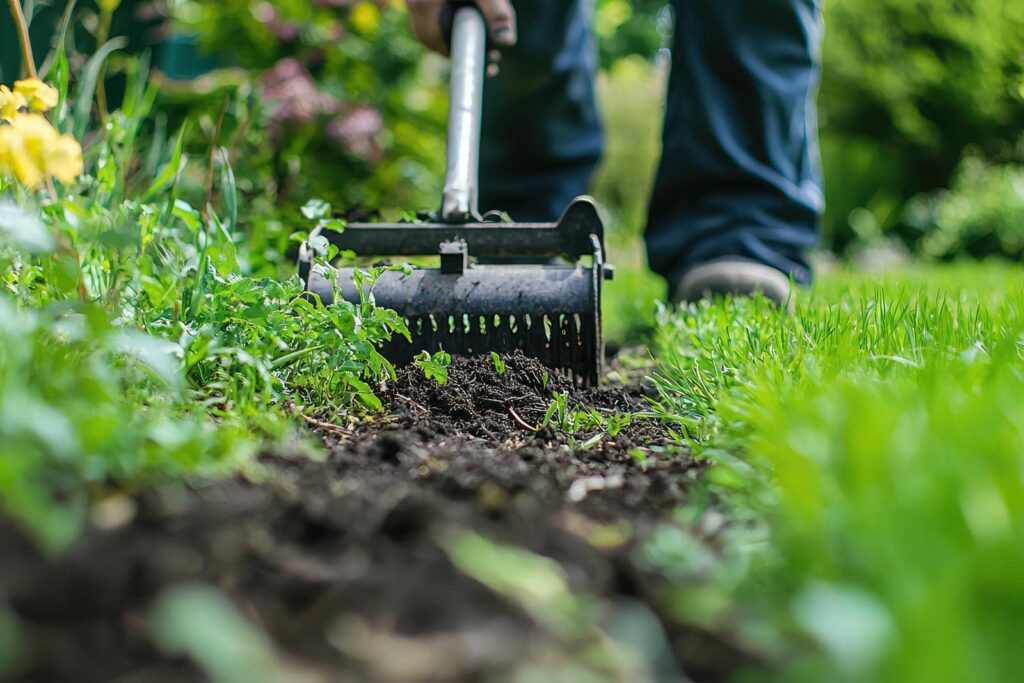
Core Aerator: This tool removes small plugs of soil, allowing air to penetrate deeper into the ground.
Spike Aerator: Using spikes to create holes in the soil, this method is simpler but less effective than core aeration.
Manual Aerator: Ideal for small lawns, this handheld tool lets you aerate your lawn with minimal effort.
Choosing the right aeration tool is essential for achieving ideal results.
Assess your lawn’s size and condition to determine which aeration methods best suit your needs.
With the right approach, you’ll foster a healthier, more vibrant lawn that you can be proud of.
Post-Aeration Lawn Care
After aerating your lawn, it’s crucial to implement proper care to maximize the benefits of the process.
Start with post aeration watering; make sure your lawn receives adequate moisture to help the soil recover and promote root growth. Water deeply and infrequently, aiming for about 1 inch per week, to encourage deep root development.
Next, consider post aeration fertilization. Applying a high-quality fertilizer shortly after aeration provides vital nutrients that your grass needs to thrive. Look for a product that’s rich in nitrogen to stimulate growth and improve overall health.
Finally, avoid heavy foot traffic on your lawn for a few weeks to allow the grass to establish itself in the newly aerated soil.
Seasonal Lawn Maintenance Tips
While you may think lawn care is a task reserved for spring and summer, seasonal maintenance throughout the year is essential for promoting a healthy and vibrant lawn.
By staying proactive, you can guarantee your lawn thrives in every season. Here are some key tips:
Seasonal Fertilization: Apply a balanced fertilizer in early spring and late fall to provide essential nutrients, promoting growth and resilience.
Weed Control: Implement pre-emergent herbicides in early spring to prevent weeds before they sprout. Regularly check for any invasive species and address them promptly.
Routine Mowing: Keep your mower blades sharp and adjust the height based on the season. Taller grass can help shade out weeds and preserve moisture.
Common Mistakes to Avoid
When it comes to lawn aeration, timing errors can greatly hinder your grass’s growth potential.
Additionally, using the wrong equipment or mismanaging the tools you have can lead to ineffective aeration.
To guarantee your lawn thrives, it’s essential to recognize and avoid these common pitfalls.
Timing Errors
Although many homeowners understand the significance of lawn aeration, timing errors can undermine their efforts and yield disappointing results.
To achieve ideal growth, it’s essential to implement effective timing strategies and make seasonal adjustments. Here are common timing mistakes to avoid:
Aerating too early or late: Know your region’s climate to select the perfect window for aeration.
Neglecting soil moisture: Aerate when the soil is moist but not overly saturated to guarantee proper penetration.
Ignoring grass type: Different grasses have unique growth patterns; aerate according to your specific lawn needs.
Equipment Misuse
Timing errors can be compounded by improper use of equipment, leading to ineffective aeration and wasted effort.
First, verify you’ve made the right equipment selection. A core aerator typically works best for most lawns, so avoid using a spike aerator, which can compact soil further.
Next, adhere to proper maintenance practices; dull tines can fail to penetrate the soil adequately. Regularly check and sharpen your equipment before use.
Additionally, be mindful of your walking speed. Rushing through the process can leave gaps, while moving too slowly may cause compaction.
Finally, aerate under proper soil moisture conditions—too dry or too wet can hinder results. By following these guidelines, you’ll maximize your lawn’s health and growth potential.
To Sum Up
In the grand tapestry of lawn care, aeration serves as a gentle nudge toward vibrant growth and resilience. By following the ideal schedule of late March to early May and again from late August to early October, you’re not just caring for your lawn; you’re nurturing its potential. Embrace this essential practice, and your lawn will thank you with lush greenery and a robust root system, making your outdoor space a true sanctuary.
Recent Posts
Tips for a Thriving Lawn in Kentwood
Many homeowners overlook the importance of selecting the right grass type for their specific thriving
Top Lawn Care Tips for Grand Rapids Residents
Imagine stepping onto a vibrant, green lawn that feels lush underfoot, a demonstration of your
3 Best Lawn Care Tips for Grand Rapids Area
Did you know that proper lawn care can increase your home’s value? In the Grand